



What Is a High Temperature Fume Hood Used For?
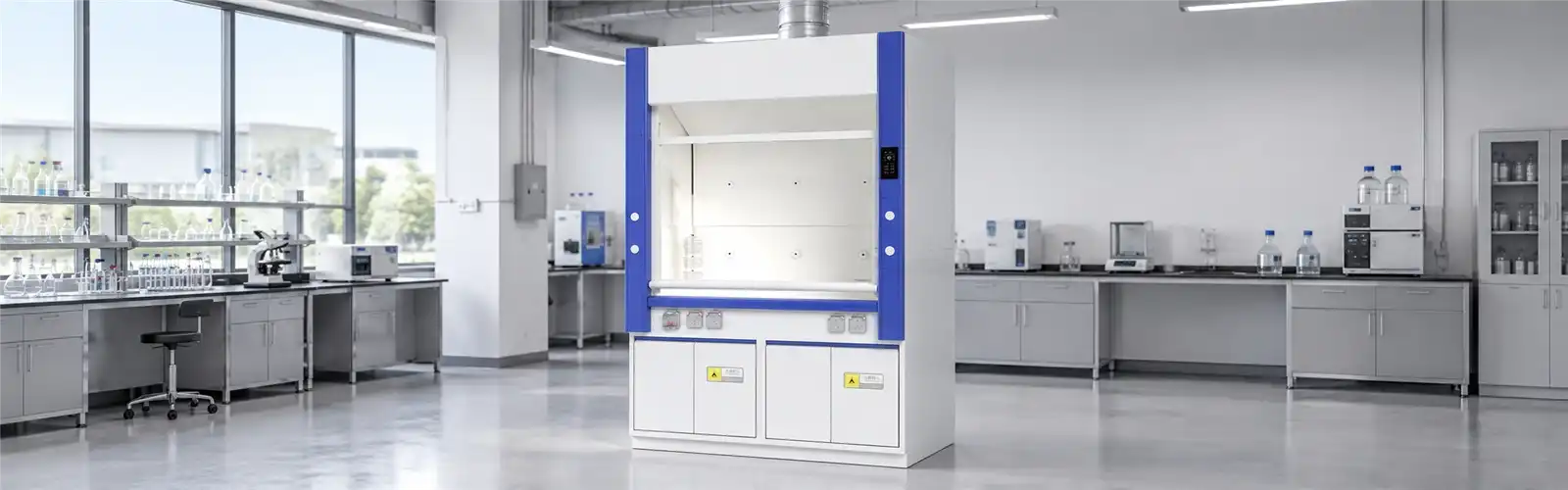
High temperature fume hoods are a specialized containment and ventilation system used to handle hazardous vapors created during activities beyond the scope of ordinary laboratory enclosures, often from 200°C up to 600°C or more. These units are made of all-steel frameworks with acid-resistant liners and heat-resistant finishes to avert structural failure. This is in contrast to ordinary hoods. They protect workers from harmful vapor exposure and provide consistent airflow in extreme heat environments. They are vital to industries such as metallurgy, petrochemicals, ceramics, and pharmaceutical research to guarantee safety and compliance.
Understanding High Temperature Fume Hoods
What Sets Them Apart From Standard Models
Conventional Fume Hoods are made from polypropylene or coated MDF panels, which are fine at ambient temperature but warp, break, and off-gas when subjected to persistent heat. Instead of these materials, a purpose-made thermal ventilation enclosure is composed of steel with corrosion-resistant liners and ceramic or tempered glass sashes to withstand fast temperature fluctuations.
How the Core Design Works
The basic premise is to adjust the face velocity, generally 0.5 m/sec across the sash opening, to draw vapors away from the operator. In high-heat situations, thermal buoyancy causes an upward airflow within the cabinet that upsets this equilibrium. A regulated bypass air system automatically adjusts to provide consistent containment even with interior temperature spikes.
Why Material Choice Determines Longevity
The lifetime of a unit in harsh conditions depends on the inner liner material. The Uken design is built using 5mm antibacterial board with corrosion-resistant treatment applied to all inside surfaces, and the exterior shell is constructed from ≥1.0mm laser-cut steel plate treated with pickling, phosphating, and epoxy electrostatic powder coating to a minimum thickness of 70μm. The multi-layer protection withstands penetration of acid fumes and mechanical wear over the years of continuous operation.
Key Applications and Benefits of High Temperature Fume Hoods
Industries that perform high-heat operations cannot afford vapor leaks or structural breakdowns in the middle of an operation. Here are settings where a thermal-rated enclosure is a necessity:
- Metallurgical and Materials Research: Muffle Furnaces and glass-melting reactors give forth a steady radiant heat. An all-steel unit with anti-corrosion lining can carry the load without bending, while a normal hood may distort within weeks under these circumstances.
- Pharmaceutical catalyst synthesis: Reagents at High temperature fume hoods increase corrosion on exposed surfaces. Corrosion-resistant inner lining avoids deterioration of the liner, which would otherwise contaminate samples and impair findings.
- Petrochemical fractional distillation: Flammable fumes and considerable heat dissipation need flame retardant structure. The frame is naturally heat-resistant and will not soften or ignite during open flame or high boiling point processes.
- Environmental acid digestion labs: Near-boiling perchloric or sulfuric acid operations produce strong fumes. The enclosed interior is wash-down friendly, retains no chemical residue, and cleans quickly between runs.
The common requirement for all application situations is that the enclosure must remain structurally solid, airtight, and compliant throughout all shifts. The operational advantage goes beyond safety: fewer unexpected shutdowns mean cheaper maintenance costs and better facility throughput.
Compliance as a Procurement Driver
EHS managers at chemical parks and industrial complexes undergo frequent occupational health audits. The hood has paperwork to meet inspectors’ requirements and does not need any more testing. It is certified to ISO, CE, SEFA, and SGS standards. That paper trail is frequently the difference in a procurement approval.
Total Cost of Ownership Perspective
Lost production time will cost more than the difference in price between a basic hood and a thermally rated item if you have a warped or corroded standard hood to replace. Procurement teams that look at the overall cost of ownership — downtime, how often they’ll have to replace it, and the risk of non-compliance — consistently find that the specialized unit gives more long-term value.

Safety Features and Ventilation Requirements
Fire and Thermal Shock Protection
Uken's thermal enclosure uses tempered glass windows paired with rubber buffer systems at the sash frame. This combination absorbs mechanical shock during sash operation and resists thermal stress fractures when cold reagents contact a hot surface. The frame itself is flame-retardant and will not soften or deform under sustained thermal load.
Airflow Stability Under Heat Load
Heat plumes rise rapidly inside an enclosure housing a furnace or heating mantle. Without active compensation, those plumes push contaminated air toward the sash opening and into the operator's breathing zone. The synchronous belt lift mechanism on this unit allows smooth sash adjustment at any point during a procedure, maintaining operator control without mechanical jamming or misalignment.
Regulatory Alignment
OSHA 29 CFR 1910.1450 requires laboratory employers to provide adequate ventilation for hazardous chemical work. ASHRAE 110:2016 and EN 14175 set the performance benchmarks for containment testing using SF6 tracer gas. Procurement teams should request test reports confirming compliance with these standards before accepting delivery of any thermal ventilation unit.
Comparing High Temperature Fume Hoods With Standard Fume Hoods
| Feature | Standard Fume Hood | High-Temp Rated Hood |
|---|---|---|
| Max operating temperature | ~80°C | 400°C–600°C+ |
| Inner liner material | Polypropylene / coated MDF | 5mm corrosion-resistant board / all-steel |
| Sash glazing | Float glass | Tempered glass with rubber buffers |
| Surface treatment | Basic powder coat | Pickling + phosphating + epoxy coat ≥70μm |
| Structural frame | Coated steel or polymer | All-steel, laser-cut, welded |
| Certification depth | Basic CE | ISO, CE, SEFA, SGS |
Standard hoods cost less upfront, but they are not engineered for thermal shock, acid vapor saturation, or continuous furnace heat. Facilities running processes above 200°C that use standard enclosures accept structural failure risk, liner corrosion, and the production downtime that follows.
Modular vs. Built-In Configurations
Uken offers three standard sizes — L1200×D850×H2350mm, L1500×D850×H2350mm, and L1800×D850×H2350mm — each built on a modular cold-rolled steel frame. The modular structure assembles and disassembles without specialized tools, which reduces installation time and lowers shipping costs through compact packaging. Built-in configurations offer tighter facility integration but require longer lead times and a High temperature fume hood installation investment.
Procurement Insights — How to Choose the Right Thermal Ventilation Enclosure
Define Your Temperature and Chemical Profile First
Ask for a quotation, but first tell us the maximum continuous working temperature, the exact chemicals that will be used, and if there will be open flames or electrical heat sources within the enclosure. This information will help you specify the liner, the duct material requirements, and whether stainless steel or standard anti-corrosion treatment is appropriate for your conditions.
Verify Material Certifications, Not Just Claims
Request material test results for inner liner, exterior casing steel grade, and coating thickness measurements. The coating will prematurely degrade in acid fume settings if less than 70μm thickness. Uken offers documented material certifications and inspection records for every single product manufactured in its 50,000 m2 manufacturing plant.
Evaluate Service Support and Lead Time
Enclosure failures may typically cost more in production downtime than the unit. Check the availability of replacement parts, warranty conditions, and the response time of the technical assistance before you decide on a provider. Uken has a competent engineering staff of 100 people to provide pre-sale specification advice and post-delivery technical help.
These procurement stages help EHS managers and equipment purchasers avoid the most typical sourcing mistakes—selecting on price alone, bypassing material verification, or disregarding duct compliance with high-exhaust temperatures. If you stick to this method, you will have installations that pass occupational health audits and operate without interruption.

Conclusion
A High temperature fume hood is not a commodity buy; it is a safety-important asset that must work without failure in some of the most demanding industrial conditions. The appropriate unit has an all-steel build, proven anti-corrosion treatment, validated containment performance, and dependable airflow control under prolonged temperature stress. For chemical, metallurgical, and materials industry EHS managers, equipment purchasers, and safety compliance teams, the difference between a long-service installation and a costly liability is the accurate matching of the unit’s specifications to the process conditions.
FAQ
1. Can a furnace or heating mantle be placed inside the enclosure?
Yes, provided the enclosure is rated for the equipment's thermal output and proper clearance guidelines are followed according to NFPA 45. Uken's all-steel construction handles heavy heating equipment without frame deflection.
2. Why is tempered glass used instead of standard float glass?
Tempered glass withstands rapid temperature changes without shattering. Paired with rubber buffers, it absorbs mechanical shock during sash operation and resists fractures from thermal stress.
3. Can standard PVC ductwork connect to a high-temp unit?
No. High exhaust temperatures require stainless steel, PVDF, or specially coated ducting. PVC melts or ignites under sustained high-heat exhaust conditions.
4. How does heat affect face velocity and containment?
Thermal buoyancy disrupts laminar airflow at the sash opening. Calibrated bypass systems in purpose-built units compensate to maintain a stable face velocity of approximately 0.5 m/s.
5. How often does the unit require maintenance?
Inspect heat-resistant seals periodically and clean the interior after each procedure to prevent chemical crystallization. The scratch-proof, easy-clean surface significantly reduces cleaning time between runs.
Get a Certified Thermal Fume Hood From Uken — Built for Your Process
Uken supplies industrial-grade High temperature fume hood solutions to chemical, metallurgical, and materials facilities worldwide. Each unit ships with full material certifications, ISO/CE/SEFA/SGS documentation, and direct engineering support from Our Team. Whether you need a single unit or a facility-wide installation, our high-temperature fume hood manufacturer team is ready to match specifications to your exact process conditions. Contact Us at service@ukenlab.com to WhatsApp: +8615102909133 request a quote.
References
1. American Society of Heating, Refrigerating and Air-Conditioning Engineers. ASHRAE 110-2016: Method of Testing Performance of Laboratory Fume Hoods. ASHRAE, 2016.
2. European Committee for Standardization. EN 14175: Fume Cupboards — Safety and Performance Requirements. CEN, 2019.
3. National Fire Protection Association. NFPA 45: Standard on Fire Protection for Laboratories Using Chemicals. NFPA, 2019.
4. Occupational Safety and Health Administration. OSHA 29 CFR 1910.1450: Occupational Exposure to Hazardous Chemicals in Laboratories. U.S. Department of Labor, 2019.
5. ASTM International. ASTM G48: Standard Test Methods for Pitting and Crevice Corrosion Resistance of Stainless Steels and Related Alloys. ASTM, 2022.
6. National Institute of Standards and Technology. NIST Technical Note 1681: Laboratory Ventilation and Fume Hood Performance Standards. U.S. Department of Commerce, 2010.

CUSTOMER REVIEWS
What Our Customers Say