



What Are High Temperature Fume Hoods Used For?
High temperature Fume Hoods are specialized ventilation enclosures designed to contain and exhaust hazardous fumes, vapors, and particulates generated during thermal-intensive procedures. Unlike standard lab hoods, a high temperature fume hood withstands sustained heat exposure above 400°C without structural degradation. Industries such as metallurgy, petrochemicals, ceramics, and pharmaceutical manufacturing rely on these units daily. They protect operators from toxic acid fumes, prevent structural warping, and maintain stable airflow despite thermal buoyancy—making them a non-negotiable safety asset wherever open-flame work, acid digestion, or high-boiling-point synthesis occurs.
What Is a High Temperature Fume Hood and How Does It Work?
Core Construction That Handles Extreme Heat
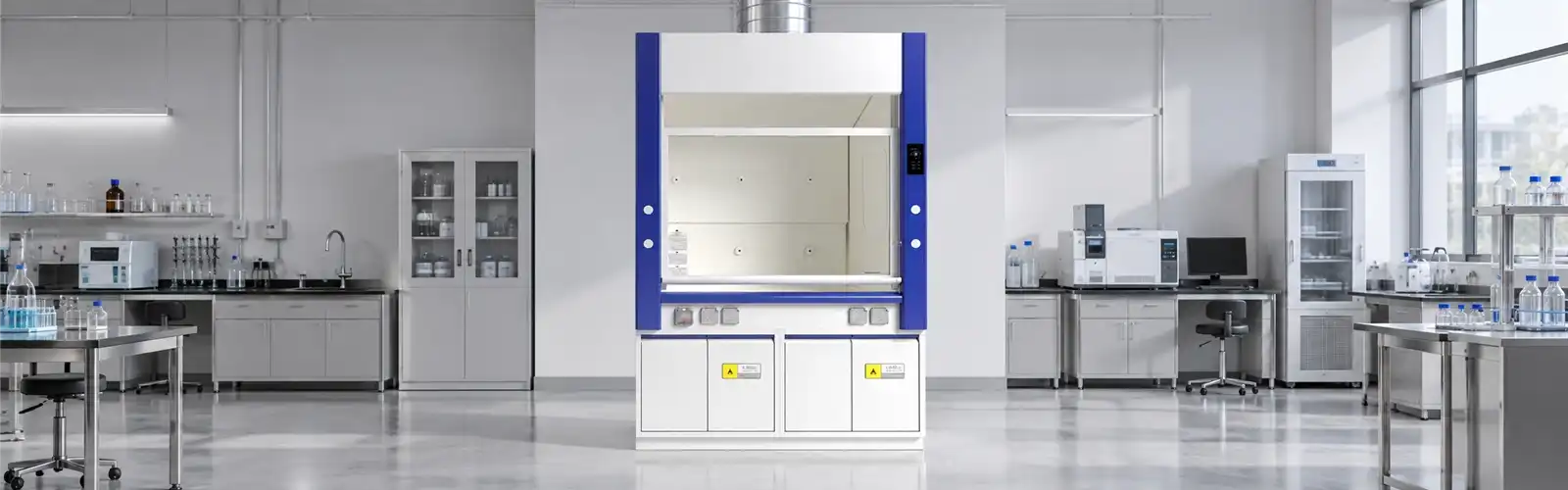
A thermal-duty fume hood is made of materials that aren't found in regular lab furniture. The upper shell is made of a laser-cut steel plate that is at least 1 mm thick and has been bent and welded to make it rigid. It has then been pickled, phosphated, and given an epoxy electrostatic powder covering that is at least 70μm thick. This process on the surface stops both rust and chemical attack at the same time. The inner layer and vents are made of 5mm antibacterial, corrosion-resistant board that can handle sudden changes in temperature without breaking, which is how most hoods break after a few months of heavy use.
Airflow Management: VAV vs. CAV Systems
Controlling airflow is the main way that thermal hoods are different from normal designs. Variable Air Volume (VAV) systems change exhaust rates in response to sash orientation and internal temperature fluctuations, lowering energy usage while keeping face velocity at roughly 0.5 m/s. Constant Air Volume (CAV) systems make sure that the exhaust flow stays the same no matter what. They are easier to set up and are better for places that don't have building automation infrastructure. For processes hotter than 400°C, thermal buoyancy can make laminar containment less effective. To fix this, both types of systems have escape air tubes that move conditioned air to keep the airstream stable at the sash opening.
Safety Components That Operators Can See and Trust
The tempered glass sash window and rubber buffer systems keep workers safe from sudden heat shocks. In place of traditional counterweight sashes, there is a synchronous belt lift mechanism that allows for smooth, jam-free height adjustment even while the machine is running continuously. On a busy production floor, this is important: a sash that gets stuck during an acid digestion run is not only inconvenient, it's also a safety risk waiting to happen.
Common Applications and Benefits of High Temperature Fume Hoods
Thermal hoods for factories are used in more processes than most procurement managers think at first. The main areas of use and what they need from the tools are summed up in the table below.
Metallurgical and Materials Research
Radiant heat from muffle furnaces and glass melting reactors breaks down normal hood covers in just a few weeks. This equipment is kept safe in a high temperature fume hood with the right rating, which stops fumes from moving into the workroom. Heavy furnace units put a lot of weight on the framework, but the floor doesn't bend or the frame warps.
Petrochemical and Pharmaceutical Laboratories
When high-boiling hydrocarbons are fractionated or catalyst synthesis is done, the inside of the hood is exposed to aggressive mixtures of chemicals that are heated to high temperatures. The anti-corrosion lining can stand up to acid attack and heat stress at the same time, which quickly destroys mild steel that has been covered with epoxy. Pharmaceutical labs like the surface because it is easy to clean and won't scratch. This is because cross-contamination between runs is against the rules.
Environmental Testing and R&D Facilities
To keep dangerous perchlorate crystals from forming when geology samples are broken down with perchloric acid, the inside must be cleaned and the structure must be able to handle heat. R&D centers like the three size options—L1200×D850×H2350mm, L1500×D850×H2350mm, and L1800×D850×H2350mm—because they can fit a range of equipment footprints without having to wait for custom fabrication lead times.
All of these uses have one thing in common: regular ventilation goods don't work when they're put under long-term chemical and temperature stress, which puts safety and compliance at risk. That risk is taken away by a purpose-built shelter.
How to Choose the Right High Temperature Fume Hood for Your Business?
Evaluate Temperature Rating and Material Certification
It's best to start with the process temperature cap. If your application sometimes goes up to 400°C, a unit made of flame-resistant steel and an inner lining that is 5 mm thick will work in that range. Not just product datasheets, but also documents that certify the materials. If procurement teams skip this step, they often end up with cabinets that have lining materials that aren't up to par and corrode within a year of use, costing extra money to repair.
Assess Supplier Credentials and Certification Portfolio
A trustworthy company that sells high temperature fume hoods should have at least ISO, CE, SEFA, and SGS certifications. These qualifications show that third-party auditors have checked not only the end product's look but also the controls used during the manufacturing process. Ask for ASHRAE 110 or EN 14175 containment test results that were done under thermal load conditions. Testing for SF6 tracer gas under heat proves efficiency where it matters the most. Suppliers who can't give you this information are only selling based on price.
Calculate Total Cost of Ownership
The cost of a heat shelter over its entire life is much higher than the price paid for it. You need to think about the cost of installation (stainless steel or PVDF tubing is needed because standard PVC melts at high exhaust temperatures), the cost of yearly upkeep, and the cost of lost production time if the unit breaks down in the middle of a process. For the extra money, a unit with a synchronous belt lift and an easy-to-clean, scratch-proof interior pays for itself in less time spent on maintenance and between service visits.
Maintenance Tips and Safety Best Practices for Long-Term Use
Routine Inspection Schedule
Check heat-resistant valves and seals every three months. Over time, thermal cycling makes elastomers harden and crack, and a leaky seal at the sash frame lets fumes get out, which is something that no exhaust system can fix. Record monthly readings of the face velocity; a drop below 0.4 m/s means that the ducts are blocked or the blowers are worn out and need to be fixed right away.
Cleaning and Surface Care
The scratch- and corrosion-resistant inside surface makes cleaning easier, but following the right steps is important. Use a pH-neutral cleaner to wipe down the inside walls after every high-acid process. If you use rough pads on coated steel, the surface will get scratched, which will allow rust to start and cut through the protected layer from below. For uses with perchloric acid, flush the wash-down tube after each use to keep perchlorate from building up.
Operator Training and Emergency Protocols
Every person who works in a high temperature fume hood needs to have written training that covers the highest load rates for the equipment, the right way to place the sashes while they are in use, and the facility's emergency shutdown process. NFPA 45 sets the minimum distance that heated equipment must be away from the inside walls of the hood. During internal EHS audits, facilities that keep these clearances report a lot fewer thermal incidents.

High Temperature Fume Hood Market Trends and Future Outlook
IoT Integration and Smart Monitoring
Newer thermal hoods have airflow sensors that are linked to building management systems. This lets the building management system know right away if the face velocity changes from what was set. This change from reactive to predictive maintenance cuts down on unexpected downtime, which is a KPI that EHS and operations managers are tracking together more and more.
Tightening Regulatory Requirements
The OSHA laboratory standard (29 CFR 1910.1450) and the NIOSH exposure rules keep lowering the levels of exposure that are safe for many chemicals that are made at high temperatures. When the new rules go into force, it will cost less for facilities to retrofit their thermal containment equipment that they bought that was approved and made for that reason. Third-party audits want original certification documents more and more, not just reports of site inspections.
Energy Efficiency Pressures
According to ASHRAE research, VAV control systems lower the exhaust volume when the sash is partially closed. This means that 30% to 50% less energy is used by the HVAC system than with fixed-volume designs. As energy costs rise and ESG reporting becomes normal for medium- to large-sized producers, the difference in running costs between VAV and CAV systems stops being just a technical choice and turns into a financial argument at the buying level.
Conclusion
Buying high temperature fume hood equipment is an investment in the safety of your workers, your reputation with regulators, and the continuity of your operations. Standard hoods don't work in places like metallurgy, petrochemistry, and pharmaceuticals where the heat and corrosion last for a long time. Building an enclosure from certified materials, testing it to recognized airflow standards, and getting help from a company with quality controls that can be inspected takes away the structural and legal risks that come with using equipment that is too small. The first step to making your lab safer and more productive is to make sure you have the right unit for your process temperature range, available space, and type of cooling system.
FAQ
What is the difference between a high temperature fume hood and a standard chemical fume hood?
A normal chemical fume hood is made of polyethylene or painted steel, which break down quickly above 200°C and is rated for chemical work at room temperature. A thermal version is made of all steel and has a corrosion-resistant inner lining, toughened glass sash windows, and surface treatments that are made to withstand long-term heat exposure above 400°C.
How often should maintenance be performed?
Every month, check the seals and record the face velocity. Every three months, do a full review inside the door, checking the sash system, gaskets, and lining durability.
Can standard PVC ductwork be used with these units?
No, because exhaust temperatures need to stay high, you need ducts made of stainless steel, PVDF, or a special coating. When exhaust temperatures go above their recommended range, PVC softens and can give off harmful fumes.
Are custom sizes available?
The standard sizes are L1200D850H2350mm, L1500D850H2350mm, and L1800D850H2350mm. Get in touch with the manufacturer to talk about non-standard sizes for certain equipment footprints.
What certifications should I request from a supplier?
Ask for ASHRAE 110 or EN 14175 containment test reports that were done under thermal load conditions along with ISO, CE, SEFA, and SGS certificates.
Request a Quote from Uken's High Temperature Fume Hood Team
Uken is an expert in making industrial-grade laboratory air that can handle harsh temperatures and chemicals. As a qualified all-steel manufacturer, we can make high-temperature fume hoods with ≥70μm epoxy coatings and three standard size versions that are ready to be bought in bulk. Fully certified materials and test records come with every unit. Send your process needs and building details to service@ukenlab.com or go to WhatsApp: +8615102909133 to get in touch with our tech team and get a custom quote.
References
1. American Society of Heating, Refrigerating and Air-Conditioning Engineers (ASHRAE). ASHRAE 110: Method of Testing Performance of Laboratory Fume Hoods. ASHRAE, 2016.
2. European Committee for Standardization. EN 14175: Fume Cupboards — Part 3: Type Test Methods. CEN, 2003.
3. National Fire Protection Association. NFPA 45: Standard on Fire Protection for Laboratories Using Chemicals. NFPA, 2019.
4. Occupational Safety and Health Administration (OSHA). 29 CFR 1910.1450: Occupational Exposure to Hazardous Chemicals in Laboratories. U.S. Department of Labor, 2011.
5. National Institute for Occupational Safety and Health (NIOSH). Engineering Controls for Laboratory Safety. CDC/NIOSH Publication, 2020.
6. DiBerardinis, L. J., et al. Guidelines for Laboratory Design: Health, Safety, and Environmental Considerations. John Wiley & Sons, 2013.

CUSTOMER REVIEWS
What Our Customers Say