



A Guide to Choosing the Ideal Fume Hood for Your Lab
Choosing the right laboratory fume hood is one of the most consequential decisions a lab manager or procurement professional makes. A fume hood acts as a local exhaust ventilation system, drawing contaminated air away from the researcher and expelling it safely outside the building. Getting this choice wrong creates real risks: OSHA data shows that improper chemical exposure contributes to thousands of occupational illnesses annually in U.S. laboratories. This guide walks you through every factor that matters, from airflow mechanics and material construction to certifications and sourcing strategy, so your next purchase protects both people and budgets.
Understanding Laboratory Fume Hoods: Types, Operation, and Safety
It is helpful to know how these units work and where the lines of regulation are before comparing products.
How a Fume Hood Contains Hazardous Air?
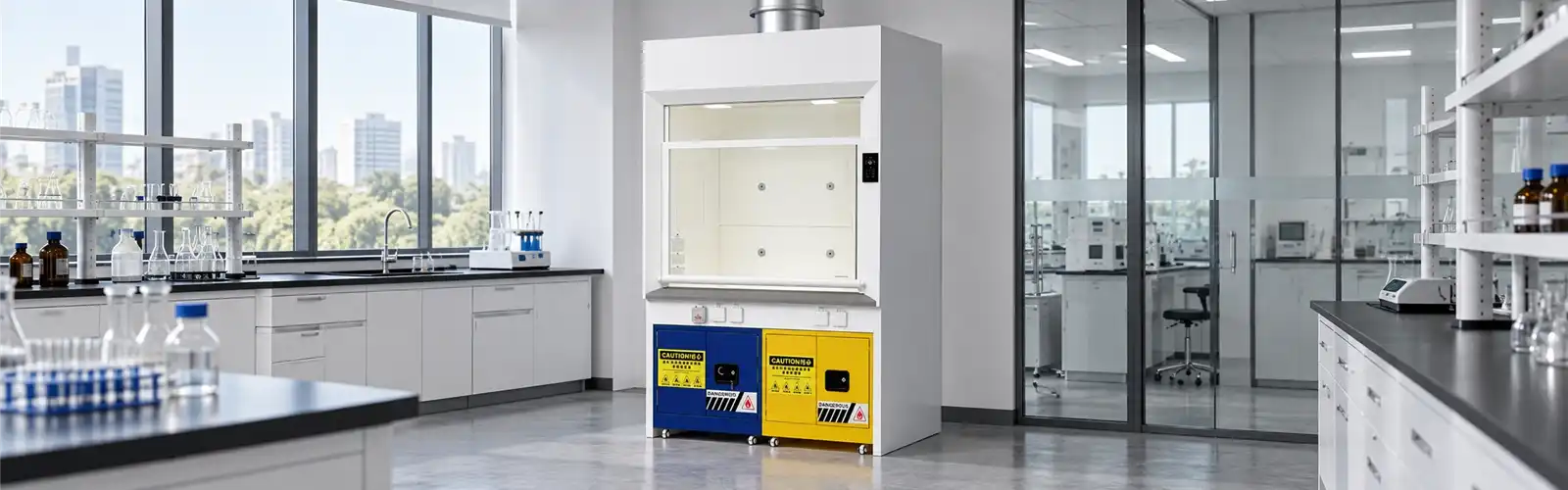
The front sash hole of a fume hood lets room air into the enclosure, which lowers the pressure inside. This flow of air inward keeps clouds and particles from leaving the breathing zone. The most important performance metric is face velocity, which is measured in feet per minute (fpm). According to both ASHRAE 110 and OSHA 29 CFR 1910.1450, the minimum face rate for normal chemical work is between 60 and 100 fpm.
Ducted vs. Ductless: Choosing the Right Exhaust Method
Through a set duct system, ducted Fume Hoods send dirty air right outside the building. They work with many different kinds of chemicals, such as acid vapors and solvents that evaporate quickly. Air is filtered through activated carbon or HEPA media in ductless (recirculating) types, and then it is sent back into the room. Ductless units are good for low-toxicity situations and places where ducts wouldn't work, but the filters need to be checked and replaced often.
Chemical Fume Hoods vs. Biosafety Cabinets
That's right, these two gadgets are used to fix different issues. A chemical fume hood keeps the researcher from coming into contact with chemicals. Using HEPA filters, a biosafety cabinet (BSC) keeps biological agents away from the researcher, the sample, and the surroundings. Using a regular fume hood for biological work is against CDC and NIH biosafety rules and increases the chance of contamination. Make sure that the device is right for the type of danger.
Critical Factors When Choosing a Fume Hood for Your Lab
Once you know which type works best for you, you can focus on the quality of the building, how well the air flows, and the total cost of ownership.
Material and Structural Durability
All-steel construction is the most durable option for

labs that get a lot of use. For example, Youken's fume hoods are made from cold-rolled steel pieces that have been tried to see how much weight they can hold and how well they can handle being hit. Precision laser cutting makes sure that all joints are within tight limits, so there are no holes that could let vapor move through. This level of manufacturing consistency immediately means that the equipment will last longer and cost less to maintain over its lifetime.
Airflow Distribution and Pressure Control
When single-point extraction is used, dead zones are made inside the cylinder where vapors can build up. An integrated suction system spreads air flow throughout the entire interior workspace, collecting emissions no matter where the reaction takes place. An air vent on the roof keeps the pressure from building up, which can reverse the flow of air and bring dirty air back into the lab. During normal operation, this two-layer airflow system keeps the negative pressure steady.
Installation Logistics, Certifications, and Cost
For business-to-business buyers, certifications are a must. Documentation from CE, ISO, and CQC allows for selling in both domestic and foreign markets, passes facility checks, and lowers liability. Standardized packaging that keeps units safe during long-distance freight is important for both distributors who handle shipments to multiple cities and those who send goods abroad. There are three common sizes—L1200×D850×H2350mm, L1500×D850×H2350mm, and L1800×D850×H2350mm—that work for most lab setups without having to pay a lot for special orders.
Market Overview: Leading Fume Hood Brands and Solutions
There are a lot of well-known suppliers on the global market. Knowing where they stand helps buying teams make faster, more sure decisions about where to buy things.
Labconco is famous for its Protector line, which has a base-airfoil shape and works with VAV. The company is based in Kansas City. The Hamilton Safe series from Thermo Fisher Scientific is made for research labs that need to be very resistant to chemicals. The French company Erlab specializes in ductless filter technology and markets its products to labs that don't have access to set ducts.
Luoyang Youken Laboratory Equipment Co., Ltd. is a good option for B2B wholesalers and engineering companies that want to buy in bulk at factory prices that are competitive. We have a production base of 50,000 m² and 100 engineers working for Youken. We offer all three standard fume hood sizes with full CE, ISO, and CQC certification packages. The modular design cuts down on shipping volume and building time, which directly lowers the landed cost for regional wholesalers who deliver to many end customers.
Making the Decision: How to Select the Best Laboratory Fume Hood?
Systematic screening keeps expensive mistakes from happening when equipment doesn't meet the needs of the lab.
Match the Hood to Your Chemical Risk Profile
Start with the chemicals you have on hand. Ducted all-steel units with built-in suction systems are the best choice for labs that work with highly volatile chemical substances or acid vapors that can damage things. A normal ducted hood with a vertical sash and an auto-hanging device can easily cover most daily tasks in an educational or light study setting.
Evaluate Airflow Efficiency Against Energy Costs
By changing the exhaust volume based on the position of the sash, laboratory fume hood VAV systems use less energy. No matter how high the screen is, CAV systems release the same amount of air, which makes the HVAC system work harder. LBNL study shows that VAV fume hoods use 30–60% less energy than similar CAV models. This can save a lot of money on yearly operating costs for large purchases made at multiple lab sites.
Factor In Packaging, Lead Time, and After-Sales Support
When distributors buy things to resell, they need to make sure the packing is good and the deliveries are on time. Standardized export packaging from Youken is made to keep goods safe during long-distance local and foreign freight paths. All three standard sizes are in stock, which allows for quick order fulfillment—usually just one to two weeks from when the order is confirmed to when it is shipped.

Ensuring Compliance and Optimizing Laboratory Safety Practices
Compliance isn't just a box that you check once. Throughout the duration of the equipment, it needs to be constantly inspected and recorded.
Key Regulatory Standards to Track
OSHA 29 CFR 1910.1450 says that laboratory air equipment must be evaluated every year for its performance. In labs that use flammable chemicals, NFPA 45 sets rules for fire safety, such as how hoods should be built and how exhaust systems should work. When lab exhaust has regulated air pollutants, the EPA rules apply. To keep facility compliance records up to date, procurement managers should make sure that suppliers include updated certification documents with every shipment.
Routine Maintenance and Performance Checks
A accurate anemometer should be used to check the face velocity at least once a year, or whenever the hood is moved or fixed. The seals, baffles, and inside surfaces of the sash need to be checked for chemical damage on a regular basis. Without any special tools, a simple smoke pencil test can visually confirm the direction of containment at the sash opening.
Training and Operational Protocols
When operators don't have the right training, even properly stated tools can be dangerous. At each hood station, labs should post sash working height standards (usually 18 inches) and make it clear how to handle an alarm when face motion falls below a certain level.
Conclusion
To choose the right laboratory fume hood, you need to make sure that the unit matches your chemical hazard class, that the structure and airflow work properly by looking at certified testing data, and that you choose a supplier whose lead times and paperwork meet your needs for resale or facility compliance. Whether you're in charge of a single study lab or a network of sites that share tools, this guide will help you make good decisions about what to buy every time. A well-designed air unit keeps people safe, meets regulatory requirements, and keeps its value over years of daily use.
FAQ
What is the difference between a CAV and VAV fume hood?
A Constant Air Volume (CAV) system always lets out the same amount of air, no matter where the sash is located. A Variable Air Volume (VAV) system changes the airflow based on the height of the window, which uses a lot less energy. According to data from LBNL, VAV models use 30–60% less energy than CAV models. This makes them the best choice for labs that want to be as efficient as possible.
How often should a fume hood be certified?
Professionals must get certified at least once a year according to OSHA and ASHRAE rules. When a unit is moved, fixed, or linked to a different exhaust system, it needs to be tested again.
Can a standard chemical fume hood be used for biological work?
No, regular fume hoods don't filter the air coming out of the exhaust but do keep the user safe from chemicals. To keep the researcher, the sample, and the environment safe, biological agents need a biosafety cabinet with HEPA filtration.
What do CE, ISO, and CQC certifications mean for B2B buyers?
Getting a CE mark means that a product meets European health and safety standards. Standards for quality management systems are checked by ISO certification. CQC is in charge of China's mandatory quality standards for goods. These three certifications allow for resale in both domestic and international markets and meet most of the requirements for facility audits.
Get a Quote from Uken — Your Trusted Laboratory Fume Hood Supplier
Uken sells industrial-grade laboratory fume hoods that are built to meet CE, ISO, and CQC standards. They come in three common sizes and are in stock so they can be sent out quickly. Our Team at Luoyang Youken Laboratory Equipment Co., Ltd. helps with large purchases by providing full certification paperwork, export-ready packing, and quick order management. You can email us at service@ukenlab.com or go to WhatsApp: +8615102909133 right now to ask for prices, product details, or a sample order.
References
1. American Chemical Society. Safety in Academic Chemistry Laboratories. 8th ed., 2019.
2. ASHRAE. ASHRAE 110: Method of Testing Performance of Laboratory Fume Hoods. 2016.
3. Lawrence Berkeley National Laboratory. Fume Hood Energy Efficiency Research Report. 2011.
4. National Fire Protection Association. NFPA 45: Standard on Fire Protection for Laboratories Using Chemicals. 2019.
5. Occupational Safety and Health Administration. OSHA 29 CFR 1910.1450: Occupational Exposure to Hazardous Chemicals in Laboratories. U.S. Department of Labor, 2021.
6. Scientific Equipment and Furniture Association. SEFA 1: Recommended Practices for Laboratory Fume Hoods. 2010.

CUSTOMER REVIEWS
What Our Customers Say