


Feb 6, 2025
NovaLab Tech Solutions
"Responsive and professional supplier with excellent product quality. Communication was efficient, and the entire purchasing process was smooth and reliable."


Ducted benchtop Fume Hoods remove chemical vapors from small R&D and academic labs. They pull contaminated air away from the operator and send it outdoors through a duct and exhaust fan. A ducted fume hood benchtop suits weighing, dilution, sample preparation, small-batch synthesis, and teaching demonstrations where work volumes stay modest and floor space is tight. The air leaves the building instead of passing through filters back into the room, so this design handles a wide range of solvents and acids. In this guide, I explain how these hoods work, where they fit, and how to choose one.
How the Airflow Path Works
It's a small box that you can put on a stand or lab bench and open the sides. The sash has a hole in it that lets air into the room. Once the air has gone through the exhaust collar and across the work area, it will go into a duct. A fan moves the air to the outside so it can escape. On top of the cabinet are a light, a utility fixture, and an airflow monitor. The hood doesn't need carbon filters that get dirty because the dirty air never comes back into the room.
There are three things you can check to see if a hood has fumes. When the window opens, air has to flow through a certain spot. This is how fast the air coming in through the hole is moving. This rate of speed is usually between 80 and 120 feet per minute in U.S. standards like Prudent Practices in the Laboratory. The fan moves the air around. The exhaust volume is the name for this. There needs to be enough movement for the vapors to get out. Moving around too much can pull the fumes toward the person who is using it. As long as the sash is the right height, all three stay flat.
The filters in a ductless fan need to be changed regularly and be able to handle the chemicals that are being used. This kind of machine pulls all the air out of the room. For labs that use flammable liquids, acid vapors, or changing methods, I think the piped way is better because the filter doesn't have to worry about getting out of place. But you need a fan, a way for the air to flow, and a plan for making up air. You can use our ducted fume hood benchtop in any room that has or will have exhaust from the building.
A ducted fume hood benchtop can be used in R&D labs to weaken acids, mix substances, prepare samples, work on formulations, test materials, make small batches, and test prototypes. These steps are taken by teams that work on drugs, biotechnology, polymers, coatings, adhesives, food science, and battery materials. It's easy to keep track of glasses, a scale, and a stir plate in a closet that's 1200 to 1800 mm wide, which is about 47 to 71 inches. Putting the hood on a bench that is already there saves even more space as the lab gets bigger.
These units are used for teacher demos, student experiments, and graduate student study in university and college labs. So that students can watch a reaction without getting too close to the chemicals, we use edges made of toughened glass. Teacher can still see what's going on this way. In the RAMP method from the American Chemical Society, the first step is to make a list of all the risks and dangers. One thing that stops this plan is the hood. A small ducted fan works in older buildings and rooms that are too small for a full-size floor-mounted fan.
I always tell people to look at the process risks first before they buy something. A normal ducted fume hood benchtop shouldn't be used with biological agents, high-heat tasks, radioactive materials, or very dangerous compounds. You need to wear safety gear like a biosafety room, a glovebox, or a hood for those jobs because they are that dangerous. One more thing is that perchloric acid needs a certain kind of wash-down design because its waste can turn into salts that can burst in ducts. Do any of these sound like what you do? Before you buy any tools, you should talk to a safety officer and an air expert.
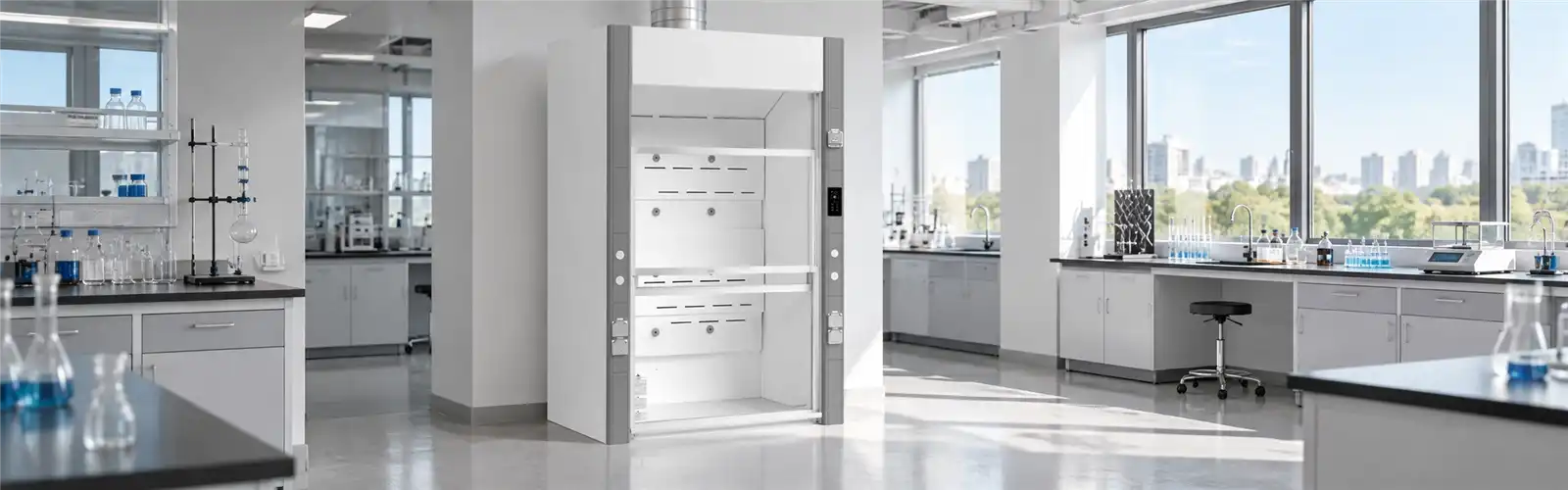
The working part of a hood is just as important as the hood itself. Because the duct is long, bends, and is thick, it creates static pressure that the fan has to get past in order to move enough air. It makes noise and doesn't let enough air flow through the hood if the ducts are too small. It costs more and is harder to balance them if they are too big. What's used for the pipes and fans has to be the same stuff as the chemicals being released. Having a separate exhaust line is the best way to deal with strong chemicals. But they can work together if they can talk to each other. You also need make-up air because face velocity slows down in a room where you can't get more air.
Containment is checked, not just thought to be there. ASHRAE 110 talks about another way to see how well a hood works. EN 14175-3 has a list of tests that are used all over Europe to check the type of something. An American standard called ANSI/ASSP Z9.5 talks about lab ventilation, and OSHA's 29 CFR 1910.1450 Laboratory Standard says that hoods should work right. SEFA 1 tells people how to wear hats. Their tests and approval by CE, ISO, and CQC show that our hoods are safe for SEFA-1. Any service can give you the original test results, and then you should try the new system.
A lot of things need to work together to keep people safe. Our tough glass door is easy to close because it has rubber bumpers on the ends. This type of lift makes it easy to set the sash to the right height since it doesn't get stuck. The outside of the ≥1.0 mm steel shell is full after pickling, phosphating, and a 70 μm thick layer of epoxy powder. On the inside, there is a 5 mm antibacterial board that strong acids, weak bases, and organic solvents can't damage. To keep things safe, it's not enough to just use alarms and airflow monitors; you should also train people, check things, and keep them in good shape.
Light chemical use will be used to test ductless hoods to make sure the filters match the vapors. The fact that they don't need ductwork makes them good for rental areas. However, it costs more to keep the filters clean, and the system might get too full when the chemistry changes. A ducted fume hood benchtop moves the air outside and away from the heat from the hot plates. It can also deal with more chemicals. To bring in cool room air, it needs to use more energy and get rid of waste air. Led is better most of the time if the lab already has air from the house.
Large items like distillation racks and small test sets can fit in full-size walk-in or floor-mounted hoods. It's not as big as a pedestal unit, but it fits on top of a bench better and takes up less floor space. In the smaller room, you can weigh, mix, get ready for titration, and do small amounts of synthesis. You can also clean it better. Is the room too small for the tools or there are a lot of people working at once? You should get a bigger hood. When it comes to work space, the 1800 mm model has the most.
Stainless steel liners can stand up to heat and a lot of cleaning. Polypropylene liners can handle many acids, and you need a strong steel shell that has been powder-coated and a lining that won't rust. The outside is made of steel that has been treated, and the inside is made of 5 mm antibiotic board. We can talk about better linings for stronger poisons if we need to. If the controls are set up correctly, the flow of air will stop when the sash shuts. This holds the air inside without letting more in, which saves power. Also, pick fans that don't make a lot of noise if your lab is close to an office.
Don't start with how much it will cost; start with the steps. First, write down what's in it, how much of it there is, and whether it's hot or cold. Step 2: Figure out how much gas the engine will need and how long it will run. Third, find the biggest machine and see how many people are using it. Step 4: Choose the sash, the shelf, the tools, and the lining. The width options are 1200, 1500, or 1800 mm. Step 5: Make sure that the wind can flow through the duct, fan, and make-up air. Then, use full project quotes to compare suppliers based on warranties, tests, spare parts, energy use, and installation help.
Before you compare prices, get a full line sheet. It should list the machine's depth and width, the sash's move range, the face's speed, the duct's diameter, the fan's capacity, how much power the machine needs, the material used for the ducted fume hood benchtop covering, the lights, the noise level, and any test results. To begin with, they are 1200 × 850 × 2350 mm, 1500 × 850 × 2350 mm, and 1800 × 850 × 2350 mm. Each one has at least 1 mm of laser-cut steel, an epoxy powder covering that is at least 70 μm thick, and at least 5 mm of antibiotic board lining. It will fit if your building has a fixed duct connection with an outer diameter flange. Plans and a movie of the spot will help us do this.
When you get there, make sure to check the service area, the room's air flow, the power outlets, and the bench's weight limit. You can find installation tips, video lessons, and building plans that show you how to line up the sashes, tighten the belts, and check for leaks. You can also order from afar or, for bigger jobs, right here at the job site. Check the airflow, containment, alarms, noise, and vibration in the room after setting it up. Clean it with safe cleaners, check the sash and belt, fans, and vents, and have a professional test it. It's easy to keep up with. This is usually done once a year or after the air flow is changed.
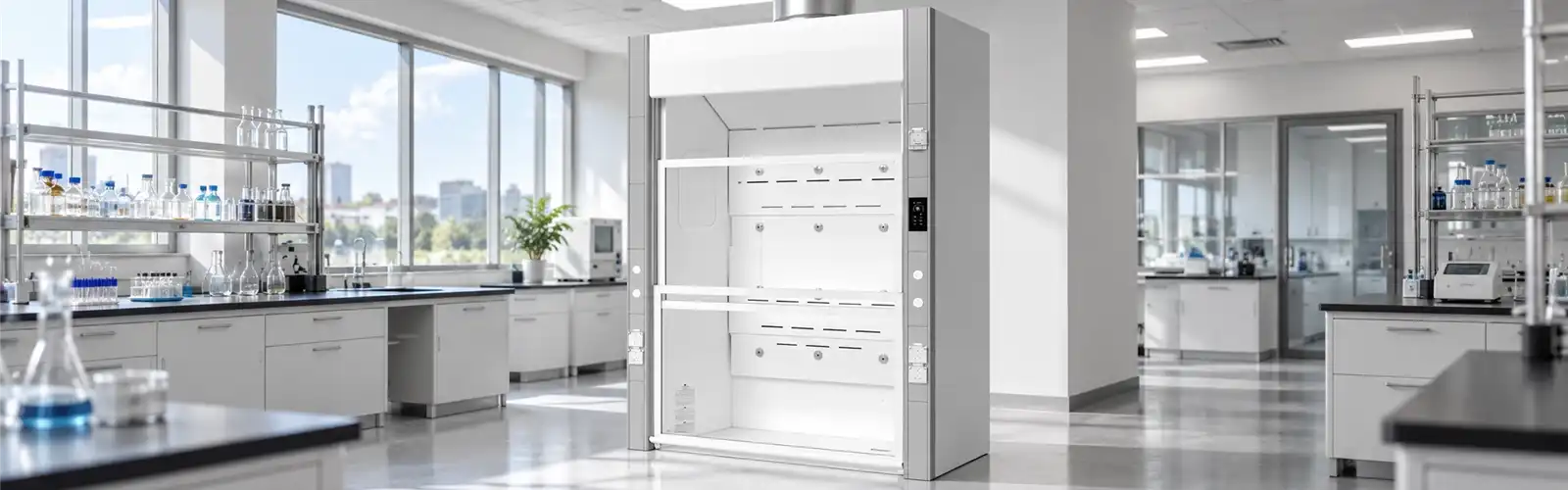
Take a better look at the cabinet too. You should ask a supplier about their production experience, quality control skills, knowledge of ventilation, sales skills, papers, references, and extra parts help. Youken Laboratory Equipment Co., Ltd. is the company that makes lab equipment with the Uken brand. It sells lab chairs, fume hoods, storage boxes, and other things for medicine, drug, school, and R&D labs. The company has 100 engineers. CE, ISO, and SGS can give project owners paperwork, and we promise to send our standard models within 15 days. Size, covering, controls, fan, power, tests, packing, and shipping are some of the things that affect the price. Right away, look at the Incoterms and see who is in charge of installation.
Brand owners and sellers usually want to make things that can be used over and over. Some of the OEM options that can be picked are custom sizes, names that are laser-engraved, colors that match RAL or Pantone codes, plug and voltage options, duct connections, and paperwork. We don't use any wooden parts in our modular design; instead, we use thickened cold-rolled steel. It can be broken down into smaller pieces for easy shipping. In writing, ask for standard drawings, color consistency from batch to batch, packaging instructions, and help with replacement parts. We can also agree to a non-disclosure agreement (NDA) before you share private-label designs.
A small training lab should have a small footprint, good visibility, low noise, and be able to work with current exhaust, so the 1200 mm type tends to work well. The 1500 or 1800 mm width is good for an R&D facility that is growing because outlets, gas valves, or lights can be placed to fit the work flow. Not just the cabinet, but also the hood, duct, fan, and fixings need to have acceptable materials for acidic chemistry to work. Drug QC labs and third-party testing labs usually need a duct plug that fits the building and a set of papers ready for the owner. Send us the drawings early so we can make sure they fit before they are made.
A ducted fume hood benchtop removes chemical vapors from compact R&D and teaching labs by pulling air across the work area and sending it outdoors, which avoids the filter limits of ductless units. Its performance depends on matched sash height, face velocity, exhaust volume, duct resistance, and make-up air, and on verification through tracer-gas testing under standards such as ASHRAE 110 and EN 14175. It suits weighing, dilution, sample preparation, and small-batch work, but not radioactive, explosive, pyrophoric, biological, or perchloric acid processes. Good selection starts with the chemical process, then moves to size, materials, ventilation, documentation, installation, and maintenance. Treating the hood and the building system as one design gives the most dependable containment.
Vent hoods send air outside. A fan without ducts pushes air through filters that need to be changed with the right chemicals and at the right time.
Don't use that. Check to see if the fan, cover, and duct are safe for the chemicals. There are special tools you need to work with biological, toxic, explosive, pyrophoric, or perchloric acid.
Yes. There needs to be a central vent system or exhaust fan that is the right size for the ducted fume hood benchtop and the ducts that go into it.
A lot of programs make you take the test at least once a year and whenever the air system or hood changes. Follow ANSI/ASSP Z9.5 and the rules in your area.
Send a list of the chemicals you need, the process conditions, the size you want, information about the duct flange, how much electricity you need, and where the goods need to go.
You can tell Uken what chemicals you have, how big the room is, how the duct opening looks, and where the chemicals need to go. Once you choose, our engineers will give you drawings and a lead time along with a standard, custom, or OEM configuration. If you want to make a ducted fume hood benchtop, please look at the data sheets and papers we can send you. You can call +8615102909133 on WhatsApp, go to ukenlab.com, or email service@ukenlab.com.
1. National Research Council, Prudent Practices in the Laboratory: Handling and Management of Chemical Hazards, 2011
2. ASHRAE, ANSI/ASHRAE Standard 110: Method of Testing Performance of Laboratory Fume Hoods, 2016
3. American Society of Safety Professionals, ANSI/ASSP Z9.5: Laboratory Ventilation, 2022
4. European Committee for Standardization, EN 14175-3: Fume Cupboards, Type Test Methods, 2019
5. American Chemical Society, Safety in Academic Chemistry Laboratories, 2017
6. Occupational Safety and Health Administration, Occupational Exposure to Hazardous Chemicals in Laboratories (29 CFR 1910.1450), 1990