


Feb 6, 2025
NovaLab Tech Solutions
"Responsive and professional supplier with excellent product quality. Communication was efficient, and the entire purchasing process was smooth and reliable."


Yes, fume cupboards are used in non-specialist labs whenever the work can release harmful vapors, gases, dust, or aerosols. A lab fume cupboard is a ventilated enclosure that pulls contaminated air away from your face and breathing zone. What matters is not the name or size of your lab. What matters is the chemicals you handle and the tasks you perform. A school prep room, a clinic testing area, and a small quality-control bench can all need one. Below, I explain how these units work, when you need one, and how to choose.
What Is a Lab Fume Cupboard?
Let me start with the basics, because the term means different things in different labs.
What does a lab fume cupboard do? The room is shaped like a box and has a window that can be moved to let air in. This kind of window is called a sash. A fan moves air from the room across your work and away from your lungs when the front door opens. Most people in the US say "fume hood." People in the UK and other places call it a "fume cupboard" or a "laboratory fume cupboard." It picks up pollution close to where it comes from because it is a local air venting unit. It's still important to use safe methods, safety gear, training, or a risk assessment, even though making things safer is good. It will work well if the cage, airflow, and controls are easy to use.
The answer is yes if the lab uses chemicals or ways that could make dangerous chemicals go into the air. It's not okay to call it a "general-purpose lab." Triggers are often chemicals that scratch, burn, evaporate quickly, or have a strong smell. It's also illegal to use acids, solvents, heat, mix, or pour liquids, clean small areas with concentrated chemicals, and show dangerous things in the classroom. When do you need to use lab fume cupboards and other locks? For businesses, that's what the OSHA Laboratory Standard says they should have in their Chemical Hygiene Plan. You should still give something its own measure no matter how often you do it. This is because low risk does not always mean low frequency. It is very dangerous to have even a small amount of strong acid or a juice bottle open.
Not only do research universities have lab fume cupboards, but so do other places. You can also find them in other places. They are used for chemistry classes in high school, college, and university, and students also use them for their own experiments. They are used to prepare samples and work with chemicals in some places that do medical tests and care for people. Labs that test food, drinks, and the environment use these tools to break things down and get the stuff they need. Aside from that, they are kept in workshops, professional training centers, support areas for medicines, and quality control labs in the business world. A sample solution for a place that only does it once in a while might still be needed by someone. Someone on yOur Team should check the smells when they open a smelly bottle or mix chemicals that react.
Once you know what the unit is, it helps to see what happens inside it.
A hole in the sash lets air in. The air moves across the work area and out of the back baffle slots. It picks up fumes and moves them away from you as it moves. Under many US rules, the face should move between 80 and 120 feet per minute. Make sure you work inside the sash at least six inches and that it stays at or below the height that was marked. Keep the arms moving quickly, leave doors and windows open, keep air cooling sources close by, and keep big things near the front. Also, don't put things in the box.
Most of them have a room inside, a window that can be moved, and vents that let air flow through the hole evenly. It also has a filter module, an exhaust connection, or a fan and motor assembly. When the air flow slows down, keys and screens let you know, and alarms go off early. No water, gas, vacuum, or drainage ports need to be in the work area. It does have electricity and lights. You should choose the parts based on how often you plan to use the unit, the chemicals that will work with it, and your process. In a classroom lab, students shouldn't use the same tools that they use in a clinic where tests are only given a few times a week.
Lab fume cupboards with ducts take dirty air from inside the house and send it outside through pipes. The air is cleaned and sent back into the room. A ductless cupboard is another name for this kind of cabinet. Sometimes, neither kind is better than the other. The choice of filter depends on the chemical, the amount of vapor it has, the size of the particles, the temperature, how wet it is, and how long it needs to work. Because of this, a unit that has been filtered needs to be checked on and checked to make sure it works. The National Research Council says that split units should only be used for certain chemical jobs. I would never suggest either choice without writing down the risks. This is because a filter that doesn't work with your chemicals can let fumes back into the room.
It's more likely for people who are alone to be exposed if they don't move around much. That is called turbulence, and it can make little tasks like weighing harder. It can also waste energy and make the business more expensive to run. There are things in the room, the doorways, and other nearby equipment that can change how the hood works. Lab fume cupboards are safe as long as you check the flow of air and don't guess what will happen. To be sure that the goals of your project are clear, you should look at guidelines, local laws, tests before the project starts, and a risk assessment. Many people use ANSI/ASHRAE 110 to decide if a hood is good. You should also look into tools and fans that use less power if you are in charge of more than one lab. Because a hood can run all day, the electric bill will go up.
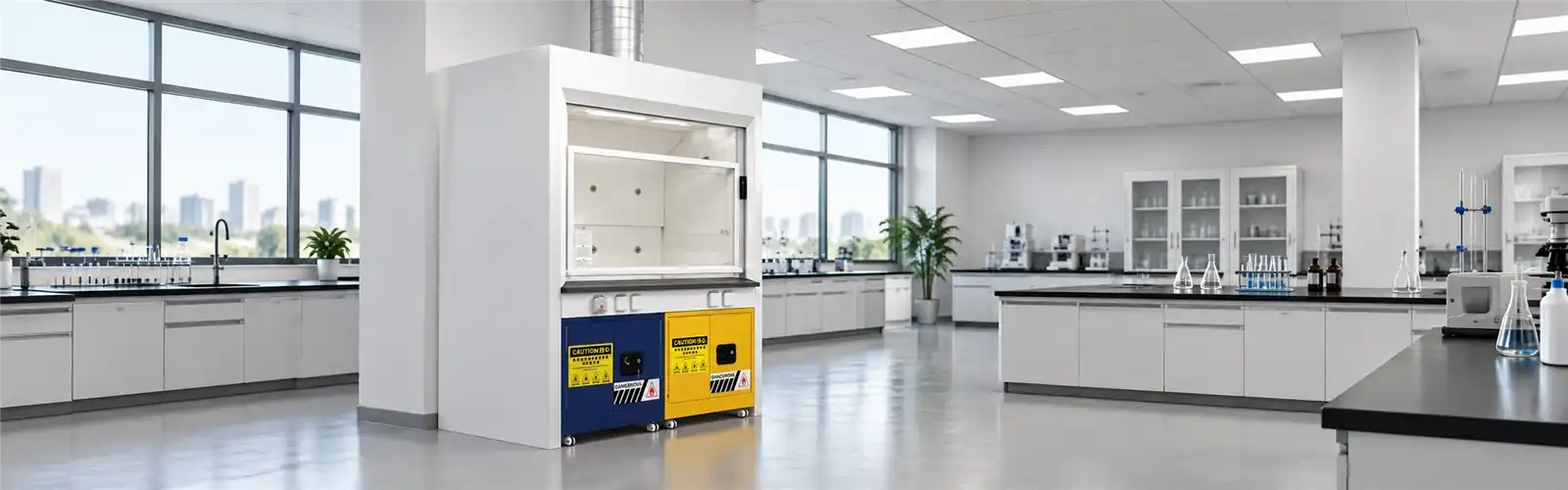
Now we reach the practical question. The answer comes from a documented risk assessment, not from your lab's name or size.
First, read your Safety Data Sheets. Check to see if the substance is flammable, poisonous, reactive, or crumbly. Next, check how often you do it, how long you do it for, how much, how strong, how hot, and how often. Think about how dangerous it is to have dust, aerosols, biological material, and leaks that you can't stop. A lot of common processes need gas to move around in order to work. These include acid digestion, solvent transfer, burning or evaporation, sample preparation, chemical cleaning, mixing or formulation, and solvent transfer. If you're not sure about a risk, you should have a health and safety professional look it over. It would be better to do a quick review now rather than after the room is built.
A hood needs strong sides and steady airflow when it is used or tested every day. Events for teaching bring in a lot of new people every week. Maintenance work and work that needs to be done quickly in case of an emergency happen less often, but the things that are used can be the most dangerous. Low-risk doesn't always mean not used very often. On that day, you should be careful even if you only open a strong acid once a month. Also plan for growth. You'll need to know what kind of cabinet width, service outlets, ventilation, and filtration system will still work if your lab adds or grows tests in a few years.
A ducted unit works well when the exhaust always needs to go outside and there is a way for it to do so. If you can't put in pipes, you could use a filtered unit instead. Make sure the filter has enough space and can handle the chemicals. A system that has been cleaned might not work with new chemicals, compounds that are very dangerous, a lot of them, goods that burn, or chemical loads that change. Before you buy, make sure the seller can write down how the product works, how to fix it, how loud it is, how much power it uses, and how good the customer service is. It's fair to compare deals on that paper, and it gives your safety officer something real to look over.
Take a look at the room's size and height first. When you're done, look at the possible airflow, the exhaust paths, and the release. Find out how much gas, water, electricity, cleaning, or drains you need. Check out the loading area on the floor and see how packages can get there. Take a look at the emergency and fire safety plans, as well as the area where works and checks are done. Putting the machine together and turning it on should only be done by trained pros. When the keys are turned over, the airflow, warnings, sash features, and writing notes should all be checked. NFPA 45 tells labs that work with chemicals how to keep their buildings safe from fire. There may be rules for building codes in your area as well. Make sure you know what you need before you place your order. That way, the unit you get will fit in the space you have.
Not all the time do you need a lab fume cupboard. Source capture extraction suits are needed for people who work with fume-making tools. Things that are afraid of air or are very dangerous are kept safe in glove boxes. Plant machinery that is closed up keeps dirt and other things inside. Because it has HEPA filters, a biological safety cabinet is better than a regular fume hood for biological work. Powders can be cleaned up by dust filters, and changing the chemicals gets rid of the whole danger. Simple tasks can be done in a small box with vents. The best one depends on the type of contamination, the process, the amount of containment needed, and the way the worker will do the work. Check the risks and use the right controls for the job.
Check out their standards and certs before you look at other companies. Next, check to see how well the building can handle chemicals, how loud it is, how much energy it needs, and how well it can handle wind and control. You should ask about custom sizes, service sets, tests in the plant, help with setting up, extra parts, warranties, and service after the sale. Such things are important. It's also important to be able to share and serve in schools and small labs that need to get things done quickly. Don't buy more space if you don't have a lot of cash. Instead, check to see if the cabinet's width is right for what you need to do. Tell them about the process, such as the chemicals you'll be using, the tasks you need to do, the size of the room, and how the waste will be sent. Then, a technical team can help you pick the right type of cabinet, its airflow, and its filters.
Each lab fume cupboard is made by ten skilled engineers at Uken, Luoyang Youken Laboratory Equipment Co., Ltd. For the door and window frames, they use 1.0 mm cold-rolled steel, epoxy powder coating, and tempered safety glass. The standard sizes are L1200 mm x D850 mm x H2350 mm, L1500 mm x D850 mm x H2350 mm, and L1800 mm x D850 mm x H2350 mm. You can work every day on the small desk, which can be set up in different ways. It's simple to put together and take apart since it's made of separate pieces. Also, it doesn't have any wooden parts and ships in small boxes to save money. Cleaning steel plates with acid, phosphate, or electricity can make them less likely to rust. The units we sell have been cleared by ISO, CE, SEFA, SGS, and CQC. They are also packed by professionals to make sure they stay safe while they're being sent.

Lab fume cupboards are used in labs where the work can release dangerous gasses, vapors, dust, or aerosols. This is not written on the lab sign. A written risk assessment is what I would use instead. As air moves across the work area, a lab fume cupboard pulls in particles close to the source. The sash, baffles, airflow, and exhaust or filtration must all be correct for the process to work well. Ductless units are better than filtered units sometimes. With filtered units, make sure you have the right filters and change them when they get dirty. The speed will stay the same as long as you install, set up, and test the airflow often. To do some jobs, you need different controls, like biological safety cabinets or glove boxes. People can compare certifications, materials, size, support, and process details early on to find a unit that works for their lab and their budget.
The answer is "yes." Yes, if the job creates dangerous dust, gasses, or vapors. First, go over your Safety Data Sheets and tasks. If more or bigger amounts aren't enough to stop the danger, a hood can be used.
Sometimes. You can put clear chemicals in a lab fume cupboard with a filter as long as the filter is made for them and is changed often. It might not work well if the ingredients are new, very dangerous, or there are a lot of them. Before you buy, find out what the risks are.
At least once a year and after the vents are fixed or changed, people check the air flow. It's simple to test something with ANSI/ASHRAE 110. For exact times, look at your Chemical Hygiene Plan and the rules in your area.
There are things in the baffles that stop the air from moving through them. Instead, store chemicals in a cabinet that lets air flow through it.
Are you ready to find a lab fume cupboard that works for you and your space? It meets the standards of ISO, CE, SEFA, SGS, and CQC and is made of 1.0 mm cold-rolled steel. Uken makes lab fume cupboards. You can text +8615102909133 or email service@ukenlab.com with the size of your room and a list of the chemicals you need. Our team will help you choose a good size. Visit ukenlab.com for details.
1. Prudent Practices in the Laboratory: Handling and Management of Chemical Hazards, National Academies Press, 2011.
2. Occupational Exposure to Hazardous Chemicals in Laboratories (29 CFR 1910.1450), Occupational Safety and Health Administration, 1990.
3. ANSI/ASSP Z9.5 Laboratory Ventilation, American National Standards Institute and American Society of Safety Professionals, 2022.
4. ANSI/ASHRAE 110 Method of Testing Performance of Laboratory Fume Hoods, ASHRAE, 2016.
5. NFPA 45 Standard on Fire Protection for Laboratories Using Chemicals, National Fire Protection Association, 2019.
6. OSHA Laboratory Safety Guidance, Occupational Safety and Health Administration, 2011.