


Feb 6, 2025
NovaLab Tech Solutions
"Responsive and professional supplier with excellent product quality. Communication was efficient, and the entire purchasing process was smooth and reliable."


The main considerations for a floor mounted fume hood are the process hazard, equipment size, airflow design, construction materials, compliance documents, and supplier support. Match the hood to your chemicals and apparatus, confirm that the building can supply and exhaust the required air, and verify performance with ASHRAE 110 testing. Choose the steel, coating, lining, and sash glass for your exposure, and request full documentation before ordering. In this guide, I walk through each decision in order, so lab managers, engineers, and buyers can write a clear specification and compare suppliers with confidence.
Understand What a Floor-Mounted Fume Hood Does and When You Need OneWhat a Floor-Mounted Fume Hood Is
A floor-mounted fume hood is a tall box on the floor. It stops vapors, gasses, fumes, dust, or aerosols from getting to the person working inside it. Inside the sash, air moves across the work area and through the hole into a vent pipe. The building's dirty air can now leave. Most of the time, the room, sash, baffles, lights, service devices, controls, and alarms work. You don't have to lift carts, drums, or reactors onto a bench to move them because the cabinet goes all the way to the floor. The room pressure, the vent fan, the hood, and the ducts must all work together for the job to be done.
You should use a unit that stands on its own when the job is too big for a table. Some of the heavy things we need to load are gas tanks, ovens, reactors, pumps, and tall glassware units. We need more room up high. You need to pick these things up off the ground. With a hood that sits on a table, you can only use smaller tools and bags that can hold the same amount of weight. Areas that use wet processes, shops that plate metal, and labs that study pesticides are often in this group because they give off a lot of acidic scents. Besides that, it works for little jobs at school and in drug labs. If you don't have to stand or move heavy things, you can get things done faster and safer. Just being taller and bigger helps.
Don't start with the list, but with the steps. The floor-mounted fume hood will have dangerous chemicals, flammable liquids, powders, acids that break things down, and live things. It's a good idea to make a list of all of these things. List the temperature ranges and any steps that will be under pressure. Say how big and heavy the item is and if it needs any services, like a drain, gas, or power connection. The buttons, the cover, and the finish are made with these details. 29 CFR 1910.1450 says that there must be a Chemical Hygiene Plan. The health and safety person at work should look at the hood choice and decide if it fits with the plan. In the field, changes that are too big, don't work with the materials, or are dangerous can't be made without a review that is specific to the process.
You should compare the floor mounted fume hood to the building and your gear. Find out how tall, wide, and deep the outside is. This is the next step: look inside to see how much space there is, where the vent collar is, where the sash hole is, and where the utilities are. They are 47, 59, or 71 inches (1200, 1500, or 1800 mm) wide. They are 850 mm deep, which is 33.5 inches, and 2350 mm tall, which is 92.5 inches. Check the door sizes, the load on the floor, the height of the ceiling, and the routes for delivery. Also, make sure that fixes can be made in the future. It's not safer for a hood to have a bigger hole because it lets more air and energy leave. Pick the smallest size that won't hurt people while they work.
Someone who knows a lot about air flow should look at the plan for air flow. People in business often move their faces at speeds of 80 to 120 feet per minute. The exact number will depend on the type of floor-mounted fume hood and where the sash is placed if there are any obstructions inside the hood. Ducts should be able to handle chemicals, heat, and pressure loss, and they should also be simple to check. Also, make sure the building has enough make-up air. Being alone can be less stable in a room that doesn't have enough air flow. It is also good for energy that the US has Labs21. The EPA and DOE say that labs use four to five times more energy per square foot than most office buildings. First, think about whether it is safe to use both fixed and flexible air flow plans. After that, think about how much they'll cost all together.
To keep project costs in line with what the process needs, look at different kinds of hoods. It's harder to get to an under-the-bench hood from the ground and it takes up more room. It's important to plan for worker safety if you want a walk-in hood to work with very large systems. Chemical Fume Hoods can keep things inside, but canopy hoods can't. They can only catch an open process or rising heat. Place the opening size, the need for airflow, the performance of the containment, the amount of work that needs to be done, the number of hours worked, and the total HVAC effect next to each other and compare them. When people buy HVAC systems, this is what I tell them. This way, you won't have to pay for room that the process never needs.

In a dangerous room, why does a floor-mounted fume hood last longer? Because it was well put together. Every Uken floor-mounted fume hood is made entirely of steel. Laser cutting made sure that the sizes and edges of the plate on the outside were just right. It is at least 1 mm thick. The plates are bent and put together to make a strong cabinet that will be used every day for many years. The epoxy powder is at least 70 μm thick and sticks to steel. It is charged with electricity. When it gets wet, it doesn't come off, and you can clean it with gloves and tools. Things often break quickly because the panels are too thin, the joints aren't strong enough, or the plaques don't stick well.
When you pick it up, it will hit you on the inside first, so watch out. One side of Uken doesn't rust, and the other side kills germs. Because of the lid, acid and soda can't spill. In places that need to be clean, like hospitals and GMPs, a surface that kills germs is helpful. Once you give our experts a full list of all the chemicals you use and what they're used for, they will make the item for you. Make sure that the places where you work are safe from chemicals, strong, don't leak, and are easy to clean up. If your job is hard, ask us about custom-made ways to protect yourself. If the process is very clean or acidic, they might need them.
The floor mounted fume hood sash will protect you in case of a shock or a response that gets hot. Strong glass is used in the Uken's sash, which makes it simple to turn. It's also easy to change with one hand and won't fall over. This type of glass doesn't break into sharp pieces when it breaks. Instead, it breaks into small, flat pieces. Now there is a lower chance that someone will get hurt. With lights, plugs, service features, alerts, and tracking, it should be safe to use and easy to fix. Things that don't catch fire, systems for putting out fires, and parts that won't blow up need to be looked at in the context of what they exist to do. Any plan for a dangerous place needs to be accepted and clearly marked. When I look at a provider, I don't trust something that says it is explosion-proof but doesn't say why.
The most important things about our heavy-duty unit are these:
Make sure the conditions are met before you place the order. For this reason, codes change how things are made, tried, controlled, and planned. ANSI/ASHRAE 110 tells you how well floor-mounted fume hoods work in the US. Read NFPA 45 to learn how to keep chemistry labs safe from fire. Scroll down to SEFA 1 to learn what to do in a lab. The fire, mechanical, and electricity codes in your city or town may have extra rules, such as how to list power. Most buildings in the US use 120 V, 60 Hz power, so this needs to be done right away. ISO, CE, SEFA, SGS, and CQC don't bother Uken. I believe you should ask for the exact reports that match the project's outline.
It is better to get rights, start work, and do repeat checks when there is good documentation. Information about the materials used, test results, general layout drawings, data on airflow and pressure, utility layouts, electrical schematics, instructions, data on spare parts, and the terms of the guaranty should all be sent by a good service provider. A buyer with more than one lab should also ask for a written specification for the floor-mounted fume hood that spells out the exact part types, colors, and locations of the logo on each order. This way, extra parts for the hood can be used in more than one place. We send out production drawings to make sure the engineers can make the product before it is made. This means that yOur Team doesn't have to make changes on the job site. Instead, they can change the numbers or service points on paper.
Get ready ahead of time so the floor mounted fume hood can come. Check the level of the floor, the strength of the structure, the height of the roof, the utilities, the need for make-up air, the need to lift, and how easy it is to move. Check points and sealed parts that connect to each other should be used on pipes. The first time the machine is turned on, techs should check the room pressure, facing speed, output volume, smoke vision, alarms, and room pressure. Also, they should write down the results right away so that later they can be compared. Before something breaks, check the floors, lines, keys, locks, fans, sensors, and sensors. The first thing I check when air flow slows down is for clogged lines, broken filters, broken fans, and changes in room pressure. What the maker says and the rules in your area should tell you how often to try.
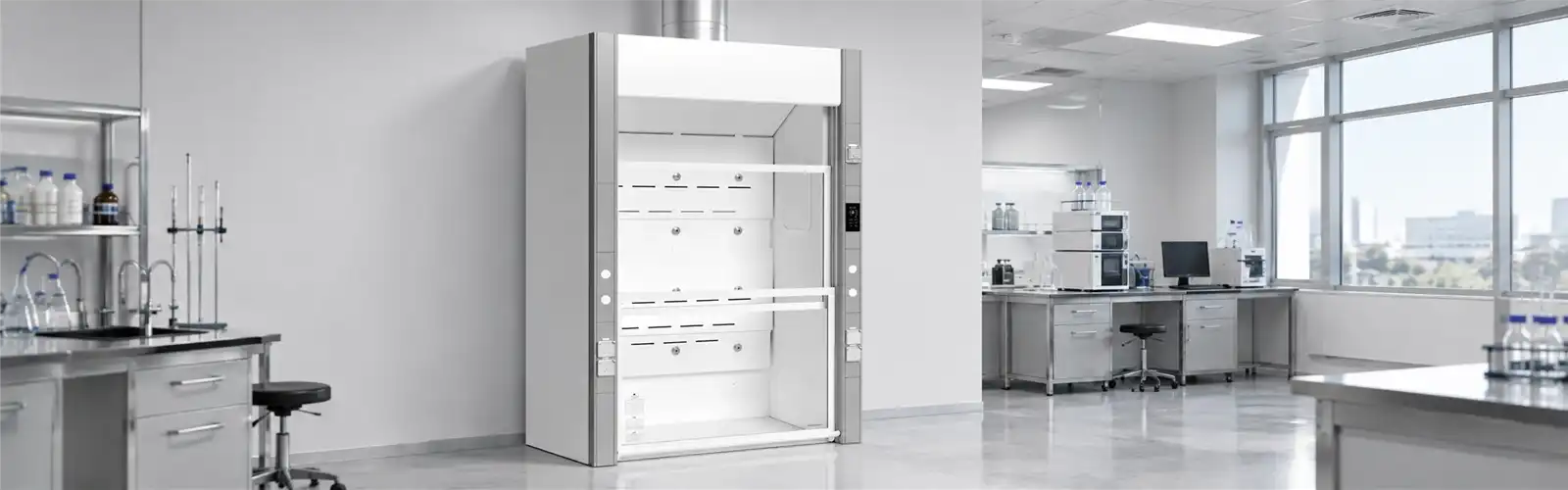
You can turn the process into numbers that the seller can give you if you know what you want. What are the risks? What are the materials used for the floor-mounted fume hood? What is the range of airflow? What is the exhaust connection? What are the utilities? What are the controls? What are the standards? What are the tests? What is the installation scope? What is the warranty? What are the spare parts? To make sure that all the prices are the same, use Incoterms, draw a picture of the spot, and write down due dates in the RFQ. If you buy for more than one lab, you can save money by sticking with the same style. Colors, marks, and parts don't change. Providers don't have to ask as many questions when the specs are clear, so there is less back and forth.
Price the whole job, not just the table. You should talk about the freight, customs, setup, testing, commissioning, maintenance, and how much energy is used. You should also talk about the fan and the ductwork. Then, give each supplier a score based on how well they make things, how flexible they are, how much experience they have with exporting, how well they provide technical documents, how quickly they respond, and how well they help customers after the sale. Uken sells steel lab furniture, floor-mounted fume hoods, storage boxes, and other types of furniture. It takes 100 experts to work on it. As part of our job, we help prepare items for shipping, check for quality, create, and make things. It's easier for your team to make plans when you do these steps with a partner.
Not price or looks, but writing should determine the score. They look at how well the containment works, how well it fits the job, how big it is, how much weight it can hold, how well it handles airflow, how long it lasts, how much energy it uses, how hard it is to set up and how easy it is to keep up, how reliable the provider is, and why it costs so much to own. The most important things should be safety and following the rules. Next should be process fit and long-term serviceability. Everyone who bids gets the same score on the paper. Choose materials that don't work well together, choose them based on their outside dimensions, or believe vague claims that they won't explode. These can all lead to mistakes. Heavy-duty, chemical-resistant, special, or walk-in styles should only be chosen if the job calls for them.
Depending on the process, chemicals, equipment size, and loading method, there are various kinds of floor mounted fume hoods. It is decided which of a floor-standing unit, an eating hood, a dome, or a walk-in is the best. The building should be the right size, and the airflow, exhaust, and make-up air should all be set up and planned at the same time. How long the doors last and how safe they are in dangerous places depend on the epoxy coating, the inner lining, the width of the steel, and the toughened glass sashes. The rules set by ASHRAE 110, NFPA 45, SEFA 1, and OSHA should be used to judge US projects. As proof, you should use plans, test results, and instructions. You should buy something that has full cost comparisons, proven specs, and a list with each item's weight. It will be safer and last longer that way.
The difference between a floor-mounted fume hood and a portable one is that. A floor-mounted fume hood is put on the floor and has more room for big, heavy, or tall things. It is too big and heavy to use every day because it sits on a table. It works best for little jobs.
The rule of thumb is 80 to 120 feet per minute most of the time. The last goal will depend on the hood's shape, the risk, and your opinion of how much risk there is. After the security system is set up, ASHRAE 110 tests should be done to make sure it works.
Yes. We can print your image in RAL or Pantone colors and different sizes if you give it to us. We could also talk about adding track or making the glass thicker. Our engineers use these plans to make sure they can build something before they start.
Strong boxes with lids to keep water out are used when we standardize how we pack for export. That way, each unit stays safe until it gets to its new home, no matter where it is in the country or on the coast.
Are you looking for a floor-mounted fume hood maker who works on projects for export? A plate that is at least 1 mm thick makes up the outside. Tempered glass sashes, a name, and different RAL colors cover it with epoxy that is at least 70 μm thick. Uken only makes hoods out of steel. To send your models and list of chemicals, email service@ukenlab.com or text +8615102909133 to this number. When they get back to you, they'll give you a plan and a price. To find out more, please visit ukenlab.com.
1. ANSI/ASHRAE Standard 110, Method of Testing Performance of Laboratory Fume Hoods, 2016
2. NFPA 45, Standard on Fire Protection for Laboratories Using Chemicals, 2019
3. Prudent Practices in the Laboratory: Handling and Management of Chemical Hazards, National Research Council, 2011
4. OSHA Laboratory Safety Guidance, Occupational Safety and Health Administration, 2011
5. SEFA 1 Laboratory Fume Hoods Recommended Practices, Scientific Equipment and Furniture Association, 2010
6. Laboratories for the 21st Century: An Introduction to Low-Energy Design, U.S. Department of Energy and U.S. Environmental Protection Agency, 2008