


Feb 6, 2025
NovaLab Tech Solutions
"Responsive and professional supplier with excellent product quality. Communication was efficient, and the entire purchasing process was smooth and reliable."


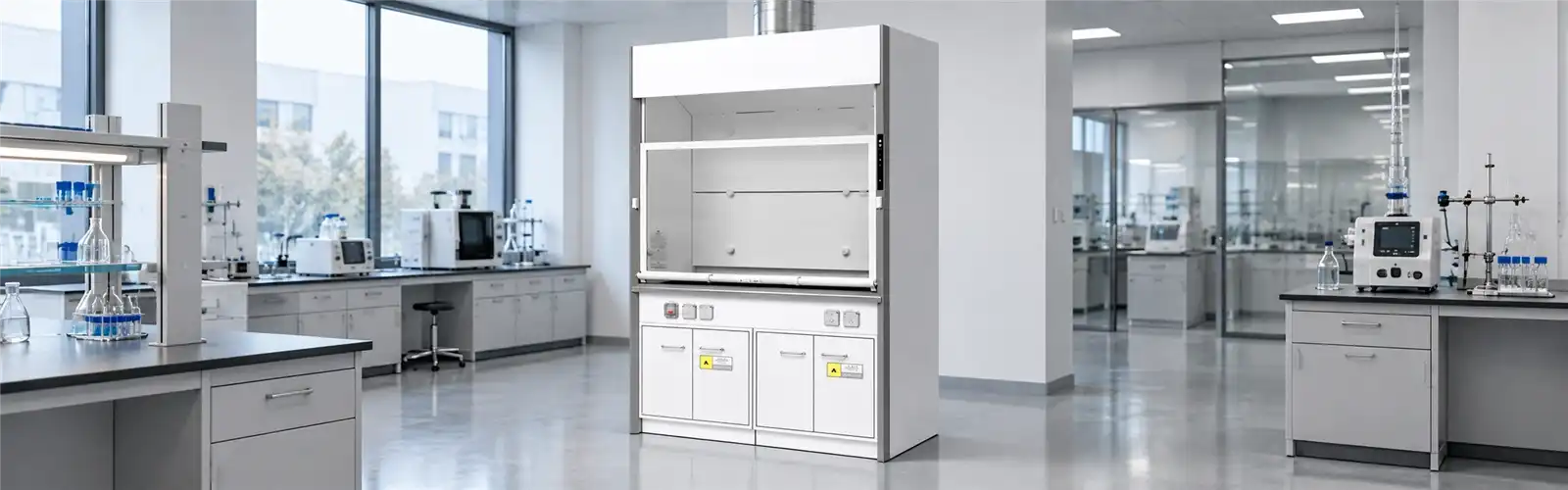
If your lab works with volatile solvents, strong acids, or chemical mixtures that change from project to project, I recommend a ducted fume hood benchtop. It pulls contaminated air through a duct and fan and sends it outside the building, so protection does not depend on a filter that can wear out. A ductless unit can work for a short, known list of chemicals, light workloads, and rooms that cannot take ductwork. In this article, I compare both types, explain how to size and install a hood, and list what to ask a supplier before you order.
Ducted vs. Ductless Fume Hoods: What Is the Fundamental Difference?How a Ducted Benchtop Fume Hood Works
To make a ducted fume hood benchtop, you connect a box with vents to the air outside the building. Through the hole in the window, a fan moves air from the room across the work area. Volatiles, fumes, and dust are blown into the duct by the wind, and the system lets them escape into the air. There's no need to clean the building first because the dirty air already goes. The hood also keeps the pressure in the chamber lower than in the room. This keeps the vapors from getting into the operator's lungs. To find out how well a hood in the United States holds a tracer gas, most people use ANSI/ASHRAE 110. It works best when the hood, duct, and fan are all the same.
Without pipes, a fume hood just moves air through the work area, cleans it, and sends it back to the room. Carbon filters are often used to get rid of organic vapors, and other media are used to get rid of certain chemicals. There is only so much that each filter can hold. Once the room is full, vanes can get into it. It's also hard for some molecules with low molecular weight to hold on to carbon. This is why a split unit needs a written list of chemicals that can be used, a plan for checking the filters, and a set time to change them. There is some information about recirculating hoods in SEFA 9, but not much in "Prudent Practices in the Laboratory."
Look at the risk first, then the price. Make a list of all the chemicals, how much of each there is, and how often you open the tub. Adding heat to a process will make it give off more gas. Then, find out what your building can handle in terms of make-up air, roof slope, and shaft room. Last, go over the rules that you need to follow. These could be the NFPA 45 for labs that use chemicals, the OSHA Laboratory Standard (29 CFR 1910.1450), or your own plan for chemical hygiene. Because of these things, a design stands out a lot more than a picture in a book. Sometimes, a ducted design gives you more room to be safe if the list of chemicals is long or changes a lot.
I tell most lab owners to choose a vented design when they work with volatile solvents, acids that break down things, or changing mixes. When used every day, exhaust from the outside always works because it doesn't depend on a filter's limited capacity. There are a lot of places in this group, such as pharmaceutical quality control rooms, third-party testing labs, and chemical compliance labs. A price has to be paid for infrastructure. You need a way for the pipes to get to their destination, a place for the exhaust to go, make-up air, and professional fitting. Putting it in might cost more, and some buildings need to be changed. Even so, a well-made ducted fume hood benchtop can do most of the work in rooms where people do work all the time.
A split unit is useful when the job is small, safe, and the chemicals that pass through it are short and known. It's helpful when wires can't be run, when the gear can be moved, or when checks are only done sometimes. It's not meant to be used instead of open exhaust. Ask the seller in writing about how the filter works with chemicals, how long it should last, how to replace it, and how to get rid of it before you buy. Find out how monitoring works and who on yOur Team will keep track of every change to a setting. If no one owns that routine, the safety case comes apart very fast.
Don't just look at price when you compare the two. Check out how much it costs, how hard it is to set up, how much energy it uses, how easy it is to move, and how much it will cost you in five years. When units have ducts, the HVAC and exhaust work needs to be coordinated. Also, the air that the units remove needs to be replaced with conditioned make-up air, which makes the energy cost go up. Ductless units are easier to move and set up, but they cost more in the long run because of the filters, tests, and keeping an eye on them. If you work with flammable or corrosive materials a lot or if you can handle permanent exhaust, ducted is the best choice. Think about going split only if you know what the chemicals are, how well they work with the filters, and if your team is ready to change the parts.

Pick a size, but don't buy the model that's the largest on the price list. Instead, think about how you work and how much space your tools take up. Find out how much space is needed for your biggest piece of equipment, the containers you want to put inside it, and the hands and arms of the person who will be operating it. You should think about the working height, width, whether it will fit on a bench, the service space, and future growth. Too little of a hood makes the room too crowded and stops air from moving. If the hood is too big, it might not fit the room, cost more, and let in more cold air. Write down your biggest set-up and then look at the hole in the sash to see how it compares.
It depends on how wide the sash is open, how fast the face moves, where the baffles are placed, how powerful the fan is, how resistant the ducts are, and how the air flows in the room. Most of the time, face speeds are given as 80 to 120 feet per minute, but your school may have a lower goal. It's not always true that a bigger fan helps keep things inside. If there is too much air, it can make noise, make the opening rough, and waste energy. Make sure the seller gives you checked airflow data, and then use ASHRAE 110 methods or a similar method that is used in your area to test. Give them the application brief early on so that they can help you pick a hood and airflow that works for your process.
In general, Uken's ducted fume hood benchtop comes in three outside sizes: 1200 × 850 × 2350 mm, 1500 × 850 × 2350 mm, and 1800 × 850 × 2350 mm. All three have a steel plate that is at least 1 mm thick, a coating that is at least 70 μm thick, and a 5 mm thick antibacterial core inside. Due to its small size, the hood can be placed on a bench that is already there in a small lab. If your layout, pipe locations, gas valves, or lighting needs change, our engineers can talk to you about custom sizes and floor plans. The exact arrangement is shown on production models before they are made.
Insuring the right order is the first thing that needs to be done. Someone who makes the hood, an HVAC expert, a contractor, and the person who uses the lab should all agree on the bench, the plan of the room, the duct route, the point of discharge, the power source, the noise limit, the way to do maintenance, and the make-up air. For the job, the duct needs to be the right length, width, number of bends, and strength against chemicals. When picking an exhaust fan, you should look at more than just the motor's horsepower. A loud fan can bother people nearby, so set a noise goal at the start. Send us your duct's outside diameter and information on how it fits so that the link can work with your current HVAC. We have video guides, installation guides, and drawings for putting things together. We can also arrange for on-site help for bigger projects.
Don't just test the hood after setting up everything else. During commissioning, you should check the face velocity, measure the airflow, make sure the warning works, look at the sash, and write down that the system does what it's meant to do. The tempered glass sash moves easily on Uken's synchronous belt lift, and rubber buffers make the closing easy too. While the sash is being inspected, watch how it moves. You can use our video guides to line up the sashes, make the belts tighter, and check for leaks. This will keep your team from making common mistakes when setting up. Keep the report with the rest of your test work. Once more, test at times set by local laws, company rules, the level of risk, and how often you use the hood.
A fume hood is only safe for people who know how to use it right. Let enough air flow through before you start. Keep the sash at the height that was marked, and keep things away from the front edge. Do not block or pile things up in the vents. Don't use an alarm that hasn't been fixed. Every so often, you should look for damage in the fan, motor, window, airflow monitor, lights, work area, duct connections, and any rust that you can see. Also, the filter checks for ductless units need to be put down. It's easy to clean a finish that is smooth and doesn't have pores, like the epoxy powder finish on Uken hoods.
Any supplier can tell you about the size, materials, noise level, airflow range, electrical needs, details on how to connect the ducts, and test records. In order to make the outside base of a Uken ducted fume hood benchtop, steel is laser-cut, bent, and riveted until it is at least 1 mm thick. It is first picked over and phosphated, and then an epoxy powder covering of at least 70 μm is put on top. Acids and bases can't damage this covering. Normal liquids, weak acids, and alkaline solutions can't hurt the 5 mm inner layer that kills germs. A window made of toughened glass and a belt lift that works at the same time finish off the safety design. You can trust that our hoods are safe because they've been tested and approved by CE, ISO, and CQC.
Also, people from other countries who buy something should look at the export packing, spare parts, warranty terms, and customer service after the sale. The people who make and sell the goods should check to see if they can customize it, keep track of the materials used, test it at the factory, and make sure that each batch has the same color and brand. RAL or Pantone colors can be used to make custom colors at Uken, and standard models have a 15-day lead time. We can talk about OEM needs, such as laser-engraved logos and boxes. More than 100 of our engineers draw things and answer scientific questions. You can also get help from us online to keep a job on track.
Make a plan before you call the service providers. Chemicals, concentrations, maximum amounts, process temperatures, how often they will be used, predicted fumes or particles, equipment size, and the number of people who will be operating the equipment should all be written down. Include details about the building, like the workbench's size and weight, the roof's height, the ducts' path, the exhaust's location, the power source, the HVAC system, and any local building codes that apply. Then include business information like how much it is, where it's going, when it's due, how it will be packed, the warranty, extra parts, and OEM needs. Here are some things you should ask for: a datasheet, an installation drawing, information on airflow, material specs, an electrical diagram, a maintenance handbook, records of inspections, compliance papers, Incoterms, and the length of time you will have to wait. When you give a full brief, you cut down on review time and rework.
What should help you choose between ducted and ductless equipment? Not the price, but the chemicals, the process, and the building. A ducted fume hood benchtop sends vapors outside. As long as the fan, make-up air, and installation are planned, it can handle volatile liquids, corrosive acids, heavy use, and changing mixes. A split hood can handle a small group of known chemicals and light work loads, but only if the filters are suitable and are changed when they need to be. You can get a better idea of how much the equipment costs when you look at how much it will cost in five years, the right size, airflow data, and safe daily habits. The buyer can match the hood to the real risk if they have a clear application brief and all the supplier documents.
This type of hood is good for chemical work that changes a lot because it lets dirty air escape. How safe something is is still affected by how it was made, how it's installed, how it's used, and how well it's taken care of.
It costs money to buy tools, run ducts and a fan, use energy, test, fix, and shut down. In the long run, filters for ductless units cost more. Take five years to look at both of ducted fume hood benchtop.
Watch out for the amount of danger, the laws in your area, the rules at school, and how often you use the hood. A lot of labs check at least once a year and after HVAC changes. ANSI/ASHRAE 110 talks about a well-known test method.
Yes. We can talk about custom sizes, colors, where the outlets and valves go, lighting, internal shelving, and flange details after we look at your drawings.
You need to find a company that makes ducted fume hood benchtops and can quickly answer your technical questions if you are setting up a lab. Standard models of Uken can be ordered in 15 days, and they come in three standard sizes. It also comes with drawings and instructions for installing it. You can email service@ukenlab.com or text +8615102909133 to get your chemical list, room size, and outlet information. Please go to ukenlab.com to learn more.
1. Prudent Practices in the Laboratory: Handling and Management of Chemical Hazards, National Research Council, 2011
2. ANSI/ASHRAE Standard 110, Method of Testing Performance of Laboratory Fume Hoods, 2016
3. ANSI/ASSP Z9.5, Laboratory Ventilation, 2022
4. NFPA 45, Standard on Fire Protection for Laboratories Using Chemicals, 2019
5. Occupational Exposure to Hazardous Chemicals in Laboratories (29 CFR 1910.1450), Occupational Safety and Health Administration, 1990
6. SEFA 1, Laboratory Fume Hoods Recommended Practices, Scientific Equipment and Furniture Association, 2010