


Feb 6, 2025
NovaLab Tech Solutions
"Responsive and professional supplier with excellent product quality. Communication was efficient, and the entire purchasing process was smooth and reliable."


A chemistry laboratory fume hood is required for any chemical that can harm you through inhalation or create a fire or reaction hazard in open air. That includes volatile organic solvents, concentrated acids and bases, oxidizers, toxic gases, carcinogens, reproductive toxins, strong-smelling compounds, and fine powders or aerosols. Heating, evaporating, stirring, or digesting a chemical raises the risk even more. The Safety Data Sheet (SDS), the quantity in use, and your process conditions decide each case. I wrote this guide to help QC and procurement teams match hazards to the right equipment.
When Is a Chemistry Laboratory Fume Hood Required?Start With the SDS and a Written Risk Assessment
The SDS is the first thing that is looked at to figure out what to do. Risks are talked about in the first part. The second part talks about how to handle them. The third part talks about exposure limits and controls. There is an OSHA rule (29 CFR 1910.1450) that labs must have a Chemical Hygiene Plan. People should know when they need to use chemistry laboratory Fume Hoods because of this plan. I think about five things: how dangerous it is, how easily it can change, how much there is, how hot it is, and the conditions for the reaction. If there is a small amount of something very dangerous or cancer-causing, you might need a chemistry laboratory fume hood. But if there is a lot of something mild and not volatile, you might not. The last layer is made up of local laws and your building's exposure guidelines. This needs to be written down because auditors will need it for GMP, health and safety at work, and environmental checks.
Chemistry laboratory fume hoods let air into the area where you are working through the sash hole when you breathe in. This moves gases out of the area. The air flow in a room doesn't get rid of contaminants; it just moves them around. Some people call this kind of exhaust arm a snorkel. It can pick up small point sources in a small area. A glove box hides everything. A biosafety cabinet cleans the air to keep people, samples, or both safe. What's important is how well the equipment works, not what it says on the pack. This is because every measure is made for a different risk.
Chemistry laboratory fume hoods aren't always the right choice. For things that can catch fire, are sensitive to air or wetness, or need a neutral atmosphere (which a chemistry laboratory fume hood can't provide), a glove box or transfer cage with a lid is often what they need. Most of the time, biosafety cabinets move air around because they are supposed to keep biological materials inside. So, they can't safely hold chemicals that are likely to leak. This is what the CDC's BMBL says. If the work is low-risk, closed-system, or very small, you might not need a local exhaust arm or general air. Just make sure the catch works well. It's not always best to move air through a chemistry laboratory fume hood because it can mix up light powders. Instead, use weighing stations or powder enclosures. Write down your choice instead of going with your gut.
A chemistry laboratory fume hood is usually what you need to wear when working with dangerous chemical solvents. Chloroform, acetonitrile, methanol, toluene, and hexane all quickly give off fumes when they are at room temperature. Some of them are harmful and can even cause cancer. Anyone who knows anything about cancer knows that benzene and formaldehyde can do it. Some drugs and metal chemicals are also in this group because they can hurt reproduction. You are more likely to get sick if you breathe in dangerous gases like ammonia, chlorine, and hydrogen sulfide. Sometimes thiols and other smelly things are put in a chemistry laboratory fume hood so the smell doesn't spread through the lab and get the team's attention. These solvents are often used to separate samples and make the mobile phase in labs that check the quality of drugs.
If you heat or water down concentrated hydrochloric, nitric, or sulfuric acids, they give off fumes that are very bad for you. The VOCs that make you itchy are strong bases, such as ammonium hydroxide. Ozone and other strong oxidizers can break down organic matter very quickly. We need to help two people more. If you touch hydrofluoric acid, it will burn you very badly and give off a gas that is very dangerous. Be careful around it, and think about how you will give first aid. More than room temperature can turn perchloric acid into perchlorate salts that can blow up pipes. In order to clean and exhaust, it needs a separate chemistry laboratory fume hood. Reactions with mixed acids and reactions that give off heat can also happen if the right materials are used to line the chemistry laboratory fume hood.
Because of how the process works, a drug that is safe to touch can become dangerous in the air. When you heat, drain, mix, sonicate, break something down, or distill it, there is more mist or fog in the air. They are more dangerous to breathe in because they contain fine powders, mists, and nanoparticles. Small amounts of powder can be blown around by wind in a normal chemistry laboratory fume hood, though. And so, a ventilation balance cage, a powder enclosure, or a glove box are often what strong powders need instead. As long as you follow the rules and keep the work inside the sash, a chemistry laboratory fume hood can still help with many steps of QC work that make dust. Before you do anything, you should ask yourself: what can I add to the air? How much energy am I adding?

The window hole lets air into the room. The air moves across the work area and out of the room through the exit. A "foil" sill lets air flow under the edge of the sash. The front is smoother now. Face velocity tells you how fast the air is moving where the sash opens. Aim for winds between 80 and 120 feet per minute, but faster wind doesn't always mean safer. Going too fast can use more power, make waves, and make more noise. Voids can also be pushed out by cross-drafts from doors, vents, and people moving around. How the room is set up and how clean the air is are just as important as the chemistry laboratory fume hood itself.
With the help of an exhaust fan and ducts, it takes the dust and dirt outside. Because it can handle so many chemicals, it's the best choice for labs that work with drugs and chemicals. When a chemistry laboratory fume hood doesn't have ducts, the air that comes out of it goes through filters and then back into the room. That saves water and energy, but filters can only handle a certain amount of poisons. That's why you need to know how chemicals interact with each other and have a plan for checking on your filters. Since they don't have vents, units work best for jobs that are clear and limited. They don't work well when the chemistry isn't known or is mixed. If you use a lot of acids or solvents in your lab, I suggest a ducted design with an exit system that works with the wind from the chemistry laboratory fume hood.
If you want to be safe in the lab, keep your tools and drugs at least 6 inches inside the window line. Do a few more things every day. The sash should stay at or below the worked-on height. The exit holes shouldn't be blocked, and you shouldn't store too much at once because it stops air from moving. There won't be a small spill if you put the tools in extra protection. When the alarm goes off, don't do anything. Also, don't leave things to heat up or distill alone without a plan. When you work with drugs, you need to wear lab coats, safety glasses, and gloves. Also, know where the eyewash and safety shower are. You should tell someone right away if you were exposed, even if the symptoms don't seem too bad.
Because they sit on a table or base cabinet, bench-top chemistry laboratory fume hoods are good for the most important work. Chemistry laboratory fume hoods that are on the floor or that you can walk into can fit tall things like big reactors or distillation rigs. The liners are made to be strong for models that can handle acidic fumes. When making models that will be used with perchloric acid, the build has to be simple to clean. Polypropylene, epoxy glue, and stainless steel are some of the things that are used to make the inside. Chemicals of different types can't hurt any of them. Plans without ducts or a lot of airflow work better for some tasks. The main things that people worry about in organic chemistry are how well it mixes with liquids and how safe it is for fires. When used in acid processing, how well they don't rust and how well they release are the most important things.
Luoyang Youken Laboratory Equipment Co., Ltd. (Uken) fabricates each chemistry laboratory fume hood from a 1.0 mm cold-rolled steel sheet to order. Chemicals that are alkaline, acidic, and organic are used in surface treatments to make them last longer. The outside widths are 1200 mm, 1500 mm, and 1800 mm. Inside, the lengths are 955 mm, 1255 mm, and 1555 mm. It's 2350 mm tall, 850 mm deep, and 850 mm high on top. The front is 1135 mm high and the back is 925 mm high. It's 645 mm deep on the inside. Three-stage filters make it easy for air to flow through, and sliding doors with comfortable handles make it easy to change the sash. Select a chemistry laboratory fume hood that is made of the right material before you use it to work with hydrofluoric or perchloric acid.
Because QC teams work long hours, little things can get in the way of their daily work. Our touch screen is easy to use and lets you see the lighting, air flow, and system alarms. When parameters go outside of the safe range, you will see and hear an alert. Building management systems can talk to the control system, which lets you keep track of everything from one place. Lights that are already there make it easy to see what you need to do, and plugs with safety caps keep the work area safe. There is no damage to the frame, the breeze is good, the sash works, the electricity is safe, and the warning works before we ship them. When we make things, we follow the rules set by ISO, CE, SEFA, and SGS.
Make a list of all the chemicals you need. The list should have the names, amounts, vapor pressure, reactivity, working temperature, and how often you need to do each step. Then, match the chemistry laboratory fume hood's size, sash type, lining and worktop materials, vent volume, power, noise, and fire safety to the list. When you compare them, you can see standard, walk-in, ducted, and ductless heaters. Besides the purchase price, you should also think about how much it costs to set up, test, maintain, buy replacement parts, and get help from the supplier. People who buy things for pharmaceutical quality control often add things like shipping time, certification files, and stable airflow to the list. Because these things change how quickly tests can be done and how ready the product is for audits.
The air moving around a chemistry laboratory fume hood is what makes it work. Before you start the installation, you should make a plan for how the room will be set up, how the air will flow in and out, and how the pipes, fans, and electrical services will work. In ANSI/ASHRAE 110, a test method, you can measure how the face moves, see smoke, and check for tracer gas control. It's something that many of them do at least once a year and again after making changes. ANSI/ASSP Z9.5 talks about how rooms should be wired for air flow. Every once in a while, check the tables, sensors, fans, lines, filters, alarms, shields, covers, and lids. If the old liners are broken or airflow can't meet control goals, it might be safer to get new ones.
You can look at prices from different companies as long as you give each one enough information. Tell them what chemicals you need, their SDS papers, lab drawings, the sizes you need, the types of ducts you'd like, your control goals, the utilities you need, what the destination needs, and when you need it delivered. As for airflow, material compatibility, test records, warranty terms, and the ability to get replacement parts, you should ask for them. You shouldn't buy a cheap or used chemistry laboratory fume hood that doesn't have test records, lines that are broken, an unclear filter history, or bad customer service after the sale. If the job involves more than one country, find out who is in charge of setting up and starting up the service. The seller will be able to give you the best setup the first time if you are clear about what you want. Also, this will keep the purchasing cycle on schedule.
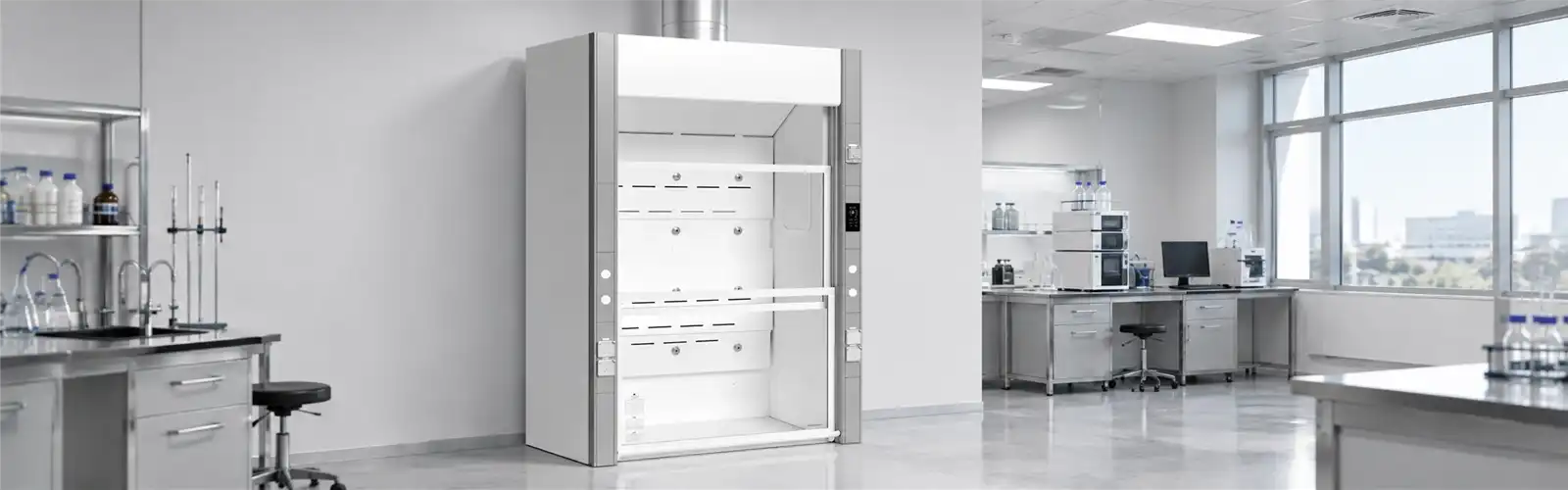
When a chemical's flammability, concentration, or processing conditions pose a risk to workers by allowing them to breathe it in or causing a fire or reaction, a chemistry laboratory fume hood is required. That level can be reached by flammable chemicals, deadly gases, highly concentrated acids and bases, oxidizers, and some powders and fumes. You need to use certain things or methods to clean up after using hydrofluoric acid or perchloric acid. You should make every choice, like which glove box, powder enclosure, or biosafety cabinet is best, after reading the SDS and writing down the risks. What makes a chemistry laboratory fume hood work well? The right materials, safety rules, the flow of air, and regular tests according to standards like ANSI/ASHRAE 110 and ANSI/ASSP Z9.5 are some of the things that affect how well it works. The lab is safer and ready for studies when the chemistry laboratory fume hood is right for the chemicals, process, and building.
There are many things that affect the process, including the SDS, the amount, the range, and the process factors. Only a small amount of a very dangerous substance might need a chemistry laboratory fume hood. A mild liquid that won't catch fire, on the other hand, doesn't.
Filters that don't use ducts can't handle all smoke. First, make sure that the filter can handle the things that you wrote down.
A lot of them test at least once a year and again after the fans, HVAC system, or ventilation has been changed. Do what your Chemical Hygiene Plan says and follow ANSI/ASSP Z9.5.
There is no way to keep biological threats out of biosafety cabinets. In fact, many of them move air, which is bad for chemicals that are easily caught on fire.
A chemistry laboratory fume hood is produced by Uken. The 100 trained engineers that work for them make sure that their products meet ISO, CE, SEFA, and SGS standards. Send us a list of the chemicals you need, along with models, SDS sheets, and the size you need. We'll give you a price and help you find a good chemistry laboratory fume hood. You can email us at service@ukenlab.com, call us at +8615102909133 on WhatsApp, or go to ukenlab.com to start your job.
1. Prudent Practices in the Laboratory: Handling and Management of Chemical Hazards, National Research Council, 2011
2. Laboratory Safety Guidance (OSHA 3404-11R), Occupational Safety and Health Administration, 2011
3. ANSI/ASSP Z9.5 Laboratory Ventilation, American Society of Safety Professionals, 2022
4. ANSI/ASHRAE Standard 110, Method of Testing Performance of Laboratory Fume Hoods, ASHRAE, 2016
5. Biosafety in Microbiological and Biomedical Laboratories, 6th Edition, Centers for Disease Control and Prevention and National Institutes of Health, 2020
6. Identifying and Evaluating Hazards in Research Laboratories, American Chemical Society, 2015