



Science Tabletops – Understanding the Options for Your School Science Lab
Picking science tables for school labs requires careful thought about the parts used, how safe they are, and how well they work. They do their studies at a chemistry lab working table, so it needs to have places that can handle chemicals and other science activities. Purchasing managers, building managers, and lab planners can make smart decisions that balance cost, sturdiness, and legal requirements if they know about the different tabletop options. This guide tells schools how to make safe, useful learning places with the right kinds of things and how to choose them and keep them in good shape.
What Is a Chemistry Lab Working Table? Key Features and Uses
Chemistry Lab Working Tables are special desks made for school kids that can handle the rough needs of research. Unlike normal furniture, these surfaces need to be able to stand up to chemical damage, hold large pieces of equipment, and stay clean to the standards needed for scientific accuracy.
Core Design Principles
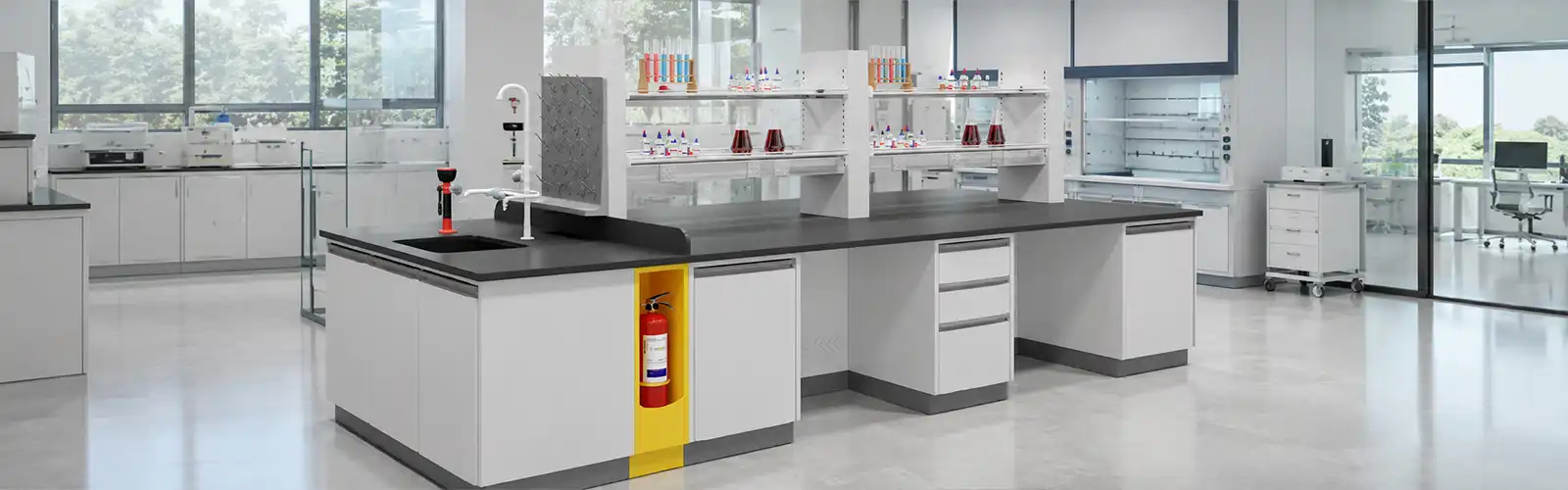
These days, chemistry lab working tables are made to be safe. Epoxy resin electrostatic sprays are used to finish 1.00mm cold-rolled steel plates, which makes the building very immune to acids and alkalis. These building methods meet three important needs: they protect the surface from chemical spills, they keep it stable under the weight of analysis tools, and they make it easy to clean up after each experiment. It's easy to set up and move around because the frame is flexible, so it can be changed to meet the needs of the school as they change without having to do big repairs.
Applications Across Educational Settings
In school science labs, these chemistry lab working tables are used for a lot of different chemistry studies, from easy pH tests to more complex examples of organic synthesis. The surfaces are chemically neutral, so they can be used for bunker burners, cameras, titration tools, and storing samples. Features that are resistant to fire and water meet safety standards for K–12 and college settings. This keeps students safe while they do hands-on tasks for learning.
Safety and Compliance Standards
The government has strict rules about the items that can be used in educational labs. Certified Chemistry Lab Working Tables have marks like CE, ISO9001, ISO14001, and ISO45001 that show they meet quality standards around the world. It is impossible for infection to happen between tests, as the design is clean and germ-free. This helps experts get correct data and also follows the rules for cleanliness set by the school.
Types of Chemistry Lab Working Tables and Materials: Which One Fits Your Need?
The Chemistry Lab Working Table works well, lasts a long time, and costs a lot of money depending on the material it is made of. There are a lot of educational school options, and each one has its own benefits that can be adjusted to different lab activities and budgets.
Epoxy Resin Surfaces: The Chemical-Resistant Standard
In schools, epoxy resin tabletops are most often used because they can handle poisons and heat better. Strong acids like sulfuric, nitric, and hydrochloric can't hurt the top of these solid core chemical and physical boards. Because it is made of a single piece, no liquid can get inside. This means that germs can't grow in the holes on the outside. It is possible for H-frame systems to hold up to 500 kg of weight per square meter. Heavy spectrometers and centrifuges, which are common in advanced chemistry classes, can now be used. The finish is smooth and uniform, which makes it easier to clean. This means that students can quickly set up their labs between tests.
Ceramic Tabletop Alternatives
Heat doesn't hurt ceramic surfaces at all, which makes them great for labs that do a lot of work at high temperatures. Put hot glasses on top of this material and don't worry that they will break. It's very good at stopping heat shock. Ceramic is very resistant to chemicals, but it needs to be handled carefully so that it doesn't get broken by bumps. Epoxy might be better for schools with younger students because it can take being hit, but ceramic is better for advanced study rooms because it is less likely to break if it is handled correctly.
Stainless Steel Options
When it comes to fire safety, stainless steel tabletops are the cleanest and safest choice. Since the surface isn't porous, bacteria can't grow on it. This means it meets the high standards for cleanliness set by microbiology and pharmacy education programs. But some strong acids can make stainless steel turn a different color over time. In other words, it is better for studying living things than for doing a lot of hard chemistry work. It could be hard on the eyes to do long tests because the material is shiny and makes glare from lab lights.
Modular Versus Fixed Configurations
Modular forms allow labs to be open to change. Because knock-down buildings come in small packages, they cost less to ship. They are also easier to set up because they only need a few easy steps. Any school that wants to grow can use modular systems that let them add more chairs without changing the way they are put together. On the other hand, fully built stationary chemistry lab working tables can be used right away, but they are more difficult to move and cost more to set up.
You should think about your income, the age groups of your kids, and how chemically intensive your program is before making a choice. Chemicals don't hurt epoxy resin, so schools that teach organic chemistry and scientific methods choose it. Biological sciences schools, on the other hand, might choose stainless steel because it's easier to clean. When a program is growing and needs more room, modular systems work well. When a site is already established and has stable space needs, set solutions work well.
How to Choose the Best Chemistry Lab Working Table for Your School: A Decision Support Guide
There are a lot of things that affect long-term success and educational outcomes that you need to think about when making a smart choice. When buying professionals make this choice, they should plan ahead and think about what they want now and in the future.
Assessing Chemical Resistance Requirements
Chemical touch is needed for different jobs in different amounts. Materials that aren't as strong can be used in general science classes where basic tests are done with weak solutions. But in advanced credit chemistry studies, surfaces that can handle concentrated chemicals are needed. You can use epoxy powder paint in a tough classroom because it stands up well to high-frequency corrosion tests. Look at the list of chemicals in your course. More SEFA 8-M tests with 49 chemical solutions should be done on more chemistry labs' working tables if organic solvents, strong oxidizers, or acidic substances show up a lot.
Durability and Load-Bearing Capacity
Science tools are very different in how much they weigh from one area to the next. Each physics lab needs a different load limit because chemistry labs use lighter glasses and oscilloscopes need a different load limit. A building made of steel is strong and can hold a lot of weight. They hold up analytical scales that need bases that don't move so that they can measure correctly. Even when it's being used all the time, the structure as a whole doesn't change shape. This is important for keeping surfaces level for precision tools. Think about the tools you already have and the ones you'd like to get as the program grows.
Storage Integration and Workflow Efficiency
The built-in storage makes the lab work much better. It is easy to get to the chemicals, and the best use of space is made possible by configurations with single cabinets (470 × 520 × 830 mm), double cabinets (900 × 520 × 830 mm), and water tank units (1440 × 720 × 830 mm). Three-drawer cabinets on student desks hold things that are used a lot, which makes the main storage areas less crowded. Things go more quickly now that they are organized, so students can focus on the steps of the project instead of where to find the materials.
Budget Analysis: Upfront Costs Versus Lifetime Value
At first, different prices can make people choose the wrong thing to buy. Cheap Chemistry Lab Working Tables made of wood or plastic may look nice, but they cost more because they need more care and don't last as long. Epoxy-coated steel tables are very pricey, but they don't need much upkeep for many years. Figure out how often the table needs to be changed. In the long run, a cheap option that needs to be replaced every five years will cost more than a good option that lasts twenty years. You should include the costs of fixes, refinishing, and any safety issues that might come up because of material fails in your budget projections.
Installation Logistics and Vendor Reliability
Delivery times can change academic plans. Suppliers with shipping times of 20 to 40 working days let you install in the summer so that you can keep teaching. Ask the seller if they have ever worked on a project for schools. Companies that work with school labs know the school routine and can plan supplies to fit it. OEM and ODM services can be changed to fit unique needs, like rooms with odd shapes or equipment that needs to be added. Ask for examples from companies that are like yours to see how well the seller can talk to you and fix problems during the process.
Maintaining and Ensuring Safety of Your Chemistry Lab Working Table
Taking good care of the chemistry lab Working tables keep them safe and make them last longer. Making rules is the best way to make sure that areas stay safe even after years of heavy use.
Daily Cleaning Protocols
To keep surfaces from breaking down, chemical spills need to be cleaned up right away. To keep things from drying out, students should clean the work area with water and mild soap after each experiment. It's easy to clean quickly because the surface is smooth and doesn't have any cracks between the lines. When you scrub chemistry lab working tables, don't use rough scrubbers because they can scratch the finish and leave rough spots where dirt can stick. Regular deep cleaning with pH-neutral cleaners keeps the area clean, which is necessary for getting accurate results from tests.
Identifying and Mitigating Laboratory Hazards
Chemicals pooling along the sides of tables, cuts from sharp edges during busy times, and back pain from the chemistry lab Working tables that are too small are all common risks. Putting up splash guards in high-risk areas where dangerous chemicals are handled will help keep spills in places that are easy to clean up. It's important to have rounded corners in student rooms so that people don't get hurt when they bump into things. Check to see if the table heights are good for your body. Leveling feet that can be changed can be used on floors that aren't level to make sure that kids of all heights are comfy.
Upgrading Safety Features Over Time
The programs are made safer so that they follow the new rules as the rules change. Fume Hoods and chemistry labs Working tables can be put together to make places just for working with explosive substances. This is helpful for keeping your lungs safe during organic chemistry projects. Glass doesn't break on wet floors because of anti-slip mats. This keeps people from touching dangerous things while they clean up. Putting eye wash stations next to tables makes it easy to clean up right away, which is what OSHA wants in chemical labs. These steps reduce risk and make classrooms safe places where students can confidently use scientific methods.
Leading Chemistry Lab Working Table Brands and Where to Buy Them
What kind of supplier you choose affects the quality of the chemistry lab working table, how it can be changed, and how much help it gets over time. Partners who buy things for schools need to know what the schools need and what the rules are.
Evaluating Manufacturer Credentials
Providers with a good reputation get licenses that show they follow the rules. ISO9001 checks the quality control systems that make sure the product is always made the same way. The CE mark shows that the chemistry lab working table meets European safety standards. Being certified by ISO14001 means that a business cares about the environment. This is becoming more and more important as schools start to use green programs. ISO45001 has rules about health and safety at work. This shows that companies care about their workers' well-being while they're making things. You can trust these references to show that the sellers care about quality in more ways than just meeting standards for the product.
Customization Capabilities for Educational Needs
Large sizes don't always work for all lab plans. Brands that offer unique measuring services can help rooms that aren't round or square make the most of the space they have. Because schools can choose their own colors, they can match them to their current decor or use color-coding to set apart subjects like chemistry, biology, and physics. The way things are set up visually helps students find their way around science buildings that have more than one field. Customized OEM and ODM services include features that are important to schools, like built-in power strips, water hookups that are made to fit, or safety messages that are customized.
B2B Procurement Considerations
For big orders that need to be set up in more than one room, you need to be able to negotiate. The cost per unit goes down when you buy in bulk. This frees up money that can be used to add more safety gear or technology. It's very important to have good service after the sale. When manufacturers get help from experts during the planning stage, they don't make mistakes that cost a lot of money. When something goes wrong, the guarantee should cover both the parts that were used and how they were put together. This will keep things from breaking down too soon after being bought. Talk to the seller for a short time to see how quick they are and to see if their customer service lines work well across time zones.
Navigating Online Versus Local Vendors
Buyers can get in touch with more sellers through digital platforms, but it's harder to keep an eye on delivery. Online makers can set fair prices since they don't have to pay dealers extra. This is especially true for makers who work from global production hubs. But you can't really tell how good the chemistry lab working table is without going to the store. Ask for examples of the frame structure and covering materials before you place a large order. Because they are near, local sellers may charge more, but you can try things out in person and make plans more easily. If you have to choose between two ways to get things, you should weigh the cost savings against the risks of getting them.
Conclusion
There are a few things you should think about when picking chemistry lab working tables for school labs: how safe they are, how long they will last, and how much money you have. A lot of different kinds of tests, from simple titrations to complicated chemical synthesis, work really well with epoxy resin surfaces made of steel. Platforms that are made up of separate modules let programs grow, and services let people with specific room needs get what they need. These purchases will continue to work well for decades if they are well taken care of and safety features are added. When students work with skilled makers who offer full support, they go from buying something once to forming a long-term relationship that helps them do better.
FAQ
What materials offer the best chemical resistance for school labs?
It is very hard for acids, bases, and chemical solutions that are used a lot in school chemistry to damage epoxy resin tabletops. The strong physical and chemical structure of the board can stand up to long-term use without breaking down. This makes it ideal for high-frequency tests.
How do modular tables compare to fixed installations?
As programs change, the layout of the lab can be changed because the modules are easy to put together and take apart. Putting things in small boxes saves them money on shipping costs. Fixed chemistry lab working tables are good for quick rollout, but they make it harder to change things in the future. Pick methods that are easy to move if your school is growing and you think you might need to.
What safety certifications should educational lab furniture meet?
Find CE marks and ISO approvals (9001, 14001, 45001) on the object. These show that it meets quality, safety, and environmental standards. The Chemistry Lab Working Tables must meet these requirements to be safe at work, resistant to chemicals, and long-lasting. All of these qualities are important in school settings.
Can table dimensions be customized for irregular room layouts?
If a manufacturer offers unique measurement services, they can change the size of chemistry lab working tables to fit the needs of a lab. By making it your own size, you can save room and use the water and power outlets that are already in older buildings.
Partner with Uken for Reliable Laboratory Furniture Solutions
Schools all over the United States buy Chemistry Lab Working Tables from Luoyang Youken Laboratory Equipment Co., Ltd. Our 100 skilled experts and 30,000-square-meter production center make sure that the lab solutions we offer are just what you need. We use cold-rolled steel plates that are 1.00mm thick to make tables. We finish them with epoxy glue and cut them into bendable pieces that are easier to put together and cheaper to ship. All of the units have been approved by CE, ISO9001, ISO14001, and ISO45001, which means they are safe enough for schools. Shipping takes 20–40 business days, which works with school schedules so classes don't get thrown off. You can email Our Team at ceo@ukenlab.com to talk about what lab items you need and to get a plan made just for your school.
References
1. National Science Teaching Association. (2019). Safety Standards for Secondary School Science Laboratories. NSTA Press.
2. American Chemical Society. (2020). Guidelines for Chemical Laboratory Safety in Educational Institutions. ACS Publications.
3. Laboratory Furniture Association. (2021). Material Selection Guide for Educational Science Workstations. LFA Technical Standards.
4. International Organization for Standardization. (2018). ISO 9001:2015 Quality Management Systems – Requirements for Laboratory Furniture Manufacturing. ISO Standards.
5. Occupational Safety and Health Administration. (2022). Laboratory Safety Guidance for Academic Institutions. U.S. Department of Labor.
6. Scientific Equipment and Furniture Association. (2020). SEFA 8-M Recommended Practices: Laboratory Furniture and Casework. SEFA Standards Committee.

CUSTOMER REVIEWS
What Our Customers Say