



Quality School Lab Tables from Trusted Manufacturers You Can Rely On
Procurement managers and lab planners need more than just basic desks when they're looking for reliable school furniture. Lab tables for schools are specialized workstations that are made to handle the tough requirements of modern STEM education while keeping students and teachers safe from chemical exposure, heat dangers, and structure failures. These are not common things; they are investments in safety-critical infrastructure that will decide whether your school can safely do experiments for decades or have to pay for expensive replacements within years. If you buy good school lab tables from companies that have a history of material science, safety certifications, and project completion, you can avoid the problems that come with cheap products, like rust, deformation, and not meeting standards.
Understanding the Key Needs for School Lab Tables
When setting up labs in schools, selecting suitable lab tables for schools is essential because they have special problems to deal with. In contrast to corporate research facilities with specialized workers, school labs are used by rotating classes of students with different levels of skill. This means that there are unique wear patterns and safety concerns.
Space Optimization in Multi-Use Environments
Every school day, most labs that use lab tables for schools are used for more than one subject: chemistry in the morning, biology after lunch, and physics in the afternoon. This calls for smart use of room so that lab chairs can be used for a variety of tasks without having to be rearranged all the time. NFPA 45 fire safety rules say that schools must keep safe circulation paths and modular designs with standard sizes to let them make the most of their floor plans. The right tables allow for this freedom without compromising their structural integrity or adding trip risks through mobile parts that aren't stable.
Safety-First Design Features
Chemical defense is necessary, not a choice. Every year, hundreds of small spills happen in student labs, involving everything from weak acids to chemical solvents. Work surfaces need to be able to stop reagents from penetrating and breaking down the base or giving off toxic gases. Protection from heat is just as important as protection from chemicals. Bunsen burners, hot plates, and autoclaves all produce temperatures above 1,000°F, so work surfaces need to be rated Class A for fire safety and be able to redirect heat. Safety features built in, like rounded edges, keep students from getting cuts, and frames that are strengthened make sure tables won't fall over when tools and groups of students sit on them.
Ergonomic Considerations for Diverse Users
There are big differences in height between the people who work in schools, from middle schoolers to college students. Adjustable height devices or properly defined set heights make sure that workers are in comfortable positions that keep them from getting tired during long lab sessions. ADA compliance isn't just about following the rules; it's also about making sure that all students, including those who use wheelchairs, can fully participate in hands-on science learning with their peers.
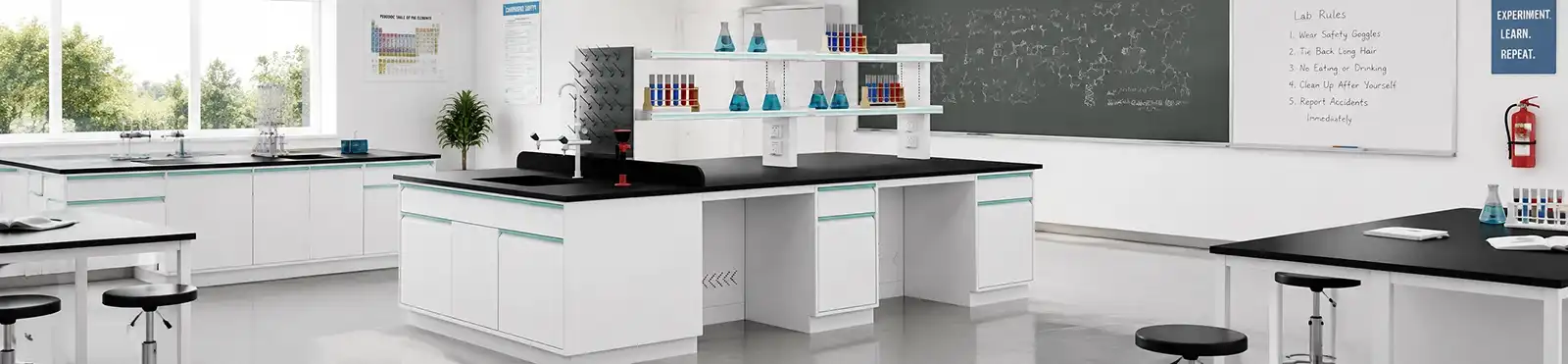
How to Choose the Right Lab Tables for Schools
Decisions about procurement have long-term effects. A structured review framework helps you match the product's specs to the needs of your business while avoiding mistakes that could cost a lot of money.
Material Durability Assessment
Material choice is the key to making lab tables for schools last a long time. Steel-framed building with cold-rolled steel plates that are 1.00 mm thick can hold more weight than wood or aluminum options. When built correctly, these steel frames can hold up to 2,000 pounds, which means that big analytical equipment like centrifuges and microscopes can be used without any problems. Surfaces need to be looked at just as closely. Epoxy resin worktops are made of a single piece and have great chemical resistance, as shown by soaking tests that lasted 24 hours and used 49 typical lab chemicals. Alternatives to phenolic glue are cost-effective options for dry labs where chemicals are not used much. Instead of depending on marketing claims, when you look at samples, ask for SEFA 8 compliance paperwork that shows real performance data.
Dimensional Specifications and Layout Planning
Standard laboratory desks are 30 inches deep and 36 inches tall, but customizing the sizes is helpful for teaching purposes. Island benches for 8–10 students need to be 12–15 feet long and have utility runs in the middle for gas and electricity distribution. Wall-mounted seats make the best use of the perimeter area in small classes and provide storage space above. The size of the cabinets is very important. Single cabinets measuring 470x520x830mm are good for personal storage, while double cabinets measuring 900x520x830mm can hold shared tools. Water tank sections that are 1440 x 720 x 830 mm include sinks without breaking up the flow of the desk. The best way to plan a lab is to make sure that these parts are balanced so that there is 35–40% movement space, which allows for safe emergency exits and makes the most of the work space.
Maintenance Requirements and Total Cost Analysis
Higher lifetime costs are often hidden by lower starting prices when purchasing lab tables for schools. It is much more expensive to buy high-quality tables that last 20 to 25 years than ones that need to be refinished or replaced every year or within 7 to 10 years. Review how you clean—seamless surfaces without cracks make it easier to clean every day and keep germs away. Epoxy resin electrostatic finishing makes surfaces that are smooth, don't have pores, don't stain, and only need soap and water to clean. Think about the terms of the guarantee that will protect your investment. Reputable makers stand behind their goods with full warranties that cover structural flaws and surface performance loss. They also have quick technical support teams that know how educational facilities work.
Types of School Lab Tables and Their Applications
Different lab fields have different needs for furniture systems in terms of how they work. Understanding these differences is the best way to make sure that table requirements and teaching needs are perfectly aligned.
Chemistry and Biochemistry Workstations
In chemistry rooms, the most chemical defense and thermal safety are needed. Tables made for these conditions have strong core physicochemical board tops that can handle being exposed to acidic liquids for a long time without delaminating or blistering. Integrated sink units with chemical-resistant fittings make it possible to clean up and dilute spills right away. For heating purposes, gas valve turrets provide controlled flame sources, and electrical outlets placed above work areas keep connections from coming into touch with liquids. The full steel structure with acid- and alkali-resistant coats keeps the frames from rusting even after decades of being exposed to chemical atmospheres. This keeps the structure stable even in the worst conditions.
Biology and Life Sciences Tables
Antimicrobial qualities and easy cleaning are very important in biological laboratories. Surfaces that are smooth and seamless keep bacteria from growing on tiny surface flaws that make the sterile method less effective. The building is fireproof and waterproof, so it can withstand steam from autoclaves and humidity from incubators, which would damage normal materials. Different types of specimen cases and equipment can fit in storage boxes with adjustable shelves. Three-pull drawer units keep dissection tools and slide preparation supplies in order. Microscopy needs to be able to isolate vibrations, and dissecting needs to be able to contain fluids. The choice of material and the form of the structure are therefore very important to how well these tables work.
Multi-Purpose STEM Classrooms
More and more schools are adding open lab places that help students learn across subjects. Mobile lab desks with industrial-grade locked casters make it easy to change the layout of the room quickly from rows to collaborative clusters. These tables are just as durable as fixed setups because the corners are strengthened and there are crossbars that keep the table from racking when it's being moved. Utility connections are also based on modular design. Quick-disconnect plugs for gas and data lines let tables be moved without having to change the facility. With this flexibility, project-based learning can be used while still maintaining the safety and efficiency standards needed for legal laboratory work.
Comparing Leading School Lab Table Solutions in the Market
There are many choices in the market, but to tell the difference between real quality and fake marketing, you need to carefully check the manufacturer's skills and the performance of the product.
Traditional Fixed Laboratory Benches
Traditional methods stress permanent installation with utility links made on-site. Customization is possible with these devices because they are built on-site, but the quality can vary depending on how skilled the builder is. Due to the order in which manufacturing and installation happen, lead times are longer (60–90 days), which makes project preparation more difficult. Maintenance is hard when secret parts need specific new parts that are hard to find from suppliers. Traditional methods are known for building teams, but they are not as efficient or consistent as what modern educational projects need.
Modern Modular Laboratory Systems
Modern makers have changed the way lab furniture is made by using flexible engineering. Precision-toleranced prefabricated parts are quickly put together on-site, cutting construction times from weeks to days. With this method, quality is always the same because production is controlled in a workplace and quality assurance methods are written down. When you're furnishing an entire building, modular systems are a great deal because they come in small packages that keep shipping costs low. The knock-down structure makes it easy to change the layout in the future as courses change, which protects your investment from becoming useless. Manufacturers who offer both fully built and knock-down choices can work with a range of academic needs and project schedules. Professional suppliers can be told apart from middlemen by their certifications. When selecting suppliers of lab tables for schools, look for companies that have ISO 9001 quality management certification to show that they have structured rules over production, ISO 14001 environmental management certification to make sure they use sustainable practices, and ISO 45001 occupational health certifications to make sure that workers are safe while they are working. CE marking shows that the product meets European safety standards that can be used in foreign projects, and SEFA compliance shows that the product meets the performance standards set by the Scientific Equipment and Furniture Association. These aren't just nice-to-have awards; they're inspected promises to greatness that directly affect the dependability of the products.
The Manufacturer Partnership Advantage
Beyond product specs, the success of a project depends on the ties between the project team and the manufacturer. Well-known sellers offer a wide range of services, such as free site surveys that help customers understand their energy needs and space limitations before they place their orders. Using knowledge from hundreds of installs, design advice services make sure that lab layouts are the best they can be for safety and workflow efficiency. Technical teams help you choose materials based on the chemicals you will be exposed to and how they will be used in your projects. Supervision during installation makes sure that everything is put together and connected correctly, and lifetime care agreements cover repairs and questions about how the system works. This all-around method is very different from transactional suppliers, who leave after delivery, leaving institutions to figure out problems on their own. Solution companies are different from commodity sellers because they can customize their products. With OEM and ODM support, institutions can choose the sizes, colors, and materials that best match the building's finish and their name. Custom worktop materials can be made to fit specific needs, like ceramic surfaces for uses that need to withstand high temperatures or stainless steel surfaces for food science labs that need to meet NSF cleanliness standards. Manufacturers with engineering teams can change the layout of cabinets, add special equipment mounts, and make standard goods fit into tight spaces that readymade catalogs can't. This freedom is very helpful when fixing up old buildings or making the most of rooms with odd shapes.
Maintenance Tips for Extending the Life of School Lab Tables
Even the best laboratory furniture needs to be taken care of properly so it lasts as long as it was meant to. Following systemic repair practices will protect your investment and keep it safe and working properly.
Routine Cleaning Protocols by Material Type
How you clean your work area every day depends on what it's made of. Most common cleaners can be used on epoxy resin surfaces, but abrasive scrubbers should be avoided because they scratch protection coats, leaving rough spots where dirt can gather. Most leftovers can be removed with soap and water, and non-abrasive cleaners can get rid of tough spots without damaging the surface. Phenolic resin needs to be treated with more care. Cleaners with an alkaline pH above 10 can damage it over time, so neutral pH products are better for daily use. Steel frames should be wiped down with damp cloths every so often to get rid of dust buildup without adding too much moisture that could get into weld seams.
Chemical Spill Response Procedures
Taking action right away keeps damage from chemical spills to a minimum. Instead of cleaning, quickly blot liquids with absorbent materials. Cleaning spreads germs over a bigger area. Before you clean up, neutralize acids with a mix of sodium bicarbonate and bases with watered-down vinegar. This will stop the surface reaction from continuing. After neutralization, rinse the damaged areas well with water to make sure there are no chemicals left over that could cause the damage to spread over time. Strong oxidizers, such as pure hydrogen peroxide or permanganate solutions, need to be dealt with right away because even short contact can change the color of some surfaces or make pits in them. Keep a record of any major spills and look over the affected areas during routine maintenance checks to find any new surface damage that needs to be looked at by a professional.
Preventive Maintenance Inspections
Inspections every three months find problems as they start to happen before they become failures. Make sure that all of the mechanical parts work smoothly. This includes the drawer slides, cabinet locks, and height adjustment mechanisms. If you find any loose bolts during eye checks, tighten them up. Over the years, vibrations from using the equipment will slowly loosen connections. Check the sides of the work area for damage or delamination that could let water get into the materials below. Check the parts of the sink for leaks and correct draining, which can cause water to pool and mold to grow. Check the inside of storage cabinets for damage caused by chemical vapors, especially in the lower sections where heavier-than-air fumes tend to build up. By being proactive, small maintenance tasks don't get worse and cause machine breakdowns that make it hard to teach in the lab.
Leveraging Supplier Support Services
Long-term relationships between manufacturers and retailers help extend the performance of products by providing expert resources. Build ties with supplier support teams that can help you with questions about material compatibility when you add new chemicals to your program. Ask for professional checks on a regular basis so that wear trends can be found and parts can be replaced before they break. Take advantage of guarantee coverage that covers problems with the materials or the work that was done. Reliable providers keep their promises quickly and without a lot of paperwork. When remodeling or adding on, talk to the original makers. They can match existing finishes and layouts, keeping the look consistent across installation steps that happen over a period of years. These connections turn sellers into partners who care about the success of your business.
Conclusion
When choosing good lab tables for schools, you have to weigh short-term cost concerns against long-term success needs. Material specs, structural design, and the ability of the maker to provide support make the difference between standard furniture and engineered laboratory systems. When institutions buy properly defined tables from certified makers, they avoid the false economy of cheap alternatives that break down early and need to be replaced in the middle of their useful life. The current standard for safe and effective educational laboratory furniture that students can use for decades is made of modular, all-steel pieces that can be put together in a variety of ways and comes with professional fitting help.
FAQ
What makes steel laboratory tables superior to wood alternatives?
All-steel building gets rid of the problems that come with wood-based goods, like water absorption, termite damage, and fire risk. Usually, steel frames can hold 1,500 to 2,000 pounds of weight, while wood frames can only hold 500 to 800 pounds. Acid cleaning, phosphating, and electrostatic spraying are used to make surfaces corrosion-resistant. These surfaces can be exposed to chemicals for decades without breaking down. Temperature and humidity changes that happen in laboratories don't affect the size of steel tables. This means that they don't bend or separate joints like wooden furniture does.
How long does installation typically require for a complete laboratory?
For a normal 20-station school lab, modular lab systems with premade parts can usually be set up in 3–5 business days. This time frame is based on the idea that all the utilities are connected and the floor is clean. For similar setups, traditional site-built systems need two to three weeks. The design makes it easy to put together, which makes installation simpler, less disruptive to current educational activities, and speeds up the opening of the facility.
Can existing laboratories be retrofitted with modern tables?
Yes, flexible plans are great for home renovations. Manufacturers offer free site studies to find out how big the areas are, where the utilities are, and any restrictions, such as doorway sizes and ceiling heights. Custom setups can adjust to the shape of the room and keep the utility lines working, which saves money on expensive infrastructure changes. The knocked-down design makes it possible to move furniture through normal doors and hallways that would not be possible with fully built traditional benches.
What warranty coverage should institutions expect?
Reputable producers offer full warranties that cover both the structural stability and the effectiveness of the surface. Steel frames and welds are usually covered for 10 years, work surfaces for 5 years against delamination and chemical damage, and mechanical parts like drawer slides and hinges for 2 years. Lifetime servicing agreements cover things that wear out and help the business run. Always ask for written warranty information that lists the flaws that are covered, how to file a claim, and how long the maker has to respond.
Partner with Uken for Premium Lab Tables for Schools
With more than ten years of experience, Luoyang Youken Laboratory Equipment Co., Ltd. has been making lab chairs for schools all over the world. Our construction is made of only steel, using 1.00 mm cold-rolled steel and epoxy resin electrostatic finishing to give it unmatched chemical protection and longevity. We offer full customization, including choosing the exact size, material for the worktops, and color to meet the needs of your building. Our quality standards are up to par with foreign standards because we have CE, ISO 9001, ISO 14001, and ISO 45001 certifications. Contact Our Team at ceo@ukenlab.com to talk about your project needs with laboratory furniture providers who have experience and know how to work in school settings.

References
1. National Fire Protection Association. (2019). NFPA 45: Standard on Fire Protection for Laboratories Using Chemicals. Quincy, MA: NFPA Publications.
2. Scientific Equipment and Furniture Association. (2020). SEFA 8: Laboratory Furniture Standard - Recommended Practices. Hilton Head Island, SC: SEFA.
3. American Disabilities Act. (2010). 2010 ADA Standards for Accessible Design. Washington, DC: U.S. Department of Justice.
4. National Research Council. (2011). Prudent Practices in the Laboratory: Handling and Management of Chemical Hazards. Washington, DC: The National Academies Press.
5. International Organization for Standardization. (2015). ISO 9001:2015 Quality Management Systems - Requirements. Geneva: ISO.
6. Occupational Safety and Health Administration. (2017). Laboratory Safety Guidance. Washington, DC: U.S. Department of Labor.

CUSTOMER REVIEWS
What Our Customers Say