



Let's Talk Lab Tables - The Backbone of Any Laboratory
When we walk into a working lab, the lab table is the most obvious but also the most underrated piece of equipment. A chemistry lab working table is more than just a flat surface; it serves as the hub of daily safety routine testing, scientific discovery, and practical application. These specialized desks are made to resist the constant stresses of chemical exposure, heavy equipment, and hard daily use. This is what makes them completely different from regular office or industrial furniture.
Understanding Chemistry Lab Working Tables: Types, Materials, and Features
What Defines a Professional Chemistry Lab Working Table?
Professional-grade lab tables are made with modern material science and strong construction to withstand the hard conditions of labs. The surfaces of these tables need to be resistant to chemicals, the bases need to be stable for fragile tools, and the heights need to be comfortable so that scholars can work for long periods of time. What makes them different is that they can keep working well even after years of being exposed to harmful chemicals, changing temperatures, and mechanical stress.
Material Options and Their Chemical Resistance Profiles
When selecting a chemistry lab working table, material choice is one of the most important decision factors. Epoxy resin surfaces are great for pharmaceutical and chemical testing settings because they are chemically resistant all the way through and can't let liquids through. Most of the time, these surfaces don't get damaged by powerful acids, bases, and organic fluids. Stainless steel is very strong and doesn't easily get damaged by heat. It is especially useful in cleanrooms and other pure settings where keeping germs away is very important. In the third group are phenolic resin laminates, which are both inexpensive and chemically resistant to a moderate degree. They can be used in educational labs and general study settings.
We use a 1.00 mm cold-rolled steel structure and epoxy resin electrostatic spray finishing at Uken. This mix gives the structure great resistance to rust while keeping its power. The epoxy powder covering is put through a lot of tests to make sure it can stand up to being exposed to harsh chemicals all the time, which are common in analytical labs.
Fixed Versus Modular Configuration Benefits
Traditional set lab tables are very stable, but they don't give you much freedom of movement. Modular frame designs are a big step forward because they let labs change how areas are set up as study needs change. Our modular method includes easy-to-install parts and knocked-down structures that make shipping much cheaper while still keeping the integrity of the fully welded structure once it's put together. This design theory solves a common problem in procurement: how to balance the need for efficient movement with the need for long-lasting structural stability.
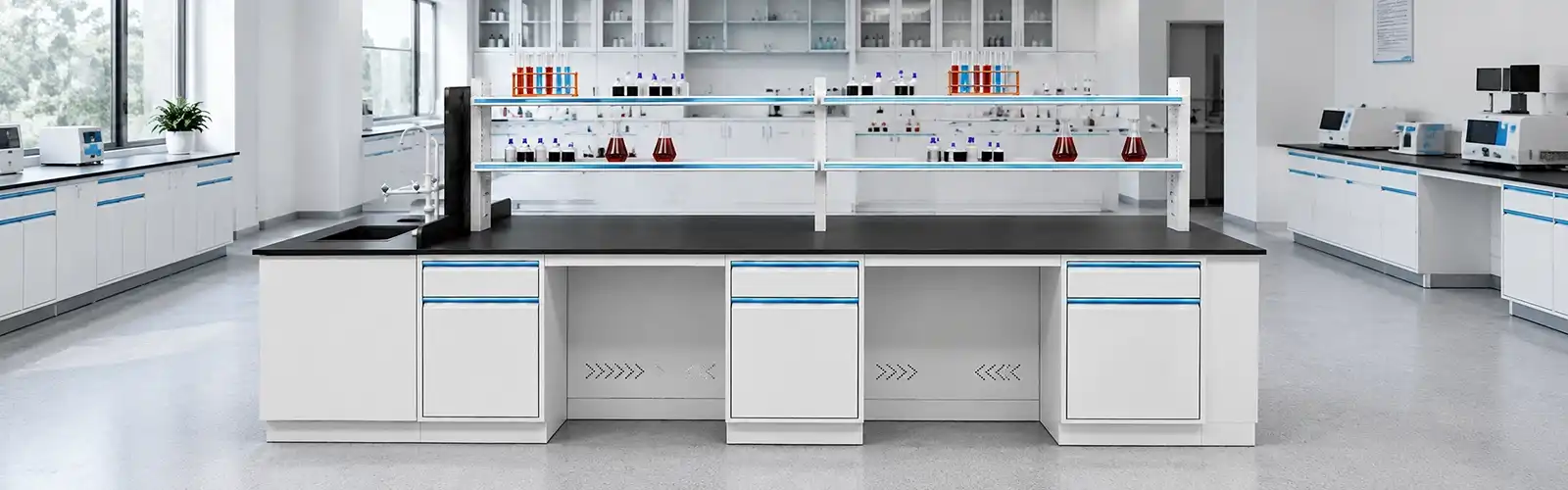
How to Choose the Right Chemistry Lab Working Table for Your Laboratory
Analyzing Your Laboratory's Specific Requirements
Before making a purchase choice, trial activities should be carefully looked over. For synthesis work to be done in pharmaceutical labs, surfaces must be able to withstand organic acids and be sterilized often without breaking down. Biotechnology labs need tables that can hold both wet chemistry and precise instruments. Many different arrangements are useful for schools because they allow for different teaching programs in physics, biology, and chemistry.
Also, the lack of space is very important. In bigger buildings, island benches make the best use of floor space by creating work areas that can be reached from multiple sides. Wall benches make the most of the horizontal space in small labs while letting utilities link through back service chases.
Critical Selection Criteria for Procurement Professionals
We suggest that you pay attention to these technical factors when judging sellers and goods. To test for chemical resistance, you should follow set procedures, such as the SEFA 8-M standards, which let you subject surfaces to 49 typical lab chemicals for 24 hours. When supporting analytical tools, load-bearing ability is very important. Good tables should be able to take 250kg to 500kg per linear meter, based on the frame design.
Customizing dimensions should be carefully thought out. The standard height of a lab table is between 830mm and 900mm, which is in line with psychological rules for standing work. Our customizable dimension service can meet specific needs for setting up microscopy work or making sure that buildings are accessible. Different cabinet sizes—a single cabinet (470×520×830mm), a double cabinet (900×520×830mm), and specialty water tank units (1440×720×830mm)—work well with different lab processes.
B2B Procurement Considerations and Total Cost Analysis
Budgeting is more than just figuring out the initial buy price. We tell procurement managers to look at the total cost of ownership, which includes shipping times (usually 20–40 working days), how hard it is to install, and how much upkeep will be needed in the long run. Certifications for suppliers give you peace of mind that the quality will stay the same. Look for CE, ISO9001, ISO14001, and ISO45001 qualifications that show a dedication to quality manufacturing, environmental responsibility, and worker safety.
Professional suppliers of a Chemistry Lab Working Table differ from commodity dealers because they provide warranties and full after-sales support. Reliable Chemistry Lab Working Table partners offer installation guidance, maintenance instructions, and lifecycle technical support. This is especially important in large-scale projects where multiple Chemistry Lab Working Table units are required for complete laboratory outfitting.
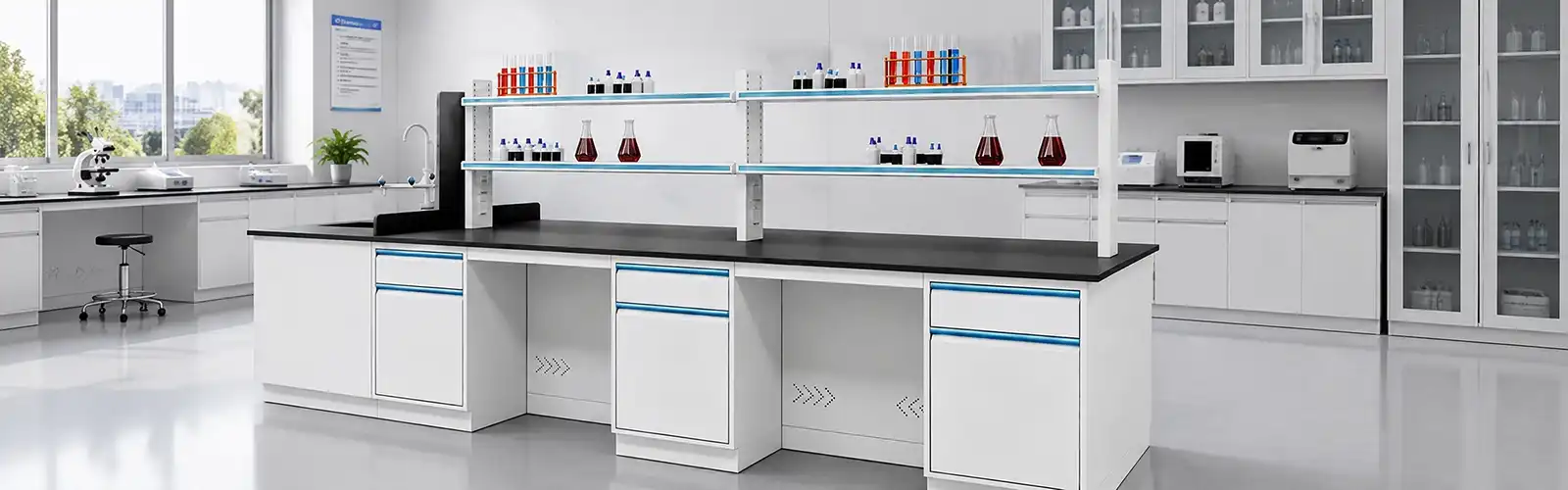
Advantages and Maintenance of Epoxy Resin Lab Tables
Why Epoxy Coatings Dominate Chemical Laboratory Applications
Because they are so chemically resistant, epoxy cement surfaces have become the norm in tough labs. The layer makes a wall that acids, alkalis, and solvents can't get through to the base material. This surface is safe and easy to clean, and it meets the strict cleanliness standards of GMP facilities, pharmaceutical labs, and cleanrooms. The smooth, uniform design of the surface gets rid of any cracks where germs could hide, making daily cleaning easier.
Another big benefit is that it doesn't get damaged by heat. Epoxy-coated surfaces can handle temperatures of up to 140°C for short periods of time. This keeps hot plates, autoclaves, and other thermal equipment from damaging the table's structure. Because the layer is so hard, it doesn't scratch easily, and the surface stays intact even after years of regular use with metal and glass tools.
Extending Service Life Through Proper Maintenance
Maintaining epoxy resin tables doesn't take much work but has big benefits for how long they last. Most chemical leftovers can't etch surfaces if they are cleaned every day with water and light soap. If you wipe up a spill right away, the chemicals won't be in touch for too long. We don't recommend using rough cleaners or scrubbing pads because they could damage the shine on the surface.
Inspections done on a regular basis help find small problems before they get worse. Professional repair services should be used right away to fix any small chips or scratches so that water doesn't get in and damage the materials underneath. This proactive method, along with the natural longevity of high-quality epoxy systems, means that they usually last longer than 15 to 20 years in busy labs.
Top Considerations When Purchasing Lab Benches
Seven Essential Evaluation Factors
By carefully looking at these key factors, procurement managers can speed up the selection process. The chemical resistance of the material should be the same as the harshest chemicals used in your lab. Test results, not general claims, are the best way to prove this. The comfort and output of researchers are affected by ergonomic sizing. Make sure that the table's heights, widths, and gaps meet the anthropometric needs of your staff and the equipment's reach needs.
Structure analysis is needed to check load-bearing strength, especially when holding heavy analytical tools like spectrophotometers or chromatography systems. Documentation called "compliance" shows that goods meet international safety standards that apply to your country and business. Modularity and built-in storage are examples of flexibility features that make the best use of small lab spaces while still being able to adapt to changing research programs.
Supplier Capability Assessment
Besides product specs, a supplier's skills have a big impact on how a project turns out. Verified approvals show that the standard of the products is stable and that the company is committed to always getting better. Checking a company's reputation by looking at project files and customer references shows if they have done work related to what you need. Strong after-sales support, such as expert advice, installation services, and access to spare parts, is very helpful during the operating stages.
Safety Standards and Design Innovations
Regulatory Compliance Requirements
Depending on where they are used and where they are located, chemistry lab working tables must meet multiple legal systems. ASTM standards cover testing for efficiency and material qualities. The SEFA rules give specific instructions on how to build lab furniture and make it resistant to chemicals. European EN standards set the safety rules for office furniture used in dangerous places. By following these guidelines, tables are guaranteed to protect researchers and testing materials properly.
Our goods are certified by CE and meet ISO quality control standards, which shows that they meet these important safety standards. The fireproof, moisture-proof, and mildew-proof features all work together to make the product safer. This is especially important in places that work with flammable liquids or in humid areas.
Modern Design Innovations Enhancing Laboratory Functionality
Modern laboratory furniture has a lot of new features that make work go more quickly and easily. Integrated utility distribution systems send power, data links, and lab gases straight to work areas, so extension cords and lines don't clutter the surface. With modular building, labs can change the layout of their spaces without having to do a lot of work to them. This makes it possible for research to pivot and for tools to get better.
Choosing materials that are good for the environment is becoming more important. In line with university sustainability goals, our production methods focus on using resources efficiently and making things that can be recycled. The dustproof design and easy removal features help with both keeping things clean in use and recycling materials at the end of their useful lives, taking care of environmental issues throughout the product's lifecycle.
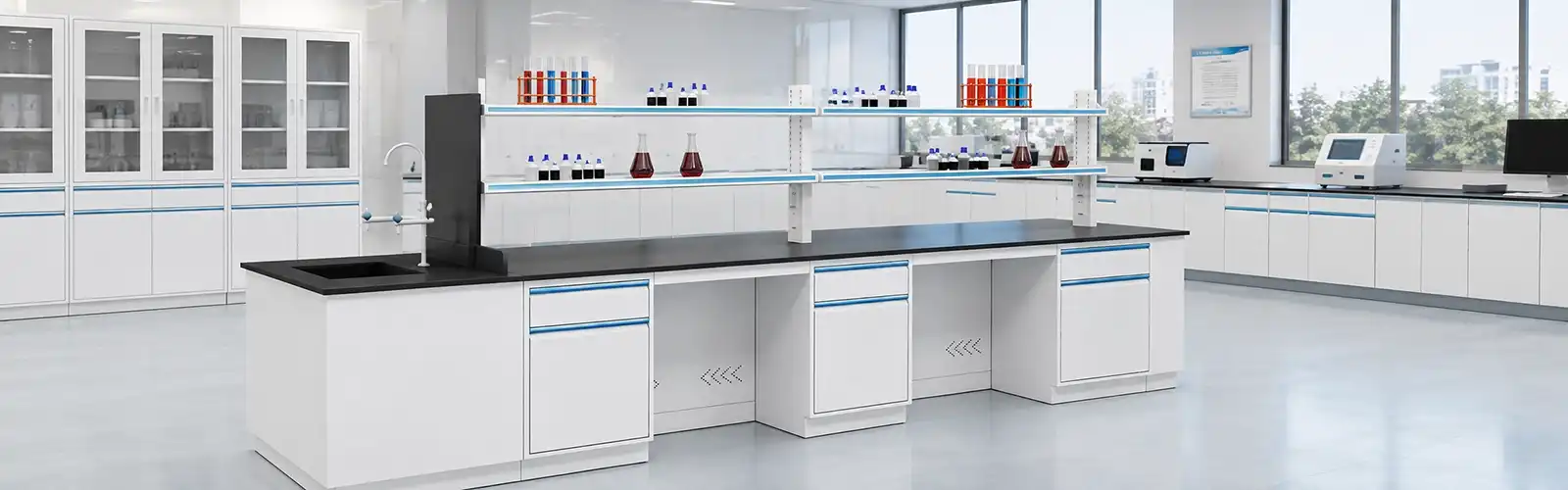
Conclusion
How to Choose the Right Chemistry Lab working table needs to find a balance between technical requirements, financial limits, and long-term operating needs. As an important investment in study capabilities, safety compliance, and worker output, good laboratory furniture is essential. Procurement professionals can choose solutions that work well for their institutions for decades by paying attention to things like chemical resistance, structural integrity, flexibility, and source dependability. The move toward modular designs, high-tech surface materials, and built-in tools keeps improving lab usefulness while keeping safety and durability as top priorities.
FAQ
What surface material works best for aggressive chemical environments?
Surfaces made of epoxy glue are better at resisting concentrated acids, bases, and organic solvents that are used a lot in analytical chemistry. When compared to laminated options, the smooth, non-porous construction keeps chemicals from getting through and makes cleaning easier.
Can laboratory tables be customized for specific space constraints?
Most professional providers, like Uken, offer customizable dimension services that can work with different building plans, ceiling heights, and equipment integration needs. Custom size makes sure that the space is used most efficiently without sacrificing safety or usefulness.
How do modular designs compare with traditional welded structures?
When it comes to structural performance, modern modular frame designs are the same as standard welding tables. However, they are much easier to move, install, and change in the future. The knocked-down structure makes shipping much cheaper, and the full welding of the structure's stability is achieved during final assembly.
Partner with Uken for Your Laboratory Furniture Needs
Uken can supply all of your laboratory furniture needs. They have been making furniture for 30 years and have 30,000 square meters of space to make things. Our chemistry lab working table options use tried-and-true epoxy resin technology along with new modular design ideas to give your facility the chemical protection and structure performance it needs. We keep up with the quality standards that buying workers need by having certifications like CE, ISO9001, ISO14001, and ISO45001. Our 100 skilled engineers are here to help you with technical questions at any point in the lifecycle of your project, from planning the layout to installation and continued support. Email us at ceo@ukenlab.com to talk about how our personalized, corrosion-resistant Lab Benches can improve the safety and operational excellence of your facility.
References
1. American Chemical Society. (2020). Laboratory Safety Guidelines for Chemical Research Facilities. ACS Publications, Washington, DC.
2. Scientific Equipment and Furniture Association. (2019). SEFA 8-M Laboratory Furniture Standard: Recommended Practices for Laboratory Furniture. SEFA International, Hilton Head Island.
3. National Research Council. (2018). Prudent Practices in the Laboratory: Handling and Management of Chemical Hazards. National Academies Press, Washington, DC.
4. International Organization for Standardization. (2021). ISO 9001:2015 Quality Management Systems Requirements for Laboratory Furniture Manufacturing. ISO Central Secretariat, Geneva.
5. European Committee for Standardization. (2019). EN 14727 Laboratory Furniture Performance Requirements and Test Methods. CEN Brussels Technical Body.
6. Occupational Safety and Health Administration. (2020). OSHA Laboratory Standard Compliance Guidelines for Chemical Hygiene and Facility Design. U.S. Department of Labor, Washington, DC.

CUSTOMER REVIEWS
What Our Customers Say