



What are chemistry lab tabletops made of?
In chemistry labs, tablets are the pieces that make up all good work. The materials that are used to make chemistry lab tables are strong enough to handle strong chemicals, high temperatures, and regular use. Based on what the lab needs, a chemistry lab working table's surface is often made of epoxy resin, phenolic resin, stainless steel, or clay. These things are very important for studying drugs, doing chemical tests, and schools because they don't rust, get dirty, or break down over time. When buying managers know how these things are put together, they can make decisions that protect people and money.
Understanding Chemistry Lab Working Tables: An Overview
There is more to work tables in a lab than just furniture. They are carefully made tools that scientists use to do their work. It is important for experts to have a stable lab table so they can do tests quickly and safely. Electricity outlets, gas lines, and water sources all work well with these special surfaces, giving experts a full work area that meets their needs.
Core Functions and Design Principles
It's not enough for lab tables to just hold tools these days. They need to be able to handle strong drugs and big science tools so that things don't get messed up. Also, they should be simple to clean. A full steel frame supports the structure. Most of the time, these frames are made from 1.00 mm cold-rolled steel plates that have been acid washed, phosphated, and coated with electrostatic epoxy glue spray. This process with many layers makes sure that the material can handle damage from both chemicals and physical forces.
Industry Applications Across Sectors
These tables are used by drug companies to make drugs and check the quality of them. The sides of the tables get organic fluids on them, so they need to be cleaned often. The strong acids and bases that are used in chemical companies are often found in quality control labs. Schools care about how long training sessions last and how safe they are for students. They're used by biotech businesses to get cell cultures and molecular biology methods ready. For each field, there are different setups that work best. For example, flexible designs can be changed to adapt to changing study needs, while fixed installations work best for quick testing.
Compliance and Safety Standards
When professionals are buying something, tables that meet SEFA 8-M guidelines are given the most attention. These standards check how resistant something is to 49 typical lab chemicals for 24 hours. A business that has ISO9001, ISO14001, or CE permission has shown that it cares about quality and the environment. These rules aren't just extra work; they make sure that the furniture will work right in real life, which protects both people and the study's truth.
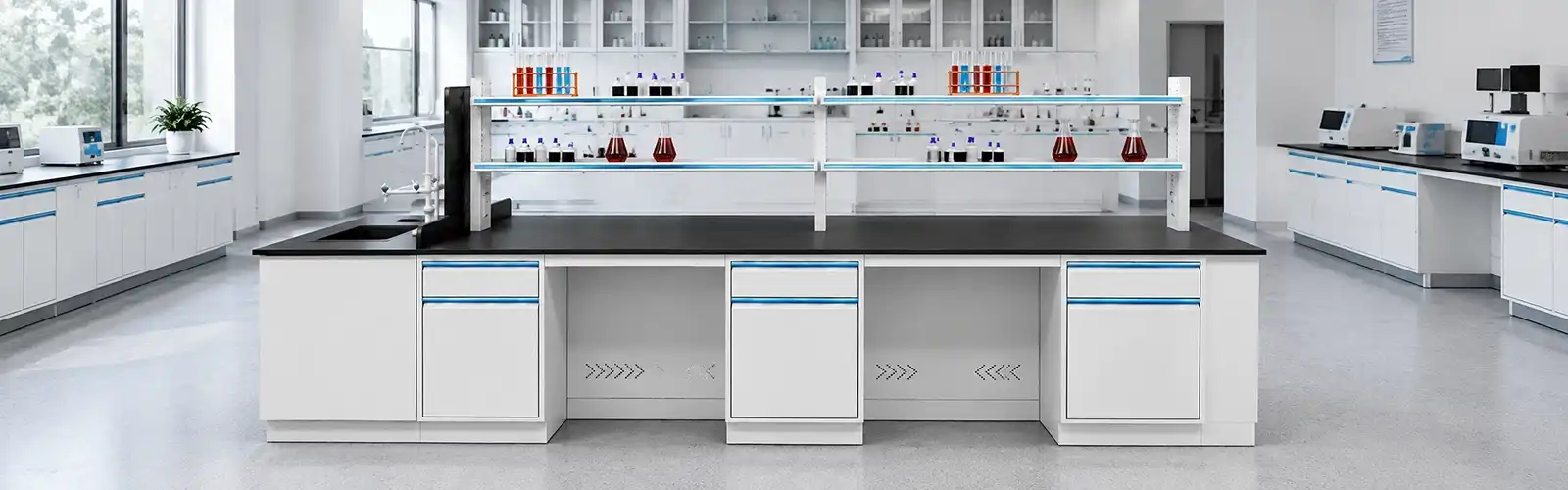
Popular Materials for Chemistry Lab Tabletops: Properties and Benefits
What kind of surface you choose will determine how well your lab furniture works after years of heavy use. The type of material has a direct effect on chemical resistance, maintenance needs, and the total cost of ownership.
Epoxy Resin: The Chemical Warrior
Strong chemicals don't stick to epoxy resin surfaces at all, which makes them great for use in labs and factories that use chemistry. By not having pores, this solid material stops liquids from passing through and germs from growing. Epoxy doesn't break down or change color after being around strong acids, bases, and organic solvents for a long time. The surface is solid up to 350°F, so hot plates and other tools that work with heat can be used on it. When it is put in, smooth caulking is used, which leaves no holes where dirt or other things could get stuck. The physical and chemical boards are built with a strong core, so the whole work area works the same. It doesn't matter where on the chemistry lab working table you do your tests; you will get the same stuff.
Phenolic Resin: Durability Meets Economy
When it comes to speed and value for money, phenolic resin does a good job. If you hit this material hard, it won't break. This makes it good for training rooms where people are rough with tools. For everyday lab work, the stacked structure works well against chemicals, but not as well as epoxy against the strongest chemicals. Surfaces made of phosphorous are very good at keeping water out, so they don't break when they get wet. Due to its natural dark color, the material hides small marks that would stand out on lighter surfaces. This makes it look more professional for longer.
Ceramic Tops: Ultimate Heat Resistance
Ceramic surfaces don't crack when they come in close touch with flames or when the temperature changes a lot. Because they don't melt or crack, ceramics are good for labs that make or test materials at high temperatures. The surface is shiny and very smooth. It's easy to clean and doesn't react with most chemicals. But clay is very fragile, and even small hits can break or chip it. Be careful when handling it.
Stainless Steel: Hygiene Champion
Most of the time, stainless steel surfaces are used in cleanrooms and drug factories, where keeping things clean is very important. Germs can't grow on metal because it doesn't have pores. Also, it can stand up to strict ways of cleaning like autoclaving. Strong chlorides can eat away at stainless steel over time, but most acids can't break it down. Because the surface is shiny, it is easy to see pollution right away, which helps with quality control.
How to Choose the Right Chemistry Lab Tabletop Material: A Decision Support Guide
You need to carefully compare what your lab needs with what the materials can do in order to choose the best tabletop materials. Don't make costly mistakes by putting furniture where it doesn't belong with this planned method.
Define Your Laboratory Environment
First, write down all of the things that yOur Team uses every day. Labs that work mostly with pure mineral acids need different things than labs that work mostly with biological liquids. What are you going to use to heat the surface—autoclaves or heating bands? —changes the temperature you need. You should think about whether the work you need to do needs big tools that can hold a lot of weight. For heavy-duty setups, modern chemistry lab working tables have a flexible frame that can hold up to 500 kg per linear meter. But you'll need to make that clear when you buy.
Evaluate Critical Material Properties
Chemical defense is one of the most important things that most science schools do. There are a lot of strong chemicals that epoxy resin can't handle, but phenolic resin is cheaper and can handle most chemicals well. It's very important to be able to handle high temperatures at work. In this case, ceramic and epoxy both work well, but melamine laminates break down quickly when it gets hot. How much weight it can hold depends on both the width of the material on top and how the frame is built below. Chemistry lab working tables with bases made of 1.00 mm cold-rolled steel and a frame that is fully linked are more stable than ones that are lighter. Taking care of different types of surfaces in different ways is important. Epoxy surfaces that are smooth can be cleaned with mild soaps, but phenolic surfaces that are rough may trap dirt and need more cleaning.
Balance Budget Against Performance Requirements
High-quality materials, like epoxy glue, cost more at first, but they last longer. With the right care, they can last 20 to 30 years. Phenolic glue costs less at first, but after 10 to 15 years of heavy use, it may need to be changed more often. Estimate how long the system will last, how much it will cost to maintain, and how long it might be down if it needs to be changed too soon. This will give you the total cost of ownership. You can get the best plan without spending too much if you can choose the colors and measurements yourself. Because delivery takes 20 to 40 business days, you can save money on rush shipping costs by planning ahead.
Prioritize Safety and Compliance Features
Check to see if the chemistry lab working tables you're thinking about buying meet your company's safety standards. In pharmaceutical and biotech facilities, GMP compliance is generally needed. In educational facilities, on the other hand, fire and impact safety are more important. Acids and bases don't damage the epoxy powder surface very much, so it can be used in places where high-frequency rust testing is done. Designs that are clean and germ-free keep sensitive uses from getting dirty. Natural risks that happen a lot in labs can be kept out of buildings that are fireproof, waterproof, and mildewproof.
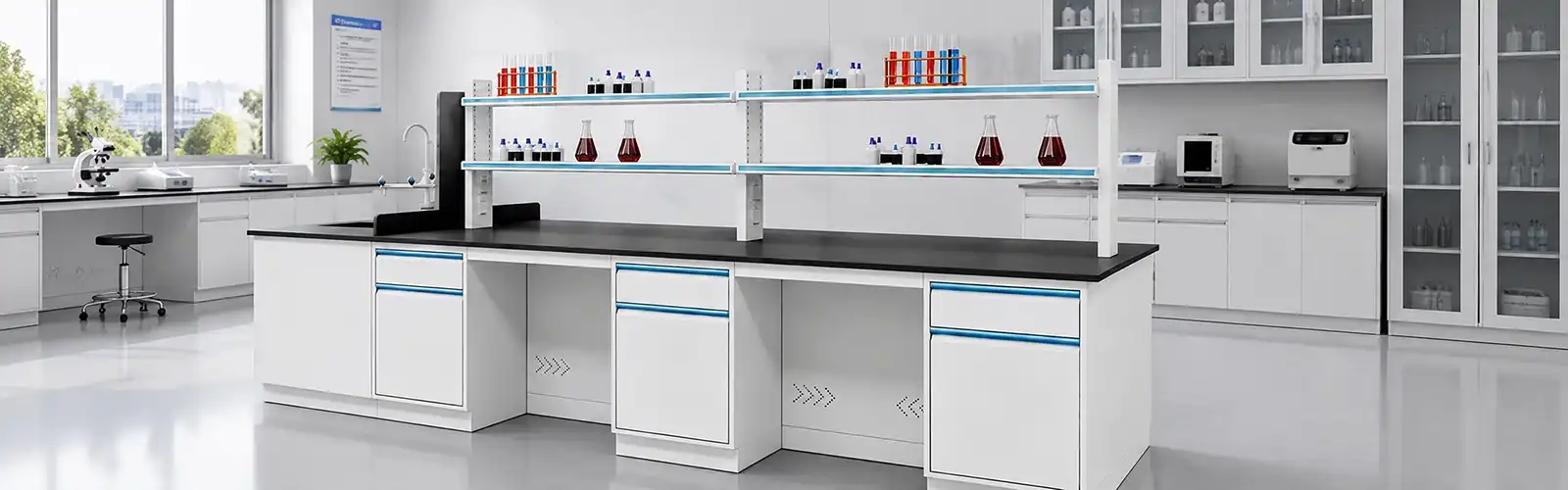
Comparing Chemistry Lab Tabletop Materials: Which One Suits Your Needs Best?
You need to know how different traits can help your processes in order to choose the right materials. There are direct ways to compare methods and find the best ones for each lab setting.
Epoxy Versus Phenolic: Performance Trade-offs
Because epoxy resin is made up of a single piece, chemicals can't get through the gaps. Phenolic is made up of layers, which leaves edges open to attack. Even after decades of being exposed to strong chemicals, epoxy still looks good and works well. But phenolic may start to show signs of wear more quickly in the same conditions. Phenolic is better for schools and general-purpose labs where chemical safety isn't very important because it's less expensive. Epoxy is expensive, but it is worth it in areas like drug research and development and petroleum tests where surface failure could ruin expensive studies or put people in danger.
Configuration Considerations: Modular Versus Fixed
When projects change to meet new study needs, modular designs can be put back together in a different way. The structure that can be taken apart makes it easier to move, and the smaller boxes used for shipping save money. This is very helpful when setting up buildings in more than one place. There is no need to wait for installation or worry about making mistakes while putting together fully built chemistry lab working tables. They can be used right away. For labs with stable, long-term plans, very hard-welded fixed systems work well. Research facilities that want to change how they work often have more freedom with modular systems that techs can adjust without using any special tools.
Integrated Features Impact Workflow Efficiency
With chemistry lab working tables that have sinks built in, you don't need separate water tools. This makes the work area easier and the making process faster. 1440 mm x 720 mm x 830 mm water tank configurations give you specific places to wash without taking away from your main work area. Single cabinets (470x520x830mm), double cabinets (900x520x830mm), and three-pull cabinets are all designs with more storage room. These cabinets keep things organized while still making it easy to get to useful things. With these combined solutions, you don't have to move as much between workplaces, which makes processes with more than one step more efficient.
ROI Projections for Strategic Procurement
When it comes to getting a good value for your money, products that cost more often last longer and need less maintenance. Even though they cost more at first, plastic surfaces that last 25 years cost less each year than melamine tables that need to be changed every 12 years. Think about the time you lost working while replacements were being made. Research delays can cause projects to be late and cost thousands of dollars every day. Meeting ISO45001 standards for health and safety at work makes it less likely that you will get hurt on the job. This could lower your insurance rates and keep you from having to pay for expensive accident-related costs.
Maintenance and Safety Tips for Chemistry Lab Working Tables
When you do maintenance the right way, it makes furniture last a lot longer and keeps lab workers safe. Setting up routines for care will make sure that your investment works as well as possible for as long as it does.
Daily Maintenance Protocols
Right away clean up spills the right way for the surface. Most household cleaners can be used on concrete and ceramic surfaces, but you should stay away from rough tools that could scratch the protective layers. It's easy to wipe down quickly because the design is smooth and even, which keeps dust from gathering. Soap solutions that aren't too strong might not be able to get through the top layers of phenolic surfaces. Check the work area every day for chips, cracks, or covering damage that could get worse if not fixed. Even after a lot of use, the acid, alkali, and corrosion-resistant epoxy covering stays in good shape. However, any damage from mechanical forces needs to be fixed right away.
Periodic Deep Cleaning and Inspection
Once a month, do a deep cleaning to get rid of buildup that normal care might miss. Cream cleaners that aren't rough can get rid of tough spots on concrete floors without damaging the finish. Look for rust on the full steel structure frame and other building parts. Watch out for welds that have holes that water could get through. That way, surfaces for precision scales and other delicate tools will stay stable. Just check that the leveling feet are still set up properly. Emergency eyewash stations and taps are built in. Make sure they work, and get rid of any broken parts as soon as possible.
Chemical Spill Response Procedures
Make it clear what to do when dangerous materials spill. Always keep the right lowering agents close to your work area so you can act quickly before chemicals hurt the surface. If you build chemistry lab working tables right, they can hold a lot of weight, so you can use them to hold up spill control tools like berms and absorbing materials. People should be taught how to clean up chemical spills using methods that are specific to the chemicals they work with every day. The cleaning should be done quickly and completely. Don't forget to keep track of spills. Trends can help you find ways to make the process or products better.
Preventive Measures for Extended Service Life
Do not put too much weight on areas that are not supported, even if the Chemistry Lab Working Table is strong enough to handle it. Tools with sharp edges or feet that could scratch surfaces over time should be put on protective mats. You shouldn't wait for problems to become clear before you set up regular review times. These days' chemistry lab working tables don't need to be cleaned as often because they don't collect dust, but they still need to be cared for. Change old parts before they break instead of waiting for them to. Fixing things ahead of time can save you a lot of money in the long run.
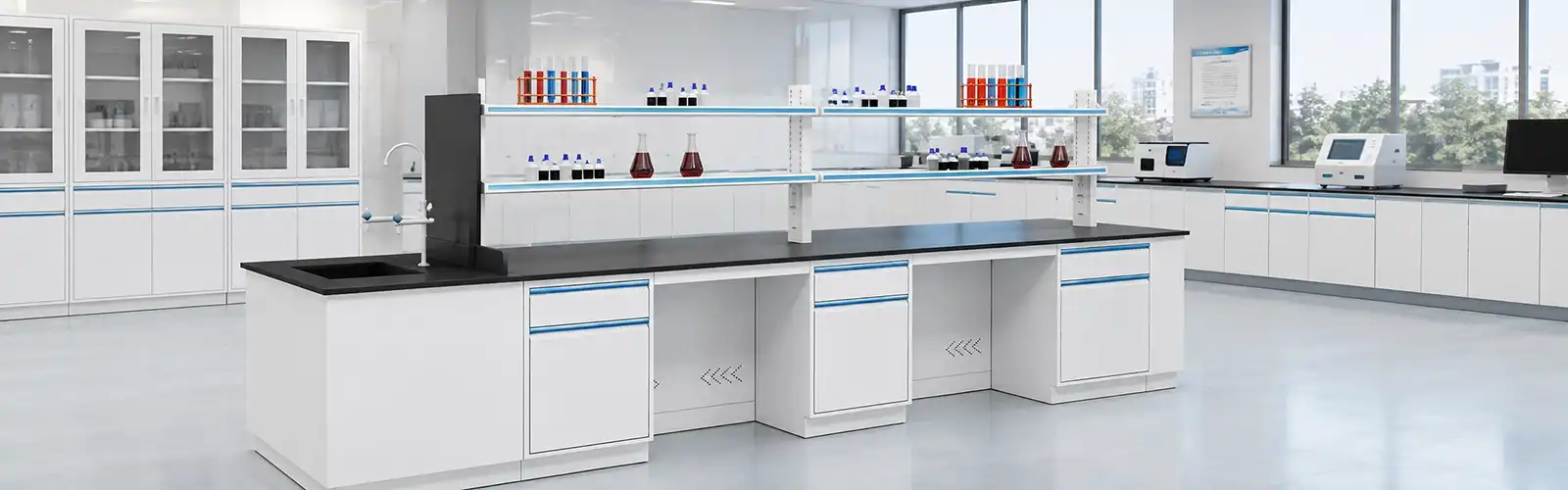
Conclusion
Before you pick out surface materials for lab tools, you should think about how chemically resistant they are, how long they will last, your lab's needs, and your budget. Epoxy glue is the best choice when you need to hold chemicals together. For some jobs, phenolic and ceramic materials work well. Just as important as the materials on the outside is how well the building below is built. For example, a design made of all steel with the right rust protection will make sure stable, long-lasting performance. Before you buy something, you should not only look at the price but also at how long it will last and how much it will cost you in total to own it. They can pick furniture that saves workers, helps researchers reach their goals, and gives the best return on investment over a long period of time by carefully weighing the needs of the lab against the qualities of the materials.
FAQ
Which tabletop material offers the best chemical resistance?
Epoxy glue is the most durable when it comes to lab supplies. Acids, bases, and organic liquids that are very strong won't break it down. The strong core physical and chemical board structure creates a wall that keeps fluids out and the surface straight even after years of use. Epoxy is the best choice for labs that work with strong chemicals or need something that will last for a long time, even though it costs more at first.
Can chemistry lab tables be customized to specific dimensions?
These days, manufacturers let customers change many aspects of their goods, including the sizes, styles, and features that come with them. The service that lets you change the dimensions works for a variety of process needs and room constraints. You can choose how the cabinets are set up, where the sink goes, and how the utility lines are made with OEM and ODM services. By picking out different colors, you can fit the look of the lab or use color-coding to show where things are useful.
How long do quality lab tabletops last before requiring replacement?
Phosphoric resin tables can only last 10 to 15 years in the same lab setting as epoxy resin surfaces if they are well taken care of. Epoxy resin surfaces can last 20 to 30 years. Lots of things affect how long something lasts: how often it is used, how well it is taken care of, and how quickly it breaks down technically. This is clear from companies that have certifications like CE, ISO9001, and ISO14001 and make Chemistry Lab Working tables that meet strict standards like SEFA 8-M. These companies care about making tables that last. If you check things often and fix small issues right away, you can keep them from getting worse and needing to be replaced.
Partner with Uken for Superior Laboratory Furniture Solutions
If you work in a lab, Luoyang Youken Laboratory Equipment Co., Ltd. makes good work tables that can handle strong chemicals. Our chemistry lab working table suppliers give full steel construction with 1.00 mm cold-rolled steel panels, epoxy resin electrostatic spray finishes, and solid core physical and chemical boards or ceramic tops that you can choose from. The units are easy to set up whether they are fully built or just knocked down because the frames are springy. With our 30,000-square-meter manufacturing center and 100 skilled engineers, we can make unique solutions that are backed by CE, ISO9001, ISO14001, and ISO45001 tags. We know that when you buy something, you have to weigh your performance needs against your finances. That's why we give you full technical help to pick out the best furniture for your needs. You can talk to us about your lab equipment needs and get detailed quotes for big orders by emailing ceo@ukenlab.com. We promise delivery in 20 to 40 business days.
References
1. Scientific Equipment and Furniture Association. (2019). SEFA 8-M Laboratory Furniture Standard: Recommended Practices for Laboratory Furniture. Hilton Head Island: SEFA Publications.
2. American Society for Testing and Materials. (2017). ASTM E84 Standard Test Method for Surface Burning Characteristics of Building Materials. West Conshohocken: ASTM International.
3. National Research Council. (2011). Prudent Practices in the Laboratory: Handling and Management of Chemical Hazards. Washington: National Academies Press.
4. Occupational Safety and Health Administration. (2020). Laboratory Safety Guidance. Washington: U.S. Department of Labor.
5. International Organization for Standardization. (2018). ISO 14644 Cleanrooms and Associated Controlled Environments. Geneva: ISO Standards.
6. European Committee for Standardization. (2016). EN 13150 Laboratory Furniture – Safety Requirements and Test Methods. Brussels: CEN Publications.

CUSTOMER REVIEWS
What Our Customers Say