



Lab Furniture Essentials: A Comprehensive Guide to Creating an Efficient Workspace
You can turn your scientific area into a hub of productive research or a constant source of practical headaches by choosing the right lab furniture. Buying lab tables for schools and other similar lab furniture is a smart move that will have a big effect on the safety of students, the speed of research, and the long-term costs of running the lab. The furniture we choose for chemistry labs, biology classes, and multipurpose STEAM spaces has to meet strict standards. It has to be resistant to chemicals, last a long time, be designed to be comfortable, and not break the bank. Modern lab workstations are made of 1.00 mm cold-rolled steel plates that have been electrostatically finished with epoxy resin. These workstations can be made in any size and shape, and they are better at resisting corrosive environments. They are also easier to install, which speeds up projects.
Understanding the Key Requirements for School Lab Furniture
Furniture that is made to meet strict safety and performance standards is the basis of any useful educational classroom. Unlike regular classroom desks, laboratory workspaces have to be able to handle harsh chemicals, high temperatures from heating equipment, and the usual mechanical effects that happen in classrooms.
Ergonomic Design Principles for Educational Settings
The right comfortable setup keeps students and teachers from having long-term health problems and improves their ability to learn. Tables can fit people from middle school to college because they have height-adjustable features that can make the height anywhere from 29 to 36 inches. This adaptability takes into account the different body types of students and makes sure that ADA rules are followed, such as the usual 32-inch knee space. When students work on surfaces that are the right size, they can keep their balance better during long lab sessions. This keeps them from getting tired and helps them focus on the methods of the experiments.
Safety Standards and Compliance Requirements
High-quality lab tables for schools must comply with international safety standards to ensure student protection and institutional reliability. The OSHA rules set the minimum safety standards for storing chemicals and getting to them in an emergency. The EN 1729 standards, on the other hand, say what the size requirements are for educational furniture for all age groups. Standardized testing methods used for SEFA 8 approval prove that the cabinet and surface will last. These rules and regulations aren't just extra work for businesses; they're actually safety measures based on decades of lab study. When purchasing managers put approved furniture at the top of their list, they reduce the risk of liability for the organization while also making learning spaces safer.
Material Specifications for Harsh Lab Environments
The hard truth of lab work means that materials have to be made to withstand chemical attacks and high temperatures. Surfaces made of phenolic resin are very resistant to acids, bases, and organic solvents, which makes them perfect for teaching chemistry. Epoxy resin options are better at withstanding heat; they can come into direct contact with Bunsen flames and glassware that is up to 350°F hot. Modern all-steel building using thicker cold-rolled steel plates gets rid of the need for wooden parts that soak up water and allow microbes to grow. Several anti-corrosion methods, such as acid cleaning, phosphating, and electrostatic spraying, make surfaces that don't break down chemically even when they are exposed to harsh chemicals every day.
Types of Lab Tables for Schools: Features and Applications
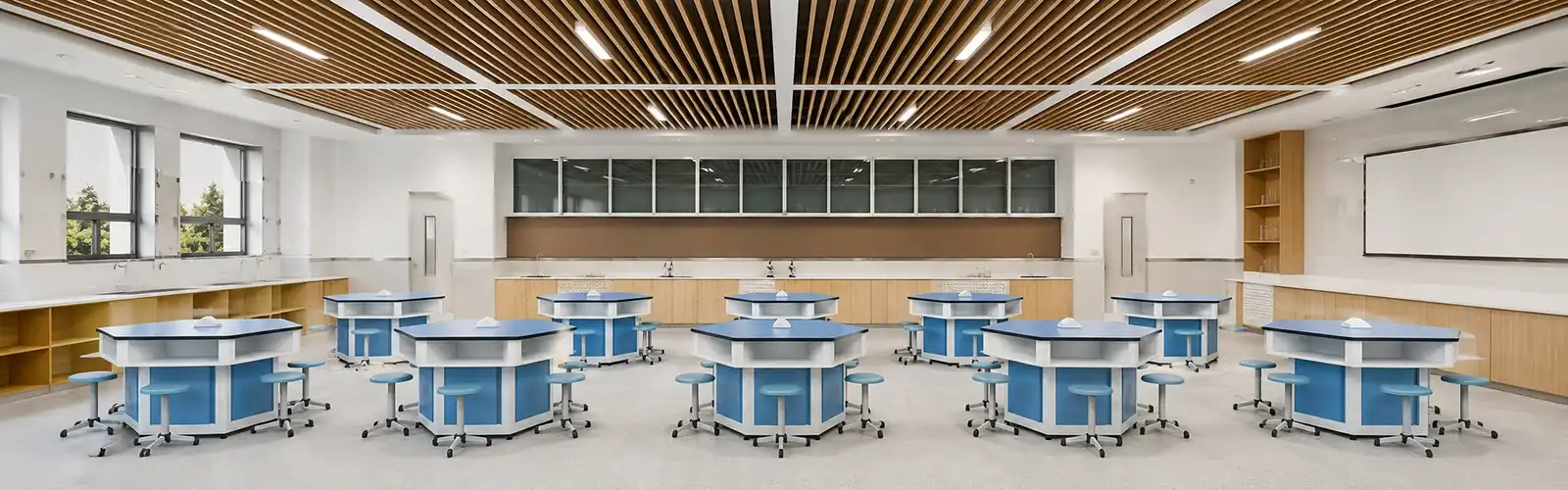
Different teaching environments require different types of lab tables for schools, each designed to support specific educational functions and scientific disciplines.
Fixed Versus Modular Laboratory Workstations
Traditional fixed-position benches can hold up to 2,000 pounds, based on the frame gauge, making them the most stable choice for precise readings and big tools. These long-term setups work well in chemistry or physics labs where work is done in the same way every time. For institutions that need to be flexible, modular solutions are a great option. The knock-down design of these workstations makes it easy to change their setup quickly as school programs change. They also come in small boxes that make shipping them about 30% cheaper than fully built units. The flexible method works especially well for schools with multipurpose labs that can be used for biology, chemistry, and physics classes.
Surface Material Selection and Performance Characteristics
The performance of lab tables for schools is strongly influenced by countertop materials. Solid-core physical boards are resistant to chemicals and last a long time mechanically. They can handle everyday lab work in many fields. Chemical spot tests are done on these surfaces for 24 hours with 49 different reagents to make sure they don't break down under normal teaching conditions. Ceramic countertop choices offer the best performance for advanced science programs because they are almost completely resistant to damage from heat and stains. High-pressure laminate (HPL) surfaces are used in physics and engineering labs, among other places, where impact strength is more important than chemical immersion safety. By knowing these differences, you can avoid expensive mistakes when the surface's capabilities don't match the needs of the lab.
Integrated Utilities and Ergonomic Features
Modern teaching lab furniture builds important features right into the design of the workstations. Factory-installed gas valves, electrical outlets with GFCI protection, and data ports get rid of the need for open cables that can cause trips and make cleaning the room harder. Integrated sinks with specialized lab taps make wet chemistry tasks easier, and standard water tanks measuring 1440 × 720 × 830 mm are big enough for classroom sections. Pay close attention to the edge treatments—radius-beveled resin edges or 3 mm PVC heat-bonded edges keep out moisture and protect students from sharp points. These well-thought-out design details set professional lab furniture apart from market goods that have been modified.
How to Choose the Right Lab Tables for School Workspaces
Selecting the right Lab Tables For Schools requires balancing durability, safety, and long-term cost efficiency. Institutions must evaluate how different Lab Tables For Schools perform under varying educational levels and usage intensity.
Assessing Durability Requirements by Educational Level
Chemical-resistant surfaces are needed in elementary school labs, but frames made of lighter-gauge steel are often fine because the students are younger and use weaker solutions and smaller tools. More violent chemistry is taught in middle school, so surfaces made of phenolic or resin must be able to handle strong acids and bases. For high school and college labs that need the most sturdiness, frames made of 11-gauge cold-rolled steel, surfaces made of epoxy resin with Class A fire ratings, and weight limits over 1,000 pounds are all required. This tiered method makes the best use of the budget while making sure that each level of education gets the right amount of safety.
Evaluating Total Cost of Ownership
The initial buy price is only one part of how much furniture really costs. Chemical-resistant surfaces that can be used for decades without needing to be replaced are a much better deal than cheaper options that need to be replaced every 5 to 7 years. Accessibility for maintenance is very important—smooth, seamless surfaces that don't let germs grow cut down on cleaning time and pesticide use. Repairs can be made more easily in the future with modular building because individual parts can be swapped out without having to throw away whole desks. When comparing seller offers, institutions should look at the total cost of ownership, which includes repairs, new parts, and finally getting rid of the equipment.
Customization Capabilities and Project Timelines
Standard catalog goods rarely meet all of the needs of educational sites when it comes to space and how they teach. OEM and ODM customization support lets you fit the exact dimensions to how the room is set up, making the most of the space you can use. Customizing colors helps businesses keep their brand consistent or set up safety zones based on colors. From order confirmation to delivery, a realistic project timeline usually lasts between 20 and 40 days, though unique specs may make this range longer. Purchasing managers should make sure that orders for furniture are in sync with both building and school dates so that installations don't happen during times when teachers are teaching.
Maintenance and Longevity: Ensuring Sustainable Use of Lab Tables
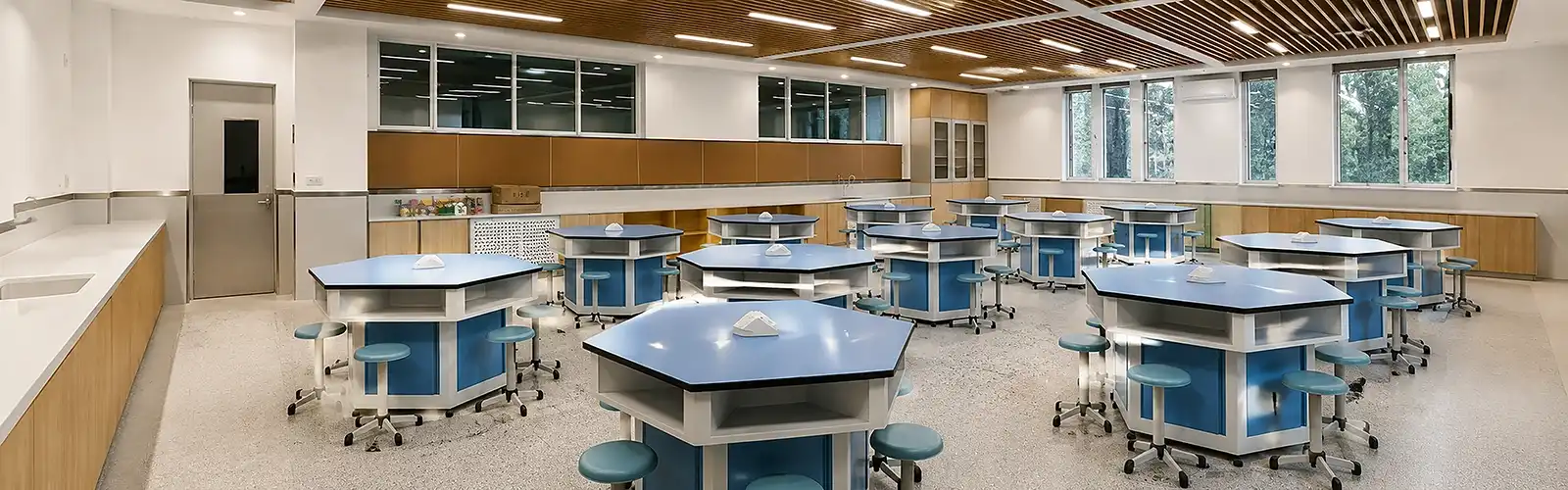
Proper maintenance extends the lifespan of Lab Tables For Schools to over 20 years. Regular cleaning and inspection ensure that lab tables for schools remain safe and functional throughout their lifecycle.
Daily and Periodic Cleaning Protocols
Cleaning products that get rid of dirt and grime without harming protected finishes are the first step in routine upkeep. Everyday spills can be cleaned up with mild soap and water, and tough spots can be removed with cleaners that don't scratch epoxy or phenolic surfaces. Facilities should stay away from rough scrubbing pads and bleach solutions with chlorine because they wear down chemical-resistant surfaces over time. Inspections every month find early signs of edge delamination, joint loosening, or finish wear and tear before small problems become safety risks. Setting up written repair schedules shows that the school cares about lab safety during accreditation reviews.
Warranty Coverage and After-Sales Support
Manufacturers with a good reputation set themselves apart by offering extensive guarantee programs and quick technical help. Lifetime upkeep agreements show that the maker trusts the product's durability and give institutions a way to predict long-term costs. Warranty terms shouldn't just cover manufacturing flaws; they should also cover structural stability, finish adhesion, and chemical-resistant performance. Damaged parts can be fixed without having to replace whole desks as long as new parts are available. When reviewing possible suppliers, procurement managers should ask for customer examples that specifically talk about how quickly and satisfactorily warranty claims were handled.
Sustainable Procurement Strategies
As schools show how to be sustainable, environmental care has a bigger impact on what institutions buy. An all-steel building with cold-rolled steel plates can be recycled completely when it's time, unlike composite materials that end up in dumps. Companies that have ISO14001 environmental management systems approved show they are dedicated to lowering the effects of their production, such as the amount of trash they make and the amount of energy they use. Greenguard Gold approval proves low VOC emissions, which protects the air quality inside classrooms that may not have a lot of airflow. These sustainability features help the school reach its environmental goals and create healthy classrooms for both students and teachers.
Procurement Best Practices for Bulk Buying School Lab Tables
When buying a lot of furniture, you need to come up with a plan that balances the different needs of quality, cost, and delivery planning.
Vendor Qualification and Due Diligence
Institutions are protected from getting bad goods and service when they carefully evaluate their suppliers. Manufacturers must show the right certificates, such as CE, ISO9001 for quality management, ISO14001 for environmental management, and ISO45001 for health and safety at work. When filling big orders, production capacity is important. Facilities with more than 30,000 square meters of manufacturing space and more than 100 skilled engineers can handle large projects for institutions without delaying deliveries. Ask for specific case studies of similar educational installations. Pay special attention to how complicated the projects were, how much they were customized, and how satisfied people were with the installations after they were done. Visits to factories are a great way to learn about how they control quality and how their real production skills compare to what they say they can do on their marketing materials.
Negotiating Favorable Terms for Educational Institutions
Buying in bulk gives you more power to get better prices and service terms. Institutions should ask for big rates that reflect lower transaction costs and faster shipping times for each unit. When compared to fully completed units, modular furniture designs are cheaper because they are easier to ship and require less work to put together. Talk about payment terms that work with the institution's spending cycles. You could set up payments based on milestones that are reached when the production is finished, the delivery is made, and the final installation is accepted. Before signing the contract, make sure you understand the customizing parameters, such as the size limits, color matching standards, and approval processes for changes.
Coordinating Installation and Minimizing Disruption
For suppliers, contractors, and building managers to work together well on installing lab chairs, they need to plan ahead. Reliable makers offer free site visits that find out about space issues, utility link needs, and possible installation problems before they start making the product. Plan ahead for when the equipment will be delivered, how many people can fit in the lift, how wide the doors need to be, and where to store things temporarily. Installation times are cut down by modular systems that are easy to put together. This means that work could be done on long weekends or during short school breaks instead of having to be shut down for weeks at a time. Clear communication rules make sure that everyone knows when things need to be done and can change school plans or building order as needed.
The data shows that choosing strategic laboratory furniture means combining short-term budget concerns with long-term goals for performance, safety, and sustainability. When schools and universities buy lab tables for schools with the right specs, they create learning spaces where students can focus on scientific discovery instead of figuring out how to use broken equipment.
Conclusion
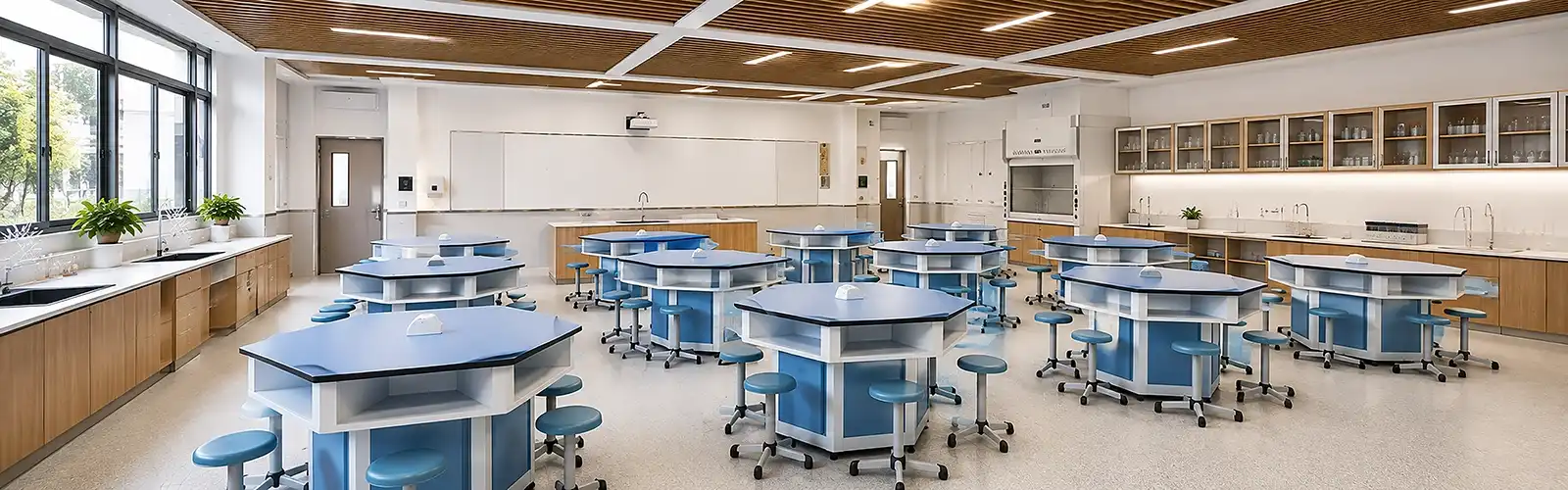
For labs to work well, they need furniture that is specially designed to handle the difficulties of educational settings. Lab tables for schools and similar laboratory desks are important investments in infrastructure that affect the safety of students, the output of research, and the long-term costs of the building. Chemical resistance, structural longevity, and installation freedom are the main problems that modern all-steel building with epoxy resin finishes, customizable measurements, and modular designs tries to solve. When purchasing managers prefer certified goods that meet SEFA and ISO standards and work with makers that offer full support, they can build labs that do their jobs for decades without needing to be replaced too soon.
FAQ
What makes laboratory furniture different from standard classroom furniture?
Standard furniture doesn't have the special materials that lab desks do that are made to withstand chemicals, heat, and safety rules. Surfaces are tested against strong acids, bases, and organic solvents, and frames give scientists a way to hold heavy scientific equipment. Built-in eyewash stations, chemical-resistant finishes, and fire-rated building that meets NFPA guidelines are all safety features.
How do I determine appropriate table dimensions for different age groups?
Kids in elementary school usually work at 28 to 30 inches tall, kids in middle school at 30 to 34 inches, and kids in high school through college at 34 to 36 inches. This range can be fit into a single installation with the help of adjustable height systems. The depth of the table should give you 24 to 30 inches of work space while still leaving enough space around the edges to meet fire code standards.
Can existing laboratories be upgraded with modular furniture systems?
Modular design makes it possible to do changes in stages without having to shut down the whole lab. During summer breaks or between semesters, individual workstations can be swapped out for new ones that are set up to work with the current utility links. This method spreads out capital costs over several budget cycles while gradually making the building more useful.
What warranty coverage should I expect from quality laboratory furniture?
Professional-grade lab furniture should come with structure warranties that last at least 10 to 15 years. Some makers even offer maintenance guarantees that last a lifetime. Coverage shouldn't just include manufacturing flaws; it should also include chemical protection, paint integrity, and joint stability. Technical help that is quick to respond and replacement parts that are easy to find are just as important as the length of the guarantee.
Partner with Uken for Laboratory Furniture That Delivers Lasting Value
Three decades of specialized knowledge have helped Luoyang Youken Laboratory Equipment Co., Ltd. work on teaching lab projects in medical, pharmaceutical, chemical, and research labs. Our modular all-steel desks are made from 1.00mm cold-rolled steel and have an electrostatic epoxy finish. This gives them better chemical protection and structural stability while making them easier to install and lowering the cost of shipping. We make a wide range of lab tables for schools and can fully customize the sizes, materials, and colors to meet your unique educational needs. Our products are certified by CE, ISO9001, ISO14001, and ISO45001. With 100 skilled engineers working in 30,000 square meters of production space, we can reliably deliver within 20 to 40 days. We also offer free site surveys, full design support, and maintenance for life to protect your investment. Get in touch with our buyers at ceo@ukenlab.com to talk about how our modular lab options can change your school's setting while lowering your total cost of ownership.
References
1. Scientific Equipment and Furniture Association. (2020). SEFA 8: Laboratory Furniture Standard. Hilton Head Island, SC: SEFA Publications.
2. American National Standards Institute. (2019). ANSI/BIFMA e3 Furniture Sustainability Standard. Grand Rapids, MI: Business and Institutional Furniture Manufacturers Association.
3. National Fire Protection Association. (2021). NFPA 45: Standard on Fire Protection for Laboratories Using Chemicals. Quincy, MA: NFPA Press.
4. Occupational Safety and Health Administration. (2018). Laboratory Safety Guidance. Washington, DC: U.S. Department of Labor.
5. European Committee for Standardization. (2017). EN 1729: Furniture - Chairs and Tables for Educational Institutions. Brussels, Belgium: CEN Publications.
6. International Organization for Standardization. (2022). ISO 14001: Environmental Management Systems - Requirements with Guidance for Use. Geneva, Switzerland: ISO Central Secretariat.

CUSTOMER REVIEWS
What Our Customers Say