
Laboratory Island Bench: The Ultimate Solution for Modern Research Spaces
When building or remodeling a modern lab, facility managers and procurement directors always have to figure out how to make it as efficient as possible while still meeting strict safety and legal standards. These needs are met by the Laboratory Island Bench, which becomes a strategic point. Unlike desks around the edges, these units in the middle are accessible from all sides, so multiple experts can work at the same time on a shared surface. This way of thinking about design changes how space is used, makes it easier for people to work together, and puts important services like water, gas, and electricity at the center of your business. This solution strikes a good mix between usefulness and compliance for pharmaceutical companies, research companies, and academic institutions that need scalable infrastructure.
Understanding Laboratory Island Benches—Design, Features, and Benefits
Core Design Philosophy and 360-Degree Workflow
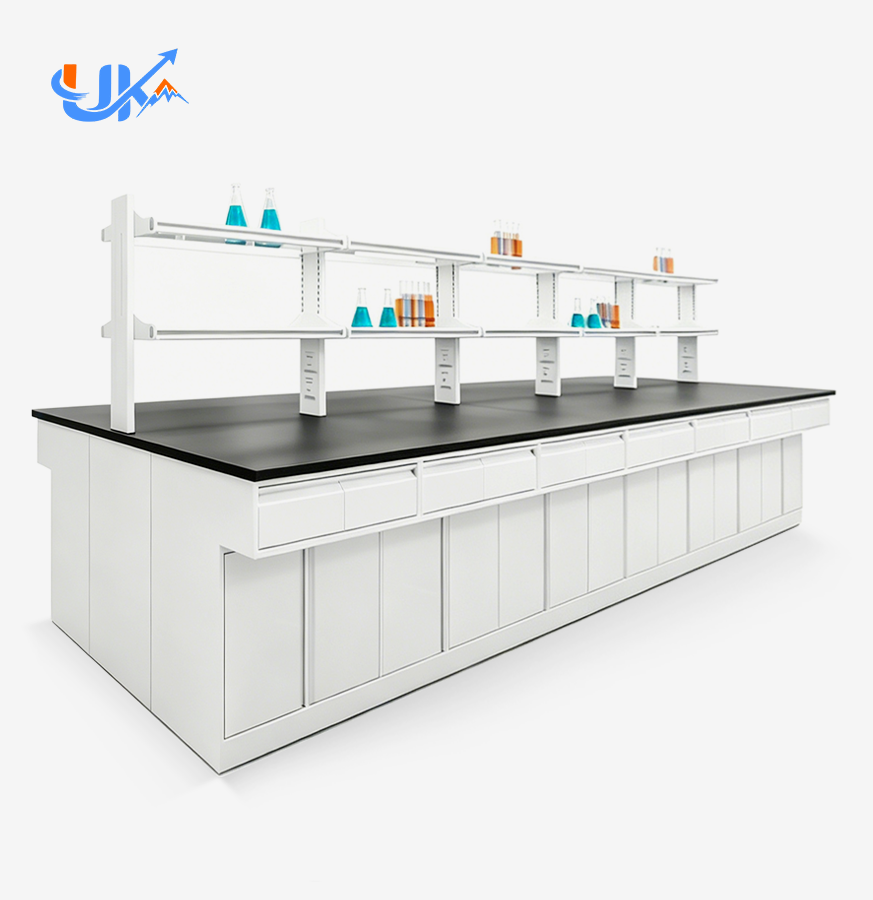
These days, study needs to be able to move quickly and work together in real time. Traditional wall-mounted chairs force teams to work in a straight line, but experts can work in any way they want with a laboratory island bench arrangement. By putting the workstation in the middle, techs can reach the tools from any angle, which cuts down on wasted movement and speeds up the process. In pharmaceutical research and development, where speed and accuracy are key to staying ahead of the competition, this layout allows high-throughput screening.
Modular Components and Utility Integration
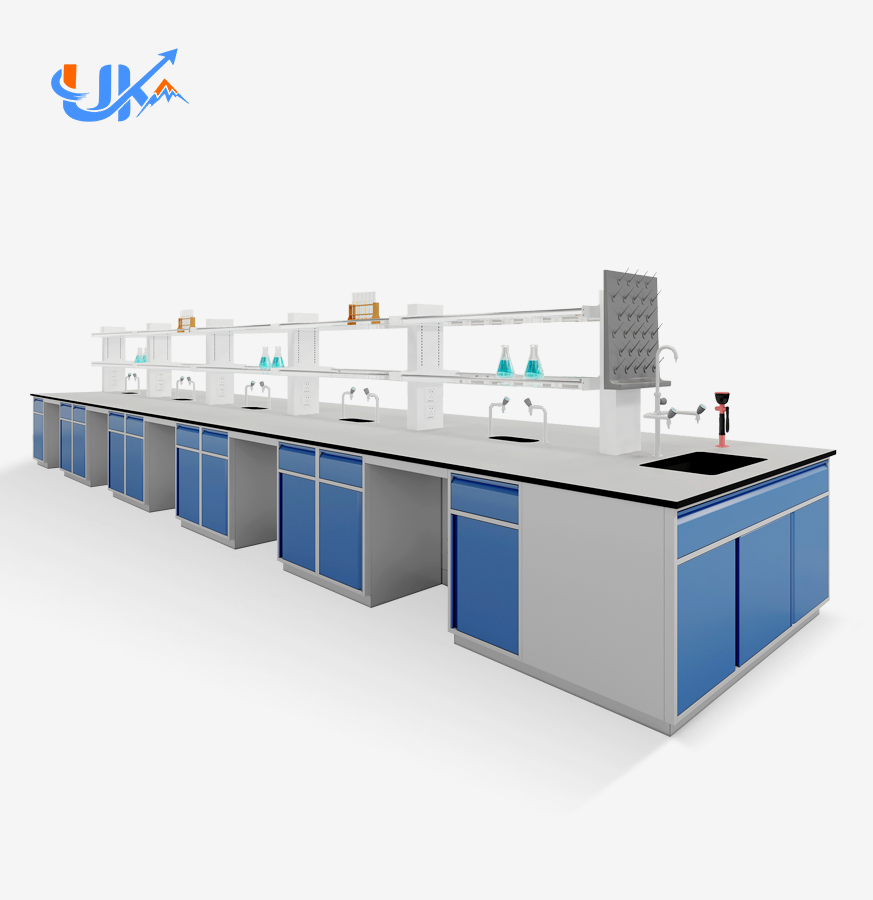
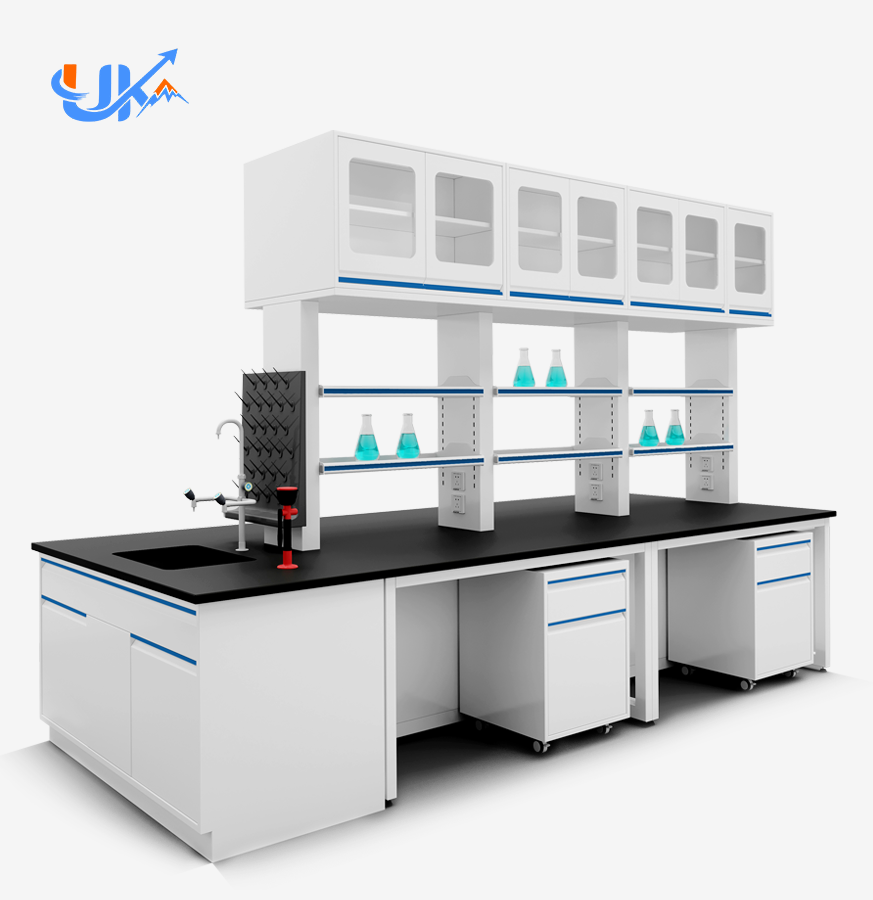
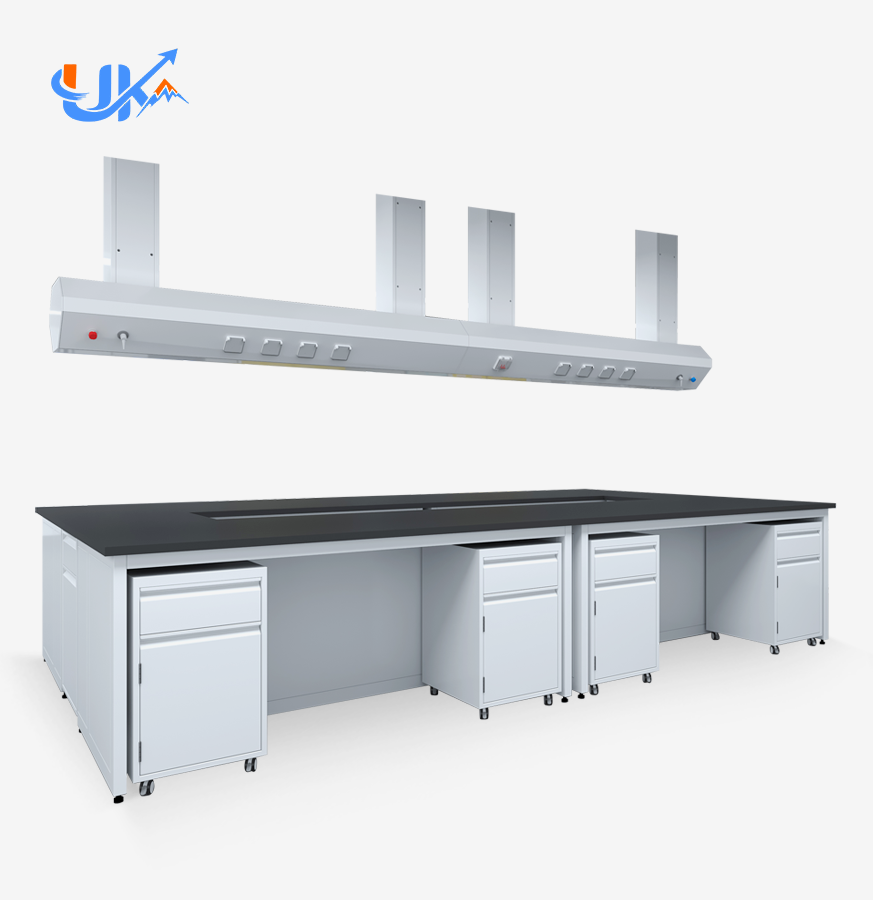
The modular design of these devices makes them very flexible. At Uken, our units have a center laboratory island bench plan with two sides that can be used at the same time, so more than one person can use them at the same time. The building has single cabinets (470x520x830mm), double cabinets (900x520x830mm), and special water tank modules (1440x720x830mm) that can be changed to fit the needs of the project as it changes. Integrated water and electrical ducts get rid of the mess of external pipes, keeping the view clear and lowering the risk of contamination.
Solid-core physical and chemical boards or ceramic surfaces are some of the countertop choices. Each is picked for its own resistance profile. Epoxy resin tops are resistant to concentrated acids and bases for 24 hours, which is important for chemistry labs and meets SEFA requirements. Ceramic alternatives work really well in clean places where temperature shock and chemical contact happen all the time.
Space Optimization and Ergonomic Support
For small areas, laboratory island benches are the answer to the space problem. When you centralize your equipment, you can set up storage or specialty areas around the edges. This makes up to 30% more space useful than in standard layouts. Ergonomically, knee-space room and height adjustments make it easier on the muscles and joints during long routines, which is important for hospital infrastructure directors who are in charge of staff health.
Laboratory safety rules must be followed at all times. Our goods are certified by CE, ISO9001, ISO14001, and ISO45001, which gives purchasing managers peace of mind that systems meet international safety standards. The structure is made of steel and can resist fire, water, and microbial growth, which are all threats to both people's safety and the security of the data.
Materials and Dimensions – Choosing the Best Laboratory Island Bench Components
Material Selection for Harsh Environments
Material science is the first step toward durability. The backbone of the structure is cold-rolled steel, especially steel that is 1.00 mm thick in our production. This gauge can hold more than 400 kg per linear meter, which is important for holding mass spectrometers or centrifuge stacks. Acid washing, phosphating, and electrostatic spraying with epoxy glue protect steel frames from rust in three steps. This protects against hydrochloric acid, sodium hydroxide, and organic solvents that are commonly used in chemical tests.
In cleanrooms and GMP production plants, stainless steel versions have extra benefits. Their smooth, non-porous surfaces stop germs from growing, which makes validation easier for FDA or EMA checks. Epoxy-coated steel, on the other hand, is often cheaper and better for general-purpose labs where chemical protection is enough without the extra cost of stainless metals.
Trends in sustainable buying now affect the choice of materials. New hybrid materials contain recycled materials and still have fire-resistant qualities, making them appealing to government and university buildings that have to follow green building guidelines. These options show that being responsible for the environment doesn't have to mean sacrificing efficiency.
Dimensional Precision for Customization
Standard measurements can be used as a starting point, but they need to be changed for real-world uses. In order to fit liquid handles, biotechnology labs that do genome sequencing need desks that are deeper (up to 900 mm), while food testing labs put length first so that samples can be mixed together more easily. Our engineering team works with lab planners to turn process diagrams into exact specs. This makes sure that the final installation supports the operations that were planned without any problems with space.
The vertical measurements are also important. Standard bench heights (830 mm) are good for standing methods, but smaller shapes are better for microscopy or cell culture work that is done while sitting down. Adjustable leveling feet (tolerance ≤2mm) even out floors that aren't level, which is very important for precision balances that work on top of them. These details, which are often missed when buying tools for the first time, decide whether it gives accurate data or makes mistakes that cost a lot of money.
Comparing Laboratory Island Benches—Making an Informed Purchase Decision
Functional Advantages Over Wall-Mounted Benches
Metrics for performance make clear differences. When two or more people can use a laboratory island bench setup at the same time, it doubles the efficiency. For example, a pharmaceutical quality control lab that processes 200 samples every day will see instant throughput improvements. Accessibility from all sides gets rid of jams at shared instruments, which cuts down on wait times and speeds up work.
Cost studies need to be nuanced. The initial purchase prices for laboratory island bench systems are 15-20% higher than those for wall chairs. This is because they have more structural parts and utility routes. Lifecycle costs, on the other hand, favor laboratory island benches when fewer work hours and better use of space are taken into account. Facility managers who are in charge of big improvements know that spending money up front saves money in the long run.
Modular Versus Fixed Configurations
Modularity takes into account the fact that study objectives change over time. As the program changes every five years, a university chemistry school might change the way the labs are set up. When buildings are knocked down, they can be taken apart without damaging the structure. This protects capital investment during moves. Fixed fully welded frames, on the other hand, offer the most stiffness for methods that are sensitive to vibration, such as atomic force microscopy, where even small deflections can mess up readings.
Integration of storage makes organizations more efficient. Three-pull cabinets (470x520x830mm) store chemicals close to where they are used, so volatile compounds don't have to journey as far or be exposed to air for as long. According to quality control standards, drawer cycle testing must be done at least 50,000 times to make sure that hardware can survive heavy use for decades, which keeps purchase budgets from having to pay for replacements too soon.
Procurement Guide – From Ordering to Installation and After-Sales Support
Evaluating Manufacturers and Supply Chain Reliability
Sourcing choices depend on what the seller can do. Luoyang Youken Laboratory Equipment Co., Ltd. has a production center that is 30,000 square meters and has 100 professional engineers working there. They offer complete solutions for laboratory island bench projects, from planning advice to installation. This vertical merger lowers the chances of quality issues or communication problems that happen on projects with more than one provider.
Delivery dates have a big effect on project plans. Standard production takes 20 to 40 days, depending on how complicated the design is and how many orders there are. Directors of procurement should work out staging deals for phased buildouts so that furniture deliveries happen at the same time as building milestones. Delays affect all parts of a project's schedule, so including fines in contracts for late delivery protects the interests of the organization.
Installation Protocols and Minimizing Downtime
Professional construction keeps mistakes from costing a lot of money. Assembly on-site is easier with modular designs, which cuts down on work hours and disruptions. However, qualified contractors who know about laboratory rules are needed to connect utilities like plumbing for sinks, gas for Bunsen burners, and electricity for instruments. Coordinating between mechanical workers and furniture fitters keeps them from running into problems that make commissioning times longer.
Long-term happiness depends on help after installation. The warranty should cover flaws in the structure and problems in the coating, and for important issues, the reaction time should be less than 48 hours. Regular maintenance plans, like checking the drawer hardware once a year and the stability of the coating every two years, protect the worth of an asset and make sure it always meets new safety standards.
Usage and Application—Customizing Laboratory Island Benches for Different Research Needs
Sector-Specific Adaptations
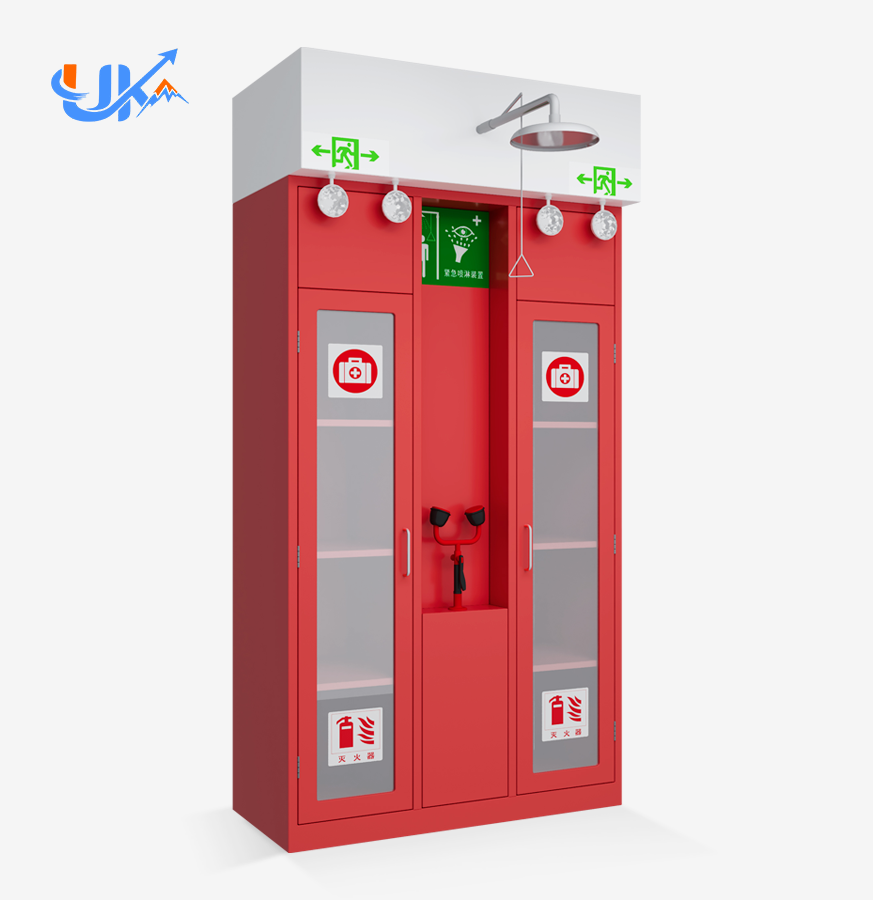
Chemical protection and ease of cleaning are very important in pharmaceutical labs. Particulate traps can't form on smooth, uniform surfaces, which is important for clean compounding. Safety features like eye wash stations and emergency drip cups that are built in are required by OSHA and GMP rules. These features show that we have a deep understanding of regulatory settings where written records of equipment specs can be used as proof in an audit.
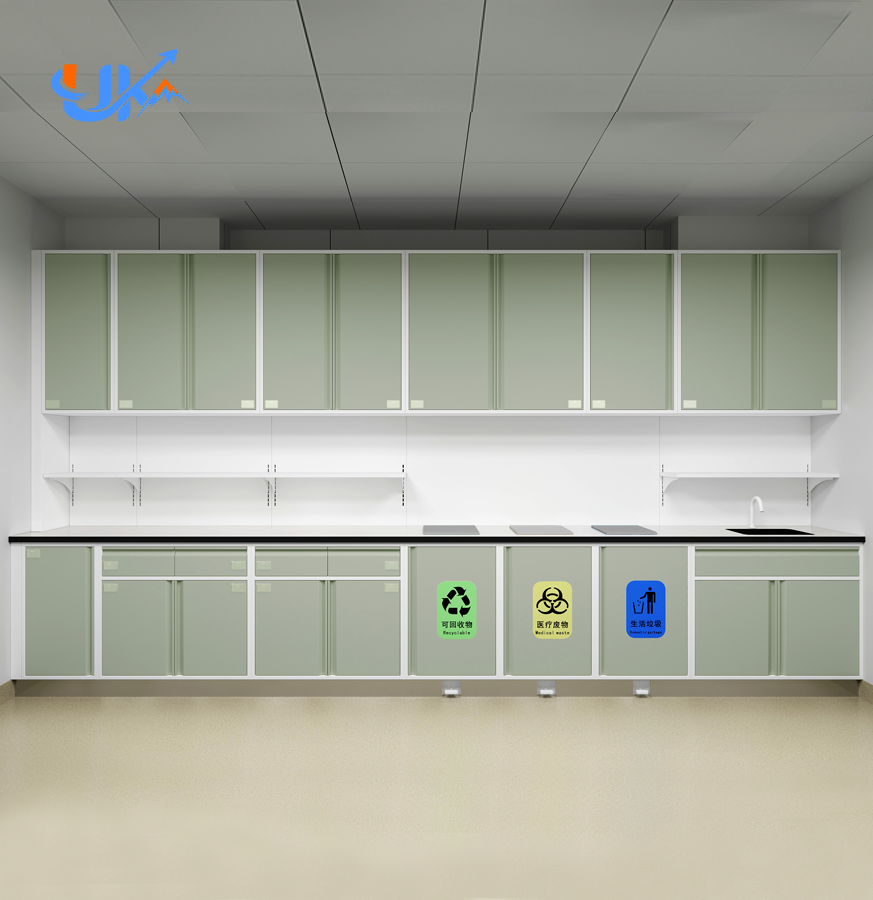
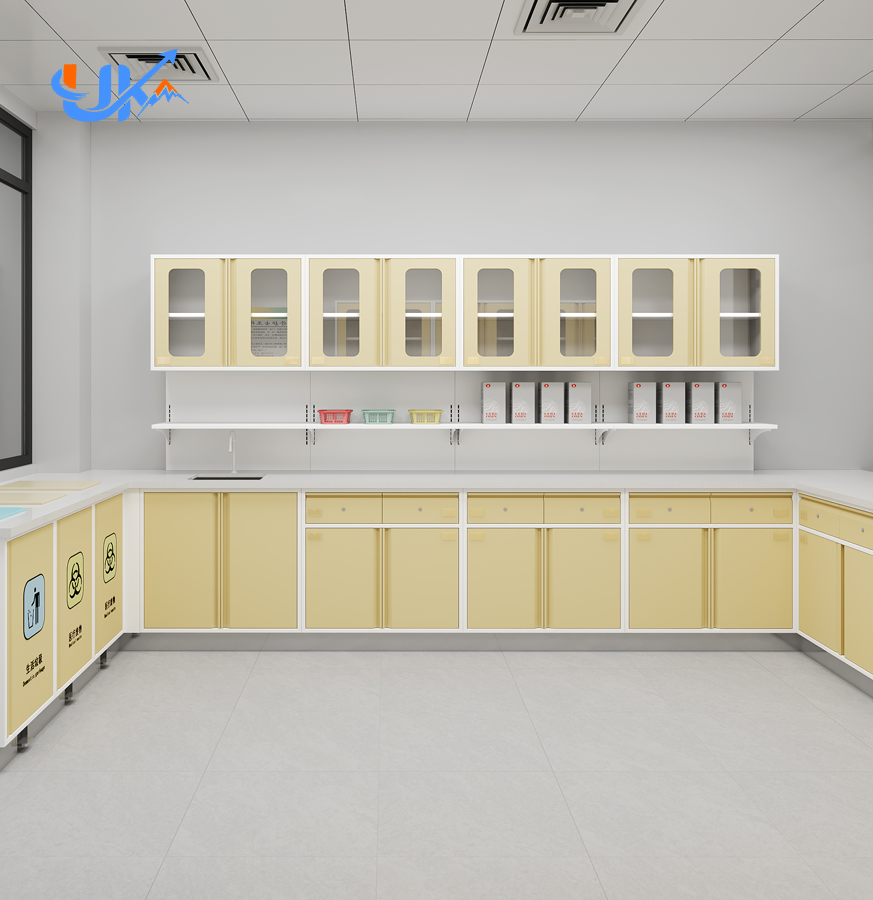
In medical and clinical tests, cleanliness and quick cleaning are very important. Cross-contamination is less likely to happen when specimens are being processed in stainless steel sinks with hands-free taps. Customizable epoxy coats make it possible to set up color-coded work areas that help error-proofing plans in testing centers with a lot of samples because mixing up samples can have bad results.
Research and academic places like being able to be flexible. Teaching labs for undergraduates are switched between classes in analytical, organic, and basic chemistry. Each course has its own set of requirements. Layouts that can be changed to fit changing class sizes and strong buildings that can handle the effects of new users. Because schools have to stick to tight budgets when buying things, our low prices and modular method make us stand out.
Maintenance Strategies for Longevity
Preventive care makes things last longer. Epoxy coatings last longer when cleaned every day with pH-neutral cleaners that don't dull the shine. Inspections every three months look for early signs of corrosion, which usually show up at the edges of sinks or gas lines. This lets small fixes be made before the damage gets worse. Applying food-grade mineral oil to epoxy resin counters on a regular basis keeps the shield against stains in place.
Chemical spill procedures require that someone act right away. Even materials that are strong break down over time when they are exposed to acids or bases. To cut down on touch time, absorbent neutralizers should be kept within arm's reach. Documenting spills and cleanup efforts meets the needs of an ISO audit and helps with choosing materials for future uses that are especially tough.
Conclusion
Choosing the right laboratory island bench layout changes the amount of study that can be done and how well the system works. When you combine modular design, strong materials, and safety standards, you get systems that are more like long-term investments in infrastructure than just buying furniture. When purchasing managers look at different providers, they should give more weight to companies that show they have strong tech backgrounds, quality certifications, and quick service networks. As the needs of labs grow, for example, for precise medicine, environmental tracking, and advanced materials research, the infrastructure must change to meet those needs. This complete method gives leaders the tools they need to evaluate vendors, make changes to specs, and put in place solutions that boost productivity while keeping people and data safe.
FAQ
Should I choose a C-frame or H-frame structure?
When you're sitting down to do something like microscopy or data entry, a C-frame form gives you more space. Alternatives to the H-frame can hold the most weight for heavy scientific equipment like NMR spectrometers. Your choice will depend on the main uses and weight needs.
Can island benches be relocated during facility renovations?
Modular knock-down designs let parts be taken apart and put back together again without damaging the structure. But plumbing, gas, and electricity lines need to be disconnected and recalibrated by an expert when they are moved. Plan for a mechanical professional to help with the move.
What lead time should I expect for custom-sized units?
Standard production takes 20 to 40 days, but longer times may be needed for difficult connections or large orders. Getting makers involved early on in the planning process keeps schedules from clashing. Costly changes can be avoided by making sure that the measurements are approved before they are used.
Do worktops meet fire safety codes?
Professional-grade epoxy resin surfaces have Class A fire rating, which means they put out fires on their own when the sources of burning are taken away. NFPA guidelines can also be met with ceramic and phenolic substitutes. Ask for proof of approval during the buying process to make sure of compliance.
Partner with Uken for Your Laboratory Furniture Needs
To get through the complicated world of lab equipment, you need a reliable laboratory island bench provider with a track record of success. Uken has been making high-quality products for 30 years and also offers full design consultations. They help with projects from the first idea to long-term upkeep. Our production is ISO-certified, so the quality is always the same, and our global operations make sure that we can offer affordable prices without sacrificing timeliness. Our team makes solutions that fit your needs, whether you're a pharmaceutical company that wants to increase production, a university that wants to update its classrooms, or a hospital that wants to improve its clinical labs. Email our technical experts at ceo@ukenlab.com to talk about the needs of your project and get a full quote. We turn technical problems into practical benefits, setting up your building for long-term success.
References
1. American Society for Healthcare Engineering. Guidelines for Design and Construction of Hospital and Health Care Facilities. Chicago: ASHE Press, 2020.
2. Laboratory Design Institute. Modular Laboratory Furniture Systems: Efficiency and Flexibility in Modern Research Environments. Boston: LDI Publications, 2019.
3. National Fire Protection Association. NFPA 45: Standard on Fire Protection for Laboratories Using Chemicals. Quincy: NFPA Standards Council, 2021.
4. Scientific Equipment and Furniture Association. SEFA 8 Laboratory Furniture Standard: Recommended Practices for Laboratory Furniture. Hilton Head Island: SEFA Technical Committee, 2018.
5. International Organization for Standardization. ISO 14644: Cleanrooms and Associated Controlled Environments. Geneva: ISO Technical Committee 209, 2022.
6. U.S. Green Building Council. LEED v4.1 for Laboratory Spaces: Sustainable Design Criteria and Material Selection. Washington: USGBC Education Department, 2020.

CUSTOMER REVIEWS
What Our Customers Say