



Comparing Medical Lab Benches: Cost, Durability, and Functionality
When evaluating laboratory workstations for clinical, pharmaceutical, or research settings, procurement managers face a critical decision: balancing cost constraints with performance requirements. A medical lab bench serves as more than a worksurface—it functions as a sterile, chemical-resistant platform that directly impacts diagnostic accuracy, technician safety, and long-term operational efficiency. Selecting the right configuration requires understanding how material composition, structural design, and ergonomic features translate into measurable value across years of intensive use in demanding healthcare environments.
Understanding Medical Lab Benches: Types, Materials, and Key Features
Material Selection: Steel vs. Composite Worksurfaces
In medical settings, medical Lab Benches are usually made of cold-rolled steel that has been treated in special ways on the outside. If you make steel benches out of 1.00mm cold-rolled steel plate, they can hold a lot of weight and are very strong. The epoxy resin electrostatic coating process makes a shield that doesn't let germs in, which is very important in pathology and microbiology areas. This coating can be exposed to 10% bleach solutions and other hospital-grade disinfectants every day without breaking down.
The material used for a countertop depends on what it will be used for. Solid- core physical and chemical boards are better for labs that use harsh chemicals because they are more resistant to chemicals. These phenolic resin surfaces keep their shape even when heated and cooled many times, and common lab dyes can't stain them. Ceramic countertops are better at withstanding heat in places where open flames or hot tools are used, but they need to be handled carefully so they don't crack when they're hit hard.
Modular vs. Fixed Laboratory Configurations
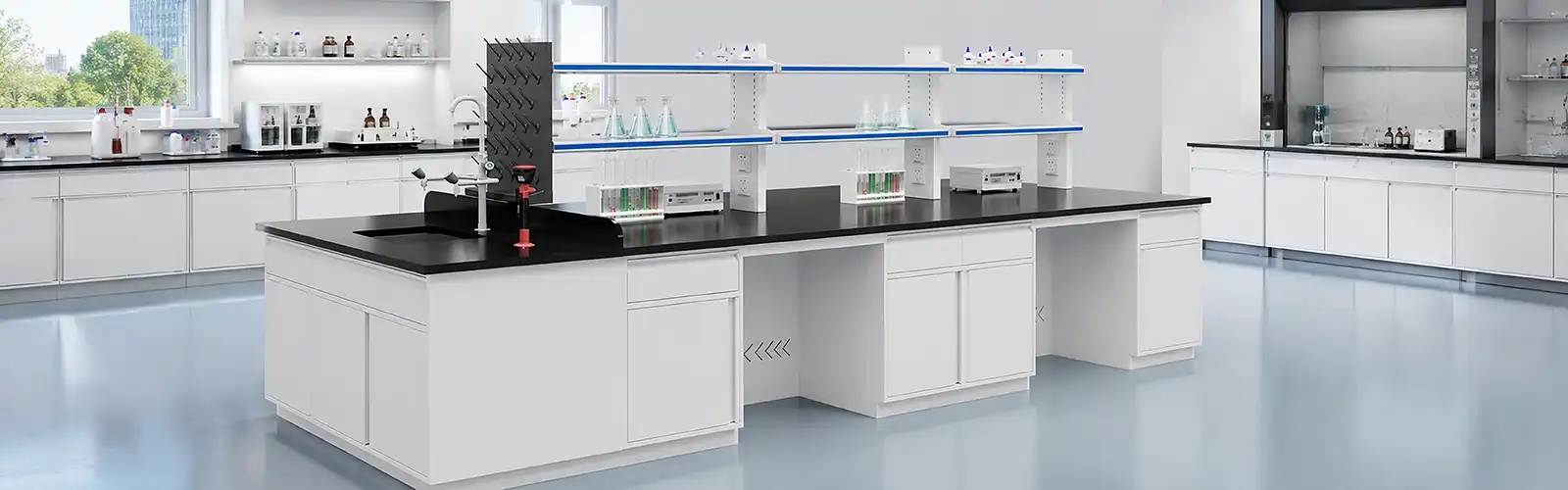
Modern ways of buying things like flexible lab furniture systems that can be changed to meet changing business needs. Standardized cabinet sizes are used in modular designs. Single cabinets are 470 × 520 × 830 mm, double cabinets are 900 × 520 × 830 mm, and water tank units are 1440 × 720 × 830 mm. These standard units let facilities change layouts without having to buy all new furniture. This protects capital investments during changes to workflows or staff growth.
Premium laboratory tables are fully welded, which means that the joints are smooth and there are no cracks where dirt can gather. This design philosophy solves a problem that medical labs have for a long time: keeping the work area clean while specimens are being processed. Knock-down structures are easy to put together and take 40 to 60 percent less time to install than traditional built-in-place systems. This means that lab operations can continue as usual while the building is being upgraded.
Safety and Compliance Features
Lab equipment meant for medical use has to meet strict rules set by the government. Certifications like ISO 9001, ISO 14001, and ISO 45001 make sure that quality control, environmental duty, and health and safety at work rules are followed during the manufacturing process. When labs want to get CLIA accreditation or be ready for CAP inspection, these certifications become very important.
Pathogens can't get from samples to workstations because the surfaces are antimicrobial and made to work in hospital settings. The smooth, seamless finish makes cleaning easier because it doesn't leave behind any residue or lines that could make a sterile method less effective. The fireproof and moisture-proof design helps keep labs safe when they store flammable liquids or work in wet places where mildew growth could damage equipment.
Cost Analysis: Balancing Budget and Quality in Medical Lab Bench Procurement
Initial Investment Considerations
The costs of buying medical lab benches vary a lot based on the materials chosen and the level of customisation needed. Benches made of steel with an epoxy coating usually costs in the middle of the range for lab furniture. They are a better value than stainless steel options and last a lot longer and are much more resistant to chemicals than wood-based systems.
Facilities can better use their budgets when they understand how prices work. At lower prices, basic configurations that can be used in teaching labs or low-throughput testing areas are available. High-specification benches made for biosafety level 2 or pharmaceutical manufacturing sites are more expensive because they are made with better materials and have compliance certifications. When you buy in bulk, you can get savings. For example, some sellers offer 15–25% price cuts on orders of more than 50 desktop modules.
Custom manufacturing through partnerships between OEM and ODM gives facilities with specific space limitations or workflow needs custom solutions. Custom orders usually add 20 to 40 days to the lead time, but they avoid expensive changes that need to be made in the field and make sure that space is used efficiently in labs that aren't perfectly round.
Total Cost of Ownership Calculations
Smart purchasing managers look at the total cost of ownership of furniture investments instead of just the purchase price. Over the course of a 10–15-year operational life, maintenance costs have a big effect on financial results. Steel lab benches that have been cleaned with acid-washing, phosphating, and electrostatic spraying don't need much upkeep other than regular cleaning. This is very different from wood benches, which need to be refinished and fixed up every so often.
The corrosion-resistant qualities of properly treated steel mean that benches don't need to be replaced before they're time. Facilities that work in coastal areas or wet conditions benefit the most from this longevity, since moisture-induced breakdown speeds up the failure of untreated materials. The high load-bearing capacity keeps the structure from deforming when heavy equipment is loaded on it, which saves money on mid-lifecycle reinforcing costs.
Shipping operations are another cost factor that flexible designs do a good job of handling. When compared to fully built furniture, shipping furniture in compact packaging saves 30–50% on freight costs. This is especially helpful when shipping from Chinese factories to North American destinations. Installation labour costs are lower because the furniture is easy to put together. Two technicians can usually set up a 12-workstation lab in one business day.
Durability and Maintenance: Ensuring Longevity in Medical Lab Benches
Chemical and Environmental Resistance
Chemicals that quickly break down cheap materials are used on medical lab benches in medical settings. Multiple anti-corrosion methods are used on high-quality steel chairs to protect them from acid and alkali harm. The first step in this treatment plan is acid washing, which gets rid of any dirt or grime on the surface. Next is phosphating, which makes a crystalline conversion coating that helps the next layers stick better. When the last electrostatic spraying is done, epoxy resin is spread out evenly over the substrate to protect it from chemicals.
Because of this thorough surface cleaning, benches can be regularly exposed to formaldehyde, xylene, acetone, and other chemical solvents that are used in histopathology processing. The chemical inertness keeps the reagents from getting contaminated, which could lower the accuracy of the diagnosis. This is a very important issue in clinical laboratories, where wrong results can have very bad effects on decisions about patient care.
Environmental factors, such as changes in humidity and temperature, can damage laboratory furniture. Moisture-proof construction stops internal corrosion, which over time weakens building parts. For example, this is very important in labs that do wet chemistry or use automatic analyzers with water-cooled parts that raise the humidity in the air.
Maintenance Protocols and Cleaning Requirements
The smooth, uniform surface of good laboratory benches makes daily cleaning easier and makes sure that the surface is completely clean. Technicians can wipe down surfaces clean without leaving behind residue because the material is stain-resistant. This keeps the sterile look that is important in lab areas where patients are present. Even when cleaned with alcohol-based disinfectants several times a day, the layer on the surface doesn't leave streaks.
Setting up regular maintenance plans for furniture saves facility expenses and makes it last longer. Every week, you should check to make sure that the cabinet hinges work properly, the drawer slides work without sticking, and the edges of the countertops stay whole without any chips or delamination. Every three months, the structure's integrity is checked to see if it has changed shape under the weight of tools or if modular links have become loose.
The dust-proof design of properly constructed lab benches keeps particles from building up in storage areas, which keeps reagents pure and keeps delicate instruments from getting dirty. Easy disassembly makes deep cleaning easier during yearly facility shutdowns or after biohazard incidents that need full decontamination.
Functionality and Ergonomics: Enhancing Laboratory Productivity
Workflow Optimization Through Design
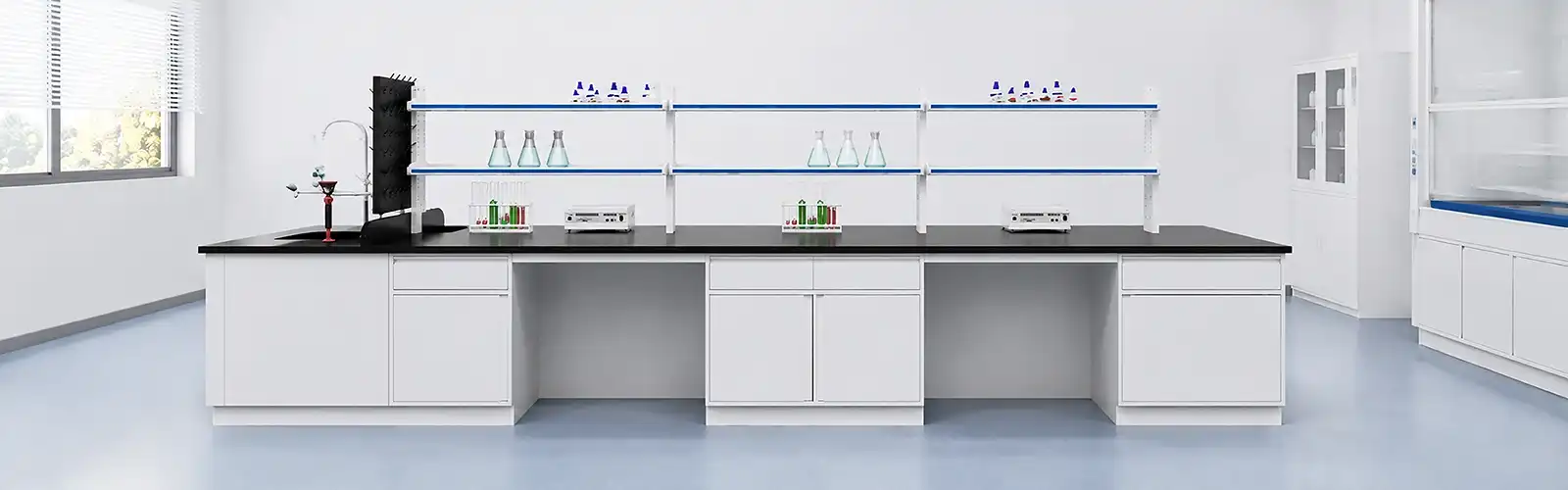
The efficiency of the lab rests a lot on how the medical lab benches are set up so that they can support normal workflow patterns. Integrated storage solutions, such as three-pull cabinets, make it easy to get to reagents in a structured way. This saves technicians time during times of high testing volume. Putting storage modules in strategic places near where they are used reduces the amount of movement and repetitive reaching that puts stress on the muscles and joints.
Different lab areas have different working needs, and modular configurations can meet those needs. A molecular diagnostics suite doing PCR analysis needs different desk setups than a microbiology lab working with bacterial cultures. Because the size and arrangement can be changed, facilities can set up rooms in ways that work best for each area while still using as little space as possible.
Water tank units that are 1440 × 720 × 830 mm can hold sinks for labs and eyewash stations that are needed by safety rules. Putting these utilities inside workstation runs instead of against outer walls makes plans that work better, save money on pipes, and make emergency equipment easier to get to.
Ergonomic Considerations for Long-Term Health
Healthcare laboratory technicians work shifts that last between 6 and 12 hours and require them to focus on precise tasks the whole time. Ergonomic desk design keeps people from getting tired, which hurts their performance after long hours of work. Even though height-adjustable benches are the best for ergonomic freedom, most people can be comfortable with fixed-height setups made to standard 830mm working heights if they are paired with the right chairs.
When lab benches are built correctly, they have strong, non-deformable frames that make them safe for tasks like microscopy and precise measuring. Vibration dampening is very important in labs that work with cell cultures or analytical scales that are sensitive to micrograms, because even small movements can throw off measurements.
The right way to set up a desk takes both physical and visual efficiency into account. Enough surface area keeps work areas from being crowded, which raises the risk of mistakes during sample processing. Customising colour choices lets facilities set up departmental colour-coding systems that keep samples from getting mixed up, which is a safety measure that is especially useful in multi-specialty labs that work with a wide range of specimens.
Side-by-Side Comparison: Selecting the Best Medical Lab Bench for Your Business Needs
Material Performance Comparison
Steel medical lab benches work better than benches made of other materials in a number of different evaluation categories. When you look at how chemically resistant steel is to wood, you can see big differences. For example, properly treated steel surfaces stay strong for years when they are exposed to disinfectants, while wood finishes break down in 18 to 24 months. Steel construction gets rid of the fire risks that come with wood parts, so it meets the stricter building codes for healthcare facilities.
Comparing workstations made of steel and stainless steel shows that epoxy-coated steel is just as resistant to corrosion at a much lower cost. While stainless steel is nice to look at in places that patients can see it, the changes in function that it makes in back-of-the-house labs rarely explain the 40–60% price premium. Budget-conscious facilities get more for their money when they put the money they save on quality surface finishes toward extra storage units or specialized equipment.
When it comes to structural stability, welded steel frames are better than composite materials that use mechanical fasteners. Welded construction makes a single piece that is strong and stable, even when loads of more than 200 kg per linear meter are applied. This is enough to support automatic analysers, centrifuge groups, and other heavy laboratory equipment without the need for extra support.
Configuration Options for Diverse Applications
When deciding between fully assembled and knocked-down structures, site-specific constraints need to be taken into account. Fully built chairs ship ready to use right away, which makes installation easier but costs more and needs a lift for deliveries to upper floors. Knock-down configurations are better for shipping costs and getting through tight spaces during renovations, but they need skilled assembly work to make sure the structures are lined up correctly.
Different types of laboratories have very different storage needs. Pathology offices that work with tissue samples need to store a lot of reagents, and setups that focus on cabinet modules are helpful for this. In clinical chemistry labs where automatic analyzers are common, open room is valued over storage space, and instruments are placed in areas with less storage. When labs keep a lot of reagents on hand, three-pull cabinet designs make it easy to keep everything organized without taking up important desk space.
Specialised settings, like sterile labs and GMP production facilities, need furniture systems that meet limits on dust generation and cleaning validation standards. Quality lab benches have a smooth surface finish and are built so that nothing sticks out. This makes validation protocols easier, and surface sampling shows that they clean up well during qualification studies.
Conclusion
When evaluating lab workstations, you have to weigh short-term budget limits against long-term operational costs and performance needs. The epoxy resin finish on steel medical lab benches makes them very durable in hospital settings. They are also very cost-effective because they are made and shipped efficiently. The modular design philosophy allows the building to grow and for departments to be rearranged without having to buy all new furniture. By choosing the right materials, following the right maintenance procedures, and setting up areas in a comfortable way, you can make them more productive while also protecting workers' health and the integrity of samples over years of hard clinical service.
FAQ
What determines the typical lifespan of laboratory workstations?
Quality of the material and how it is treated on the outside determine how long it will last. In medical labs, steel medical lab benches with multi-stage rust protection usually last 15 to 20 years, while wood-based benches only last 8 to 12 years. Proper care increases the useful life, while harsh chemicals or heavy loads speed up the wear and tear.
How do modular systems reduce procurement costs?
When you use standard parts in a modular arrangement, you can save money by making more of them. The small packaging cuts shipping costs by 30 to 50 percent, and the easier installation cuts labour costs by a large amount. As facilities add parts to current plans instead of replacing whole workstation runs, future growth costs will go down.
What cleaning agents maintain surface integrity?
Hospital-grade disinfectants, such as 10% sodium hypochlorite, quaternary ammonium compounds, and alcohol-based solutions, can be used on surfaces that are coated with epoxy. Do not use steel wool or cleaners that are rough on protection coats. Using pH-neutral cleaners every day and disinfecting the workstation once a week will keep it clean and in good shape for as long as it's used.
Partner With Uken for Your Laboratory Furniture Needs
Luoyang Uken Laboratory Equipment Co., Ltd. operates a 30,000 square meter production facility staffed by 100 professional engineers dedicated to manufacturing laboratory furniture that meets the rigorous demands of medical, pharmaceutical, and research environments. Our comprehensive product line includes customizable medical lab benches engineered with the modular design and chemical resistance essential for clinical applications. Holding ISO 9001, ISO 14001, ISO 45001, and CE certifications, we deliver solutions meeting international quality standards with shipping timelines of 20-40 days. Whether you require single workstations or turnkey laboratory furnishing for large-scale facilities, our OEM/ODM capabilities ensure configurations matching your precise specifications. Connect with our procurement specialists at ceo@ukenlab.com to discuss how our medical lab bench solutions can enhance your facility's operational efficiency and regulatory compliance as your trusted laboratory furniture supplier.
References
1. American Society for Healthcare Engineering (ASHE). Guidelines for Design and Construction of Health Care Facilities. 2020 Edition. Chicago: American Hospital Association.
2. Clinical and Laboratory Standards Institute (CLSI). Quality Management System: Development and Management of Laboratory Documents. 6th ed. CLSI guideline QMS02. Wayne, PA: Clinical and Laboratory Standards Institute; 2019.
3. DiBerardinis, Louis J., et al. Guidelines for Laboratory Design: Health, Safety, and Environmental Considerations. 4th ed. Hoboken: John Wiley & Sons, 2013.
4. National Research Council. Prudent Practices in the Laboratory: Handling and Management of Chemical Hazards. Updated Version. Washington, DC: The National Academies Press, 2011.
5. SEFA (Scientific Equipment and Furniture Association). Laboratory Furniture Standard 8: Recommended Practices for Laboratory Furniture. Revised 2017. Hilton Head Island: SEFA.
6. World Health Organization. Laboratory Quality Management System: Handbook. Geneva: WHO Document Production Services, 2011.

CUSTOMER REVIEWS
What Our Customers Say