


Feb 6, 2025
NovaLab Tech Solutions
"Responsive and professional supplier with excellent product quality. Communication was efficient, and the entire purchasing process was smooth and reliable."


Before ordering a steel chemical fume cabinet, check six things: your chemical list and process, the steel body and coating, the liner material, airflow and containment test data, safety features with certificates, and the supplier's quotation, lead time and service scope. These checks keep you from buying a unit that looks right on paper but fails in your lab. In this guide, I walk through each point in plain language and use US references, so purchasing managers, engineers, contractors and distributors can compare offers fairly and avoid surprise costs, repair needs and delays after delivery.
Define Your Application Before Comparing Steel Chemical Fume CabinetsList Your Chemicals, Temperatures, and Procedures
Start by making a list. List all the acids, bases, and solvents, along with their amounts, the temperatures at which they work, and how long splashes or vapors can stay on surfaces. Write down if the job requires working with acids or solvents, heating, evaporation, getting samples ready, or acid digestion. Selling someone something isn't possible without this list. Also, requests that are too general usually mean that the drawings have to be changed more than once. So that the cabinet can still be used during the move, the test teams should also mark steps that can be used on a bigger scale. Talk to a safety expert or air engineer about something first if you're not sure. You might not have to think about it again for weeks after reading that review.
These two things can fix a number of problems. As people work, a steel chemical fume cabinet keeps them safe by drawing air across the opening and away from them. A cabinet for storing chemicals only has containers in it when no work is being done. People often mix up the things they buy for projects that will take place in more than one room. Next, choose whether ducts will be used or not. The ducted unit uses the building's exhaust to send the vapors outside. The air from a ductless unit is cleaned and sent back into the room. This means it can only work with known chemicals and has to be changed according to a strict schedule. Many times, ducted operation is the first thing that is done when working with strong acids or solvents. Your safety officer should make sure of this.
The building that holds a cabinet is just as important as the cabinet itself. Make sure you know the room pressure, vent capacity, make-up air, duct routes, and fan position before you place your order. The US OSHA Laboratory Standard (29 CFR 1910.1450) needs a Chemical Hygiene Plan that explains the right way to use steel chemical fume cabinets. ANSI/ASSP Z9.5 talks about how to keep labs cool and dry, and NFPA 45 talks about how to keep chemistry labs safe from fire. The group in charge has the last word on any electrical work that doesn't follow the rules in the area. Know ahead of time what state the job will be in and if there are any special electrical needs so that the quote you get is correct.
When fans and heavy tools push on panels that are too thin or not joined together, they will bend. Note how thick the plate is. The steel chemical fume cabinet made of Uken steel is made from ≥1.0 mm steel plate that has been laser cut, bent, and riveted. It can hold a lot of weight because its body is made of steel. When you laser cut, the edges are straight, so the panels line up without having to be pushed together. Since steel doesn't catch fire either, it can be used instead of wood-core bodies when fire rules are in place. Also, make sure you check the leveling feet and access doors as well as the worktop's weight limit. For this reason, reactors, hot plates, and scales all add weight. Polypropylene or stainless steel? Base your choice on how much chemical contact they will actually get, how easy they are to clean, and your budget.
The finish is the first thing that will protect against dirt and spills, so find out what is done to get ready for painting. Uken cleans its steel furniture with electrostatic spray, acid, and phosphate. It's at least 70 μm thick and is made of epoxy electrostatic powder. You can look up the thickness number, so make sure you send it with your order. The surface is smooth and doesn't have pores, so tools don't scratch it. It's also easy to clean between runs. Its color doesn't change when the temperature or humidity changes; it doesn't yellow or chalk. Also, make sure the cleaners you use are safe for the finish before using them on it.
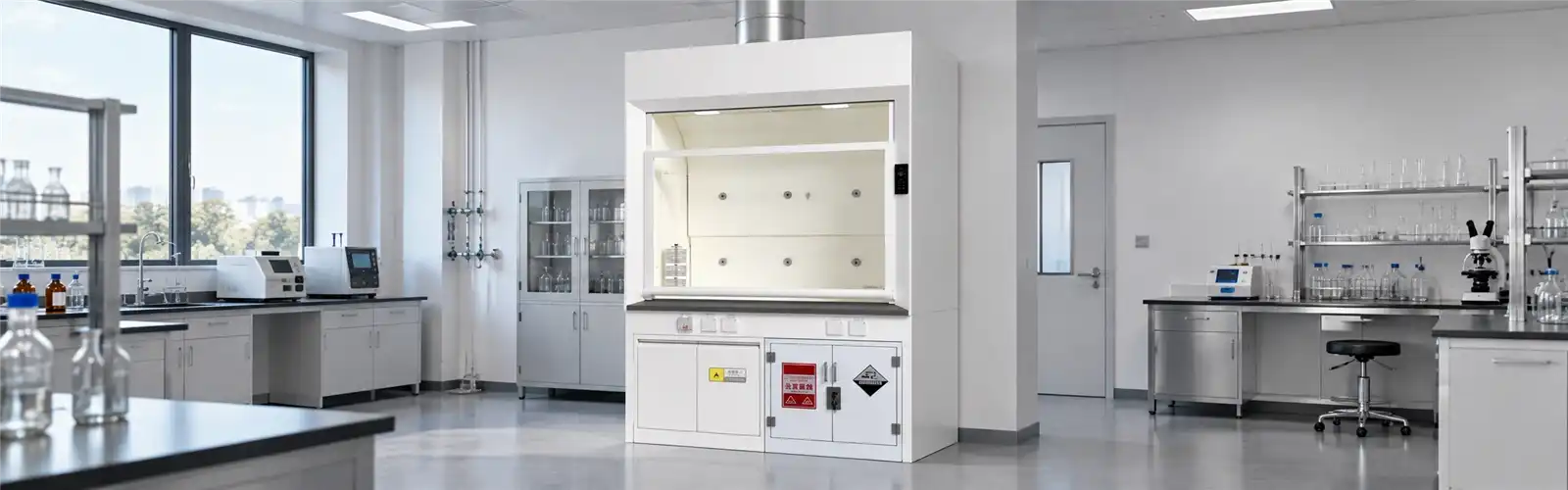
This is important because the liner is the part that will be touching the chemicals the most. Our standard liner is either a 5 mm antibacterial board or a lining that doesn't rust. Acids, bases, and biological solutions can't hurt the steel body because of this. Please let me know if you need any other process solvents, such as polypropylene, phenolic resin, or 316 stainless steel. That will save you money on the repair if the worn liner can be changed as a single piece. Next, look for the sash in the lift. When one side moves faster than the other, chain systems can get stuck. Our simultaneous belt lift, on the other hand, spreads the force evenly across the width of the sash. This keeps it from getting stuck or warped.
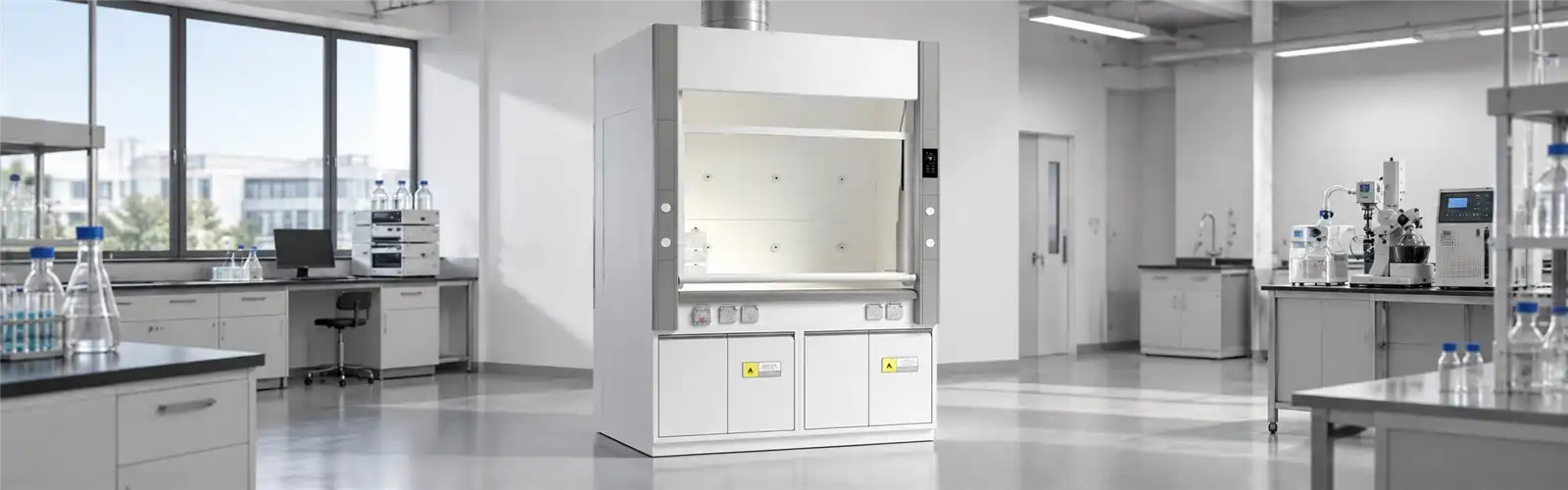
If air flows through something, the gasses inside will stay inside or not. People in the US are told to keep their face speeds between 80 and 120 feet per minute (0.4 to 0.6 m/s). The right value, though, will depend on how the steel chemical fume cabinet is made and your safety review. Give the supplier a call and ask them to give you a list of the test sash height, design face velocity, and exhaust volume. In the US, ASHRAE 110 is the usual way to test how well a unit works. Tracer gas is used to measure how much is contained. Do not ask for reports on a unit that is similar to the one you want to buy. Instead, ask for reports on the exact model and setup you want to buy. After setting up the system, you should plan to test it in person, since the results will depend on how the ducts are set up and how the air moves in the room.
Pay close attention to the parts that people use every day. Strong glass on the sash lets you see well and keeps things from breaking. Boundaries inside the machine move the air around the work surface, stopping any still spots where vapors could build up. They help keep the negativity in the room stable and the capture speed even. In the price, it should say which items are free and which ones cost extra. As well as sash stops, airflow alarms, lights, spill containment, and utility lines, you should ask about these other things. Also, make sure the steel frame doesn't move around too much. When something shakes, it can throw off the balance and the way the glasses are set up.
What the paper says about the cabinet is true. The CE, ISO, CQC, SEFA, and SGS certifications show that Uken is a good company. Make sure that each ticket works with the type you want to buy. For many projects in the US, it's also necessary to keep track of materials, electricity, airflow, and completion dates. A group called SEFA makes rules about how to use laboratory steel chemical fume cabinets. These rules are used as a basis for many US standards. In every report, you should write down the test method, the position of the screen, and the airflow settings. If conditions aren't included, it's not a good sign because you can't compare that report to another one. Keep copies of checks in the project file.
Outside size is not the same as space that can be used. Compare the inside's width, depth, and height to the operator's reach and the tools you have. Uken offers three common sizes: 1200, 1500, and 1800 mm wide, 850 mm deep, and 2350 mm tall. Make sure you know the delivery path, door sizes, and ceiling heights before you order a steel chemical fume cabinet. It is a waste of time to build a cabinet that doesn't fit in the room. Plan sinks, drains, shelves, and service features early on. Also, leave room around the benches in case you want to add on later. The comfort and safety of long procedures are also affected by how well the sash can be seen, lit, and reached. Ask for a picture that shows these measurements before the item is made.
The resistance for the whole system, not just the cabinet base, is important. The sink, drain, ducts, fan, seals, fittings, and worktop should all be looked at. Then make a plan for taking care of the thing you bought. A lot of the time, the sash, airflow, alarms, lighting, fan, ducts, and electrical parts are checked. People who use ductless types need to change their filters. It's easy to wipe down between runs because our surface is smooth and doesn't have any pores. The plan should still have a list of cleaners that are okay to use and instructions on how to clean up a spill, though. Find out how to change a liner that is worn out and how long it takes to get new parts.
A cheap quote doesn't always mean a cheap price. Setting up, ducting, fan power, filters, spare parts, repair work, or downtime are not included in the price you pay for the item. It also uses more electricity because the exhaust lets cooled room air leave the building. There are changes between steady volume, bypass, and variable air volume setups. Talk to an expert in HVAC about them. Find out how long the service will last and get a written copy of the warranty terms. Also, find out what the warranty doesn't cover. Then, don't just look at the bill, but also at the deals over the next five or ten years.
Price is important, but engineering support is even more so. Uken hires 100 skilled engineers to work for it and sells lab furniture. Lab Benches, steel chemical fume cabinets, and storage boxes are some of the things it sells. Anyone who sells something can give you detailed drawings, datasheets, installation guides, and lists of extra parts. You should also ask about experience with exporting and private labeling because contractors and distributors need consistency so they can order from you again. Size, lining, coatings, features, logos, and packing are all things that can be customized. Next, check out the factory's controls, which include looking at the welds, the finish, the sizes, and the tests that were done before the shipment. Ask if you can send an inspector.
It's only possible for two words to be comparable if they both talk about the same thing. There should be information about the model, its size, materials, parts, controls, tools, fan, ductwork, packing, shipping terms, warranty, and service on each one. Moving costs, taxes, duties, and setting up the cabinet should not be added to the price of the cabinet. Make sure you know how long it will take to make the product, when it will be inspected, and what documents you need to export it. Then, make sure they work with your plans for setting up the lab. Make it clear who put together the cabinet, hooked up the services, checked the airflow, did the containment tests, and taught the operators how to use the equipment. Make sure there are clear steps for accepting the drawings and a due date for the sample for a custom lining or first example. Making changes at the last minute slows things down a lot.
Before approving an order, I believe that every buying team should go through this third page of checks.
With this one-page sheet, bids and projects that have more than one site stay the same.
Each type of lab has its own way of weighing the same checks. Classroom labs should be simple to use, clear, and need little upkeep. In drug labs, it's important to have surfaces and papers that are simple to clean. The corrosion-resistant lining and easy-clean surface of our steel chemical fume cabinet make it great for regular cleaning. In chemical research and industrial QC labs, it's important that the equipment is built to last, has stable airflow, and is easy to service. Labs that check the quality of cosmetics and food factories also like it when compliance is written down because it makes it easier to do facility audits. Distributors and contractors should offer help with packaging and delivery, and they should also make sure that orders are always handled the same way. You should say what kind of lab it is in the question so the engineer can correctly rank the goals.
A steel chemical fume cabinet should only be bought after a written list of the chemicals and a clear idea of what they will be used for is made. The next part talks about construction, airflow, safety documents, size, upkeep, and the supplier's skills. How long something lasts depends on how thick the steel is, how many welds are used, how thick the finish is, and what kind of liner is used. Data on face motion and ASHRAE 110 test results show if fumes are kept inside. Certs and records of the commissioning process back up what is being said. It's not clear from the unit price what the extra costs are for things like installation, energy, and spare parts. This works out well because the box fits the type of lab and building systems. People who don't just look for the cheapest cabinet end up with one that fits their needs and doesn't break the bank if they think about how well it works and how much it costs to own.
It takes in and lets out dust, fumes, and gasses that are close to the source. This keeps the worker safe while they use acids, bases, and chemicals. Acid digestion, working with solvents, and getting samples ready are all common uses. People can stay safe in it because of chemicals, but it's not a biosafety cabinet.
Designs with ducts let air flow and can handle different or heavy chemical loads. Ductless designs need filters to work, so they can only use known chemicals and have strict rules about when the filters need to be changed. How much exhaust your building can handle also plays a role in the choice. Ask a safety expert about your choice before you place your order to make sure it's the right one.
Send the seller a list of the ingredients, how much of them there are, and how hot or cold they are. Find out about how well the coating, seals, ductwork, liner, and worktop all work together. Also, find out the same things about the cleaning supplies yOur Team uses. Then, talk to trained professionals to make sure you're following all the rules and requirements for commissioning in your area.
The steel chemical fume cabinets that Uken makes are made of steel. They are licensed by CE, ISO, CQC, SEFA, and SGS and have 100 professional engineers. Tell us what chemicals you need, how big the cabinet is, where it needs to go, and when it needs to get there. We'll look at how things are set up and send you a clear price. You can go to ukenlab.com, email us at service@ukenlab.com, or call us on WhatsApp at +8615102909133 to find out more about our goods.
1. Prudent Practices in the Laboratory: Handling and Management of Chemical Hazards, National Academies Press, 2011
2. ANSI/ASHRAE Standard 110: Method of Testing Performance of Laboratory Fume Hoods, ASHRAE, 2016
3. Occupational Exposure to Hazardous Chemicals in Laboratories (29 CFR 1910.1450), OSHA, 1990
4. NFPA 45: Standard on Fire Protection for Laboratories Using Chemicals, NFPA, 2019
5. ANSI/ASSP Z9.5: Laboratory Ventilation, ASSP, 2022
6. Laboratory Safety Guidance (OSHA 3404-11R), OSHA, 2011