



What Are Lab Tables Called?
What you get depends on the words you use when you're ordering lab furniture. Depending on your industry, location, and supplier catalogue, a lab table may be called a lab bench, a laboratory workstation, a work table, or just a bench. Choosing the right name is more than just a matter of style; it makes sure that your requirements match the product, avoids costly misunderstandings, and speeds up the procurement process. Whether you're setting up a pharmaceutical quality control lab, a university research center, or a cleanroom manufacturing facility, knowing these naming standards will help you find equipment that meets operational needs, meets regulatory requirements, and will perform well over time.
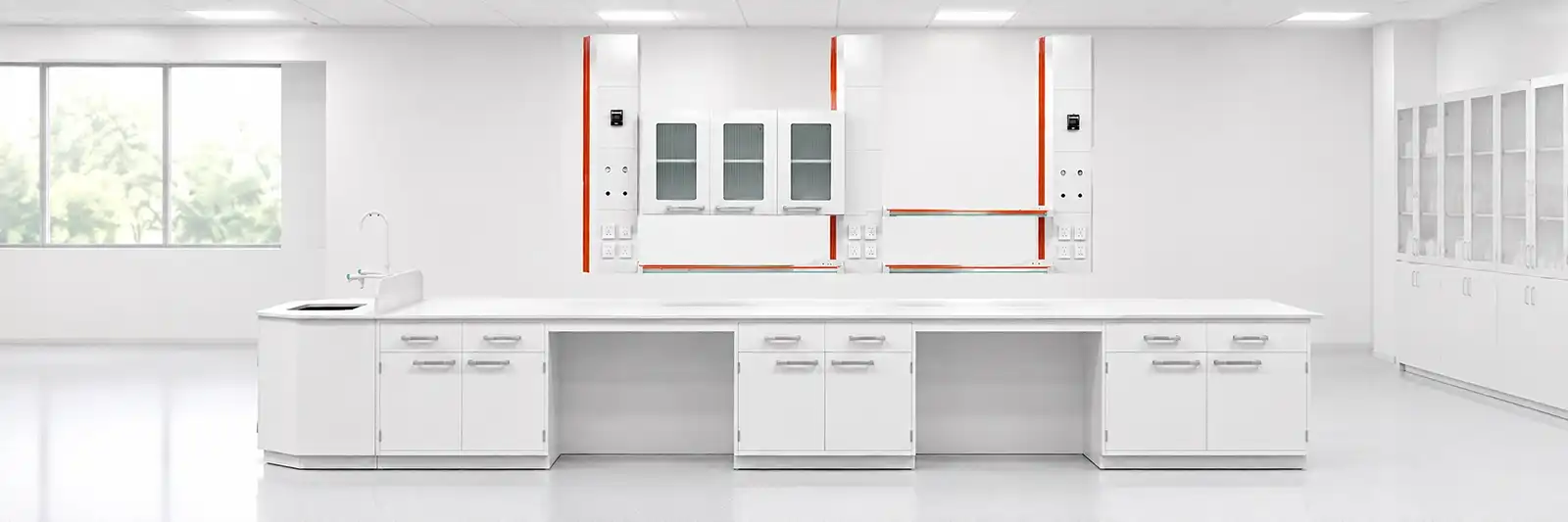
Understanding Lab Tables—What Are Lab Tables Called?
Common Industry Terms and Regional Variations
Within the United States, the term "laboratory workstation" is more common in business and school settings, while "lab bench" is more common in drug and biotech company purchase papers. In European catalogues, the words "laboratory worktable" or "work bench" may show up. A "clean bench" in a cleanroom is a desk that has air flow that has been filtered.
Distinguishing Lab Tables from Related Furniture
It's important to know the difference between a lab table and other things that look like it, like tables, instrument stands, or rolling carts. A real lab bench is a structure that is made to support testing. It can stand on its own or be connected to the wall. It comes with built-in tools, surfaces that don't react with chemicals, and strong support for heavy instruments. On the other hand, instrument stands are generally not as strong and are used to hold analytical equipment. They don't have all of the utility features and flexibility of a full lab bench.
Why Accurate Terminology Matters in B2B Procurement
Someone who says "lab bench" instead of "work table" might get something very different. A lab bench is a piece of equipment that is made to be safe around chemicals, in case of fire, and in line with lab standards. These traits might not be on a normal work table, though. Specification errors are less likely to happen when clear language is used. It's also easier to communicate with suppliers, which keeps projects on schedule and costs from going over budget.
Types of Lab Tables and Their Typical Names
You can find lab computers that are perfect for your business if you know about the different types. The right way to set up a table makes it easier to work, follows safety rules, and can be changed as research needs change.
Standard Lab Benches
The frames of standard benches, which are also known as "general purpose Lab Benches" or "wall benches," are strong and made of cold-rolled steel. The tops are made of chemical-resistant materials like epoxy resin or phenolic laminate. These units are good for basic lab work, getting samples ready, and regularly working with chemicals. Our basic benches at Uken are made from 1.00mm cold-rolled steel that has been covered in an electrostatic epoxy powder. This does not let acids, alkalis, or rust damage them. They are strong enough to be used for everyday lab work because of this.
Specialized Tables: Fume Hood Benches and Cleanroom Workstations
Different types of lab tables are made to solve specific issues that come up at work and at home. People are kept safe from dangerous vapors by air systems built into fume hood benches. On the other hand, cleanroom tables have smooth, seamless tops that don't get dirty quickly and make it easier to follow strict cleaning rules. People who work in labs and pharmaceuticals often need GMP-compliant stainless steel choices. Following FDA rules, this makes sure the area is free of particles.
Modular and Adjustable-Height Options
You may also hear modular systems called "reconfigurable benches" or "flexible lab furniture." They come with snap-together pieces that can be put together in various ways to suit various research projects. Tables whose height can be changed meet ADA standards for wheelchair accessibility and comfort. Because these designs let you change things around without having to rebuild whole systems, they cost less in the long run. It is important for universities and research centers to keep this in mind since their project lists are always changing.
How to Choose the Right Lab Table for Your Needs?
To pick the best lab workstation, there is a structured review method that takes into account technical specs, practical needs, and the dependability of the provider.
Assessing Lab Type and Usage Scenarios
In chemical labs, surfaces need to be very strong against acids and solvents. Most of the time, epoxy or phenolic glue is used for this. Biological labs like surfaces that are simple to clean, don't let germs grow, and are quick to disinfect. For electronics and precision measurement labs, frames that don't shake and surfaces that don't let electricity flow are necessary. By making sure the table's features match the lab's needs, you can avoid problems with safety, early wear, and not following the rules.
Evaluating Material Durability and Chemical Resistance
The things you choose are very important. Epoxy resin surfaces can stand up to strong acids and heat up to 350°F, which makes them ideal for use in analytical chemistry. Phenolic resin is a less expensive material that can stand up to most chemicals. It can be used for tests and in training labs. Stainless steel is the best material for resisting corrosion, but it costs more. It must be used in places that make pharmaceuticals that are subject to GMP checks. The scientific boards on our tables are solid core and can have ceramic surfaces if you'd like. These boards can stand up to chemicals and are strong mechanically.
Load Capacity, Ergonomic Design, and Modularity
Analytical balances, centrifuges, and chromatography systems can weigh over 500 pounds. To find out how much weight they can hold, use their weight. For your health's sake, there should be enough room for your knees, adjustable shelves, and quick access to power outlets. It's easier to move tools, add on to buildings that are already there, and make sure that new safety standards are met with modular designs. This lowers the total cost of owning the equipment over its whole life.
Vendor Reliability and After-Sales Support
The success of a project depends on how well a seller does their job. Find businesses that meet the quality standards set by ISO9001, have worked on large projects in the past, and offer good technical support. Delivery that you can count on, help with installation, and the terms of the guarantee are all very important. Over 100 skilled engineers work out of a 50,000-square-meter production base at Uken. The company promises consistent quality and on-time delivery in 20 to 40 days. There's proof of this in our CE, ISO9001, ISO14001, and ISO45001 marks.
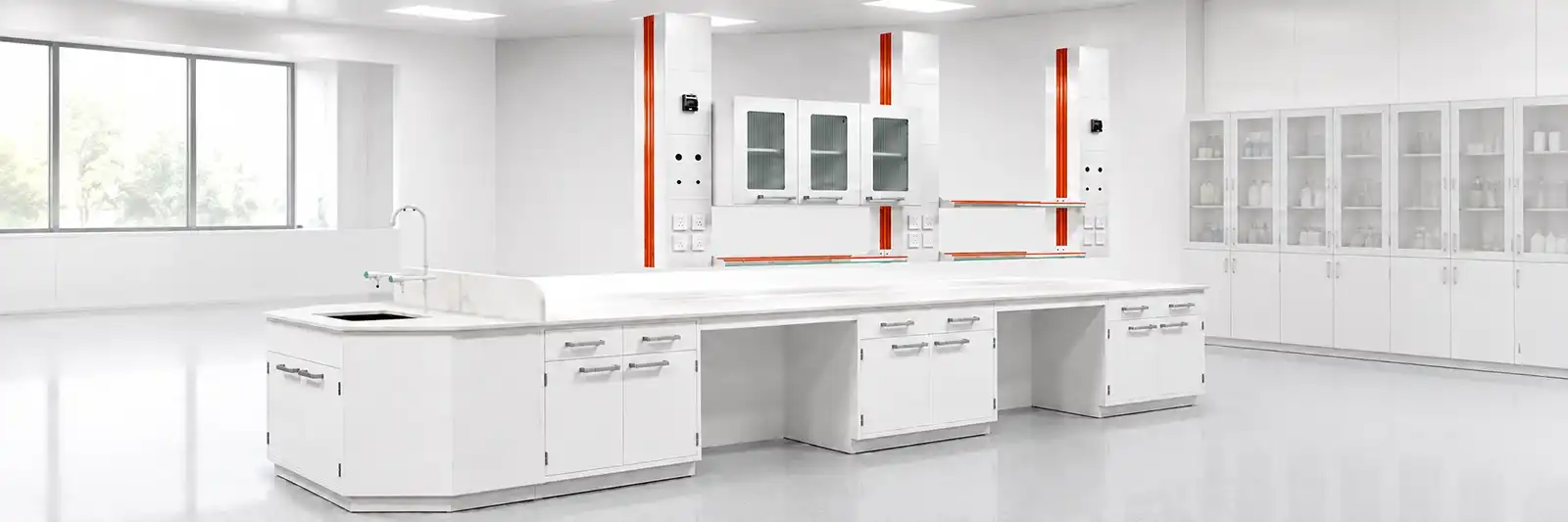
Benefits of Modern Lab Tables and Why They Matter to B2B Clients
Modern lab tables are measurable because they use advanced materials, are smartly designed, and make operations more efficient, which helps solve the biggest problems in the industry.
Advanced Materials for Safety and Contamination Control
The materials used to make benches today are strong enough to last in harsh lab circumstances. Because acids, fire, and water can't damage epoxy coats, structures don't break down as often and don't need to be changed as often. Surfaces that are smooth and don't have any cracks let germs and dirt hide. This makes it easy to clean and helps you follow rules for biosafety and cleanliness. Because these features cut down on maintenance costs and downtime, the lab can get more done.
Structural Innovations for Durability and Maintenance Savings
Our items don't bend, rot, or grow mold because they are made of steel instead of wood. They can also stand up to fire and water, which is useful for chemical and medicine uses. Several anti-corrosion methods, like acid cleaning, phosphating, and electrostatic spraying, help things last longer and keep their shape when they are exposed to strong chemicals. The high load-bearing capacity means that heavy analytical equipment can be used without the structure bowing or becoming unstable. For safety reasons and to make sure the experiments are correct, this keeps expensive tools safe.
Productivity Gains and Lifecycle Benefits
A study from pharmaceutical clients in the field shows that high-quality modular benches cut down on reconfiguration downtime by up to 40% compared to fixed installations. When designs are comfortable, they lower the number of claims for injuries and tired operators. This lowers insurance costs and makes it easier to keep staff. It's easy to see the return on investment in the first few years as the time between repairs and replacements gets longer.
Trends in Smart Integration and Sustainable Materials
In labs that are ahead of the curve, services like gas, power, and data are built right into the frames. This lets IoT gadgets and tracking systems that work in real time do their jobs. When a business wants to be green, it uses long-lasting materials and steel parts that can be recycled. Because of this, schools that want to get LEED approval and reduce their carbon footprint are interested in them. By getting new lab furniture, you can make your building at the cutting edge of new ideas and rules in the field.
Global Terminology and Sourcing Tips for Procurement Managers
Terminology Differences Across US, UK, and EU Markets
In the US, standard terms are "lab bench" and "workstation." In the UK, suppliers often use "laboratory worktable" or "bench unit." EU catalogs may refer to "work surfaces" or "laboratory furniture systems. " OEM and distributor catalogs add more variation—some focus on "modular systems," others on "turnkey solutions." Making these terms clear in RFQs and purchase orders avoids confusion and ensures accurate quotes.
Ensuring Compliance with International Certifications
When it comes to equipment, US facilities usually need to meet ANSI/BIFMA standards and SEFA standards for lab casework. For European projects, EN approvals are needed, while for foreign projects, ISO compliance may be needed. Make sure that suppliers give you proof that their products meet the necessary standards. This could include material safety data sheets, structural testing reports, and certifications that the finish will last for a long time.
Assessing Supplier Competence and Customization Capability
Check out providers based on the number of projects they've worked on, their expert design help, and their ability to make custom configurations. When a manufacturer has their own planning teams, they can make sure that the measurements, materials, and placement of utilities are exactly what you want. Ask for examples from projects that are similar to yours and ask about wait times, shipping logistics, and help with installation.
Partnering with a Trusted Global Supplier
The Luoyang Youken Laboratory Equipment Co., Ltd. is a business that sells Stainless Steel Furniture, medical furniture, and laboratory furniture all over the world. We help research, educational, medical, pharmaceutical, and other labs in North America and around the world with all of their needs. Our factory is spread out over 50,000 square meters, and we have 100 professional engineers working for us. Our modular designs make it easier to put things together, use smaller boxes to save money on shipping, and work with many different building plans. We can make your project meet all of its legal, business, and safety goals. We offer OEM and ODM services, and you can change the sizes and colors.
Conclusion
Procurement experts can find equipment that perfectly meets business needs and regulatory standards if they know what lab tables are called and the meanings behind those names. Clear language makes it easier to communicate, cuts down on mistakes, and speeds up project timelines, whether you need standard benches, specialized cleanroom workstations, or modular systems that can be used in changing research environments. Modern lab desks are safer, more productive, and have a higher lifetime value because they use better materials, have better structures, and are designed to be more comfortable. When you work with a knowledgeable provider that offers customization, reliable shipping, and full support, you set up your facility for long-term success in the scientific world, which is becoming more and more competitive.
FAQ
What materials are used for lab table surfaces?
Epoxy resin, phenolic resin, stainless steel, or solid-core scientific boards are the most common materials used to make lab table surfaces. Because it is better at resisting heat and concentrated acids, epoxy resin is perfect for analytical chemistry labs. For a lower price, phenolic resin has good chemical resistance and can be used in educational and routine testing settings. Because it is non-porous, easy to clean, and follows GMP guidelines, stainless steel is often used in medicinal and sterile settings.
Are modular lab tables suitable for all laboratory environments?
Modular lab tables can be used in a lot of different ways and are great for most labs, such as those in universities, research institutes, and pharmaceutical companies. Their adaptability makes it easy to change their layout as projects and tools do, which lowers costs in the long run. Traditional welded frames may work better in places that need heavy-duty, stable installs, like high-vibration instrument rooms. When choosing between movable and fixed systems, you should think about how often your building needs to be reconfigured and how heavy the equipment is.
How do I ensure my lab table meets safety and compliance standards?
Please make sure that the seller gives you proof that they follow the rules, like SEFA, ANSI, ISO, or EN certifications. For chemical protection, fire ratings, and load capacity, check the material's specs. Ask for test results and safety data sheets for the materials. When you buy furniture from a qualified company like Uken, which has CE, ISO9001, ISO14001, and ISO45001 certifications, you can be sure that it meets international standards for quality and safety.
Choose Uken for High-Quality Lab Table Solutions
Picking the right supplier for lab furniture is a smart choice that affects safety, speed, and the cost of running the business in the long run. At Uken, we're experts at making sturdy, fully certified lab tables that can be customized to fit the needs of pharmaceutical, biotechnology, research, and educational centers. Our all-steel modular systems are better at resisting chemicals, are easy to put together, and come in small packages that save money on shipping. These are all benefits that procurement managers who care about quality and value will appreciate. As a company with a history of success in many different fields and a dedication to quick expert help, we are ready to work with you on your next project. Email our experts at ceo@ukenlab.com to talk about your unique needs and get a price that fits them. Discover why leading laboratory furniture suppliers trust Uken to make reliable, high-performance workstations.
References
1. Scientific Equipment and Furniture Association (SEFA). "Laboratory Furniture Standards and Testing Protocols." SEFA Publication 8, 2020.
2. American National Standards Institute (ANSI). "Guidelines for Laboratory Furniture and Casework Design." ANSI/BIFMA Standards, 2019.
3. International Organization for Standardization (ISO). "Quality Management Systems for Laboratory Equipment Manufacturing." ISO 9001:2015.
4. National Institute for Occupational Safety and Health (NIOSH). "Ergonomic Design Principles for Laboratory Workstations." NIOSH Publication 2021-112.
5. Good Manufacturing Practice (GMP) Guidelines. "Facility and Equipment Requirements for Pharmaceutical Manufacturing. " FDA Code of Federal Regulations, Title 21, Part 211.
6. Laboratory Design Magazine. "Trends in Modular Laboratory Furniture and Sustainable Materials." Annual Industry Report, 2022.

CUSTOMER REVIEWS
What Our Customers Say