



Steel Lab Fume Hood: Applications, Benefits, and Selection Guide
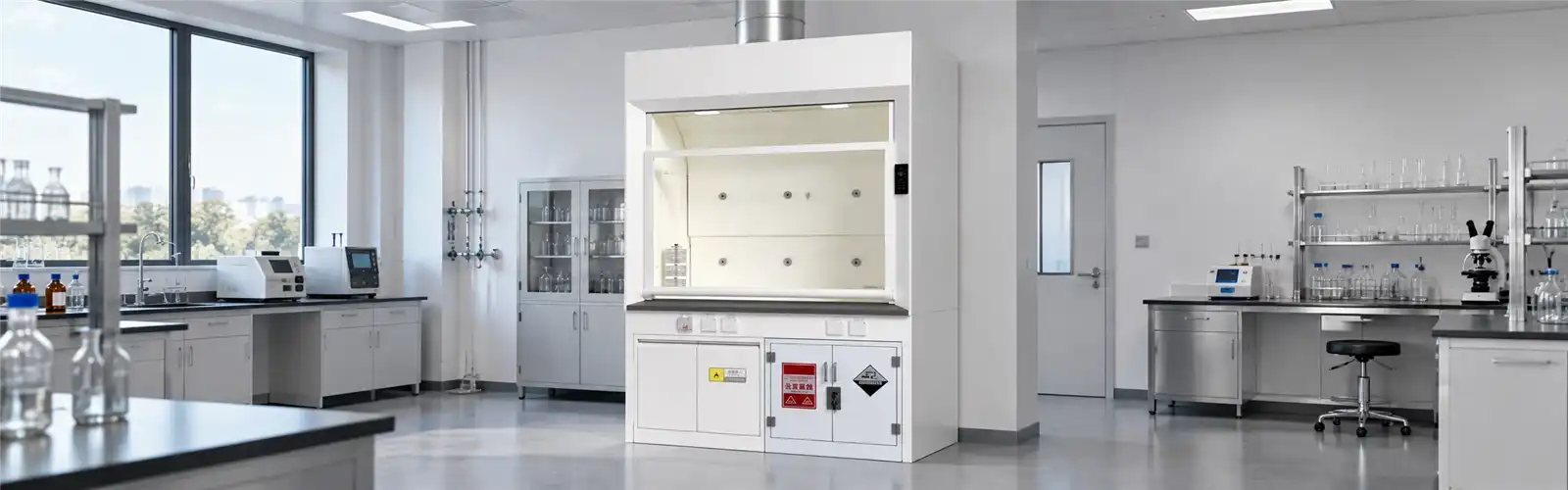
This stainless steel lab fume hood is a ventilation enclosure for the lab that is designed to assist protect lab personnel from dangerous chemical vapors, fumes and airborne particles that are produced during typical processes. Steel structure offers mechanical strength and fire resistant qualities, making it suited for many demanding laboratory environments. For EHS managers and procurement engineers, the appropriate choice of fume hood may have a huge influence on worker safety, compliance, and long-term operating expenses of a petrochemical, pharmaceutical or fine chemical industry. This article covers common usage, key bonuses and a handy approach to pick.
Understanding Steel Lab Fume Hoods: Definition and Core Applications
Fume Hoods employ regulated flows to transfer polluted air (the air you breathe) away from the user and into a vent system. Steel fume hoods are often employed in research and industrial facilities where dependability, fire protection and long lasting ruggedness are crucial.
What Is a Steel Lab Fume Hood?
A typical steel fume hood features a structural cabinet, a closed work area, a moveable sash, internal baffles, and a connector for venting the fumes. The sash, often made of safety glass, prevents people from coming too near to the work area, but they can still see the testing.
“The vents help to circulate the air around inside the cage and avoid it stagnating in some areas. The exhaust system protects the user from unclean air and directs it to the appropriate exhaust or treatment system. The required face velocity and control performance depend on the kind of chemicals being handled, the shape of the hood and the safety standards that apply. ASHRAE 110 doesn’t specify the pace at which to run each fume hood, but it does provide a method for evaluating the containment ability of fume hoods.
Industries That Rely on Steel Ventilation Cabinets
Many kinds of laboratories employ steel fume hoods. Pharmaceutical labs may handle active pharmaceutical ingredients (APIs), solvents and chemical intermediates. That implies the laboratories need to have the proper containment and surfaces that are safe for the drugs being utilized.
Laboratories testing petroleum products may have to deal with combustible substances, solvents, and procedures that need high temperatures. For these applications fire hazards, exhaust performance and material compatibility have to be considered carefully. They are rugged enough to stand up to tough work environments. Government research institutes, universities and industrial labs may employ steel fume hoods for the same reason.
Why Steel Outperforms Wood and Plastic in Continuous Production
Some chemicals can seep into the wooden cabinets. Fires can start in them. In contrast, plastics may be destroyed by specific solvents, high heat, or strong acids. Steel has superior mechanical strength and is not combustible, which made it a viable option for many industrial laboratory purposes.
There are several establishments that are open 24 hours a day, 7 days a week. In these environments, a steel lab fume hood may be a viable option since steel is sturdy and fire resistant . But how effectively it resists chemicals depends on the kind of steel, the coating on the exterior and the chemicals that are being utilized. The choice of construction materials and finishing for the inside is highly significant for long-term and safe usage.
Key Benefits and Safety Features of Steel Lab Fume Hoods
A steel fume hood is more than just a place to work in the lab. It can be used for certain things because of how it's built, how it looks on the outside, how air flows through it, and how often it needs to be maintained.
Some of the most important benefits for EHS engineers and procurement teams are:
- Steel is fireproof and can support the building. This may assist in laboratories that operate with flammable compounds, but fire safety relies on the method, electrical equipment, and lab setup.
- A chemical-resistant finish: acid washing, phosphating, and electrostatic powder coating may prevent metal corrosion. Compatibility must be tested against actual substances and concentrations.
- A well-designed steel frame can support lab instruments and equipment. The worktop's design and manufacturer's instructions determine the hood's load capacity.
- Sashes, baffles, and certain panels may be changed, making maintenance simpler and reducing downtime provided the manufacturer's design enables it.
Certifications That Verify Performance
When considering fume hoods for industrial laboratories, airflow performance, fire safety, and chemical compatibility are all important considerations. The supplier’s documentation should help to show that the equipment is fit for the intended use and that it meets the relevant requirements.
Useful documentation can include appropriate declarations of compliance, material specifications, face-velocity measurements, containment test results, and coating-resistance data, depending on the product and destination market. Buyers should verify the validity and coverage of each document, rather than just accepting general claims made by catalogs.
Long-Term Cost of Ownership
Professional laboratory equipment is provided by Luoyang Youken Laboratory Equipment Co., Ltd. (Uken). Besides the initial cost of a fume hood, consumers should consider the energy consumption, maintenance requirements, spare parts and the expected service life.
Relevant performance tests include smoke visualization for airflow pattern, thermal-anemometer measurement for face velocity, coating tests for surface durability, ASHRAE 110 testing for containment performance. Where a particular test or result is quoted the procurement team should seek to see the relevant report and confirm that it is for the model being purchased.

How to Select the Right Steel Lab Fume Hood for Your Facility
A thorough grasp of operational circumstances, such as the chemical classes handled, daily working hours, available HVAC capacity, and floor space, is the first step in the selection process. While an undersized or inappropriate unit may not be able to offer the necessary workspace or containment performance, an excessively big hood may increase energy usage.
Match Size to Workflow and Airflow Capacity
Uken's steel lab fume hood range includes three standard sizes:
L1200 × D850 × H2350 mm
L1500 × D850 × H2350 mm
L1800 × D850 × H2350 mm
While the 1800 mm width offers greater space for many instruments or bigger experimental setups, the 1200 mm width can be appropriate for tabletop work with a single operator.
Verify the available installation area, internal working dimensions, sash opening, and exhaust system capacity before choosing a model. In order to achieve the necessary containment performance under the planned working circumstances of the hood, the ventilation system must be developed and commissioned.
Evaluate Chemical Compatibility
Not all steel grades and coatings have the same chemical resistance. The compatibility of materials is particularly critical for aggressive reagents such as hydrofluoric acid and concentrated sulfuric acid.
Depending on the conditions of exposure, the temperature and the concentration of chemicals, an alternative construction material or a specially adapted liner may be necessary. A metal surface coated with epoxy powder may be appropriate for certain common laboratory applications but should not be anticipated to stand up to all acids, alkalis or organic solvents.
Before you buy, provide the vendor a sample list of the substances, concentrations, temperatures of operation and expected conditions of exposure. Request confirmed compatibility data for the proposed hood finishes and materials.
Verify Certifications and Supplier Credentials
Ask the provider for all relevant documentation on construction materials, face velocity, containment performance, and coating durability. Verify that the CE declarations, ISO certificates and other necessary paperwork correspond to the source, product or manufacturing technique in question.
Availability of spare parts, warranty terms, waiting time for the production, after sales service. A modular design would make swapping out parts simpler, but buyers should verify that parts are compatible and that replacement parts are available.
Market Overview: Choosing a Dependable Steel Fume Hood Supplier
In evaluating steel fume hood providers, procurement teams should consider proven product performance, manufacturing capacity, availability of replacement components and after sales service.
What Uken Brings to B2B Procurement
According to the company information, Luoyang Youken Laboratory Equipment Co., Ltd. has a production base of 50,000 square meters and 100 engineers. These materials may be valuable to buyers evaluating production capacity and project demands.
Ask for the latest product documentation, such as applicable conformity declarations, quality-management certifications, and performance test results, prior to placing an order. Test findings and certificates should be checked individually to ensure that they are authentic and comprehensive.
Assessing Total Supplier Value
The price of the unit is only one aspect when you make a purchase. Other factors include the availability of spare parts, export packaging, installation instructions, technical help, warranty terms and delivery dates.
If your project requires a lot of workstations, you may want to buy suitable models to make it simpler to educate personnel, maintain and install them. However, the final selection should be based on the size, ventilation capacity and chemical handling requirements of each workstation.
Future Direction: Smart Ventilation and Energy Efficiency
Modern laboratory ventilation systems may include variable air volume (VAV) controllers to adjust the exhaust airflow as a function of operating conditions and sash position. With proper planning and commissioning these systems may consume less energy than constant volume systems.
Potential savings will depend on the building’s ventilation design, operating schedule, control mechanism, and laboratory demands. Operational conditions may also be monitored and faults detected at facilities via digital control panels, airflow monitors and connection into building management systems.
Energy-efficient ventilation may provide the means for organizations to meet wider resource-management goals. Any projected energy savings, however, should be assessed for the actual operating conditions of the building, not simply the control system.
Conclusion
Three important considerations should be made when choosing a steel lab fume hood for long-term use: durability, safety, and total cost of ownership. Steel structure may provide fire resistance and mechanical strength, and the right interior materials and surface treatment can assist mitigate the chemical risks related to certain laboratory applications.
Under its specified working circumstances, an appropriate fume hood must also have the necessary containment performance. Verify the unit's size, material compatibility, ventilation needs, relevant paperwork, and supplier assistance before making a purchase. These tests may assist you in selecting equipment that satisfies your operational and safety needs, regardless of whether your business produces medicines, analyzes petrochemicals, or carries out fine chemical research.
FAQ
1. How often does a steel lab fume hood need to be tested?
Inspect and test fume hoods in compliance with applicable legislation, relevant standards, manufacturer’s instructions, and the facility’s chemical hygiene strategy. Most labs do annual performance testing. Additional testing may be required when the system is moved, significantly modified, or repaired that might alter airflow or containment.
2. Is a steel fume hood better than a PP fume hood?
The optimum option depends on the chemicals and the working circumstances. Polypropylene may be suited for certain corrosive chemical applications while steel provides mechanical strength and non-combustible structure. Neither material is suited for all chemicals. Verify compatibility with the exact substances, concentrations and temperatures involved.
3. Can I replace individual components without removing the whole unit?
This relies on the hood design and the maintenance provisions of the manufacturer. Some of the modular designs enable for individual elements like as sashes, baffles and specific panels to be changed individually. Check with the provider on the available spares and the servicing procedures necessary.
4. What is the correct face velocity for safe operation?
There is no one face velocity which assures safe containment for fume hoods. The acceptable working range is dependent on hood design, sash position, laboratory circumstances and relevant criteria. ASHRAE 110 is a technique of assessing containment performance. Test for performance using relevant tests and according to manufacturer’s standards.
5. How should I clean and maintain the steel surface?
Clean surface frequently with suitable laboratory detergent and a gentle cloth. Do not use abrasive pads or wire brushes which may ruin the protective finish. Follow the manufacturer's directions for cleaning, and routinely examine the surface for corrosion, coating damage, or chemical degradation.

Get Your Custom Steel Lab Fume Hood Quote from Uken
Uken’s staff can assist you investigate steel lab fume hood choices for individual workstations and bigger laboratory projects. Standard sizes offered are 1200 mm, 1500 mm and 1800 mm width Talk to the staff about your chemical compatibility requirements, workplace size, ventilation demands and any relevant product documentation.
Please provide a quote and the necessary technical details to assist you decide on the most appropriate solution for your facility.
Email: service@ukenlab.com
WhatsApp: +86 151 0290 9133
Contact Uken today to discuss your steel lab fume hood requirements and request a quotation.
References
American Society of Heating, Refrigerating and Air-Conditioning Engineers (ASHRAE). ASHRAE 110: Method of Testing Performance of Laboratory Fume Hoods.
Scientific Equipment and Furniture Association (SEFA). SEFA 1: Laboratory Fume Hoods.
Occupational Safety and Health Administration (OSHA). 29 CFR 1910.1450: Occupational Exposure to Hazardous Chemicals in Laboratories.
International Organization for Standardization (ISO). ISO 14644-1: Cleanrooms and Associated Controlled Environments — Classification of Air Cleanliness by Particle Concentration.
Note: Confirm the applicable editions and any additional local requirements before citing these references as evidence of specific product compliance.

CUSTOMER REVIEWS
What Our Customers Say