


Feb 6, 2025
NovaLab Tech Solutions
"Responsive and professional supplier with excellent product quality. Communication was efficient, and the entire purchasing process was smooth and reliable."


When choosing a laboratory exhaust cabinet for a chemical laboratory, you start with the chemicals and the process, not the catalog. List the vapors, amounts and temperatures you deal with. Then choose a cabinet design that has pollutants under actual working conditions. Check face velocity, material resistance, duct and electrical requirements, and the standards your facility follows, like OSHA, ANSI/ASSP Z9.5 and ASHRAE 110. Don't just compare pricing, compare complete cost. Ask for test data and documentation from suppliers. Below I will take you through each step so that you can draft a clear specification and avoid costly revisions later.
Define Your Laboratory Exhaust Cabinet Requirements Before Comparing ProductsDocument Your Chemicals and Process Conditions
Start by talking about your process phases and the hazards involved. You would identify the chemicals , their temperatures , pressures , heat loads , probability of leaks , and how workers will have to access them . The correct setup for your laboratory exhaust cabinet can be determined by using this list. This first risk assessment confirms that the environment is the proper size and safe for the chemicals you intend to utilize.
There are 2 primary kinds, one that sits on the floor and one that sits on the table. A benchtop unit is only a little box that sits on a lab bench or aide cabinet. It works well for small instruments, samples and ordinary bench work. But it is not very deep or tall on the inside thus tall equipment normally don't fit. Floor mounted design is ideal for large tools, massive reactors and condensing sets. It helps the equipment to stand on the ground.
The planning, fire safety, power, water, and HVAC departments have to work together before a unit is picked. Be sure you know how to get to the duct shafts, how to hook up the utilities and how to add make-up air. You also need to make sure there's enough weight capacity on the floor. Pass this information (interior size, fan pressure, etc.) on to your building engineers to ensure the location is prepared before the equipment arrives.
The working volume of the air is obviously dependent on more than the fan. Many factors, including user habits, room balance, and sash placement, affect how well a laboratory exhaust cabinet functions. People who work in labs should set the face speed at 80 to 120 feet per minute at the working height. If your HVAC professional knows the total resistance of your system, they can help you find the correct size exit fan.
Size the cage to your equipment. We offer our cabinets in 2350 mm high x 850 mm deep and 1200, 1500 or 1800 mm wide. Putting it on the floor instead of a bench allows you to easily accommodate large and heavy tools within. Allow for the sash, your hands and the heat load of your instruments. You know how high your equipment is, so you don't have to do anything funky around it afterward.
Keep your equipment clean to help it perform properly. Check from time to time if the sensors, fans, alarms and locks are fit for chemical duty. The sash should move and stay in position. Our method is useful for long examinations because you can replace the sash with one hand and not worry about dropping it. Also the lighting must be adequate and interior surfaces should be easily cleanable.
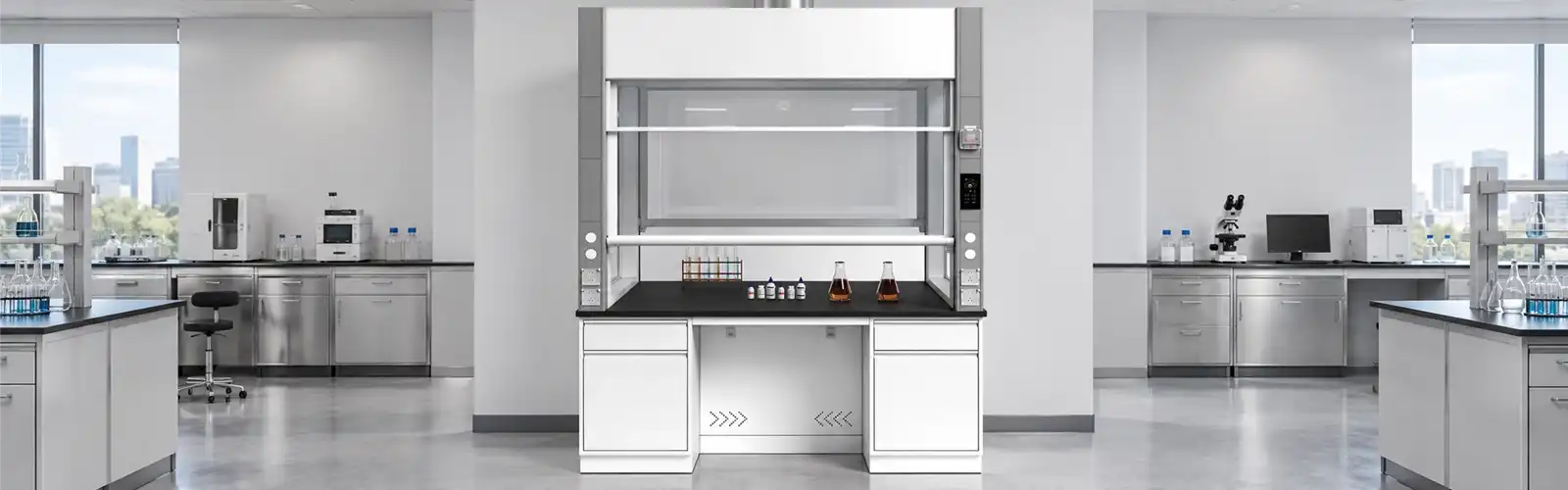
Make-up air must be brought into the room for every cubic foot of air that the laboratory exhaust cabinet exhausts. Labs need a lot more electricity per square foot than conventional office buildings to heat and cool this air. Verify the duct route and pipe strength. The room isn't balanced, therefore it changes how much air can run through, and how much room is open at the sash.
Make that the utilities, airflow and alarms are all okay. Check the voltage and frequency requirements early, as every country and area has varied electricity needs. Match your equipment loads to the outlets and power ratings. Remember to include the cost of gas, air and electricity hookups while you're comparing pricing.
Check utilities and alarms before starting the system. An ANSI/ASHRAE 110 tracer gas approach is frequently used to verify that the unit is closed and safe. That's something a lot of projects in the US need when they initially start. Get the person you hire to know immediately what test papers your site need for commissioning. Make sure he knows what he is doing.
Our laboratory exhaust cabinets are all steel framed for stability. The outside is composed of steel, at least 1 mm thick, cut by laser to give the edges a flawless finish. The surface is covered with at least 70 μm epoxy electrostatic powder, which is not easy to corrode and scratch. We employ rust free materials and anti-bacterial boards inside. The sash is constructed of tough glass that shatters into small, dull fragments.
Our units are validated according to ISO, CE, SEFA, SGS, CQC. ISO verifies the complete process to make sure raw materials fulfill quality goals. CE means the equipment is safe to operate with electricity in Europe. SEFA requirements apply to lab construction and airflow in North America. Check with your safety officer to ensure your strategy meets NFPA 45, 29 CFR 1910.1450, and your local state codes.
Make sure you see evidence from ISO, CE, SEFA and SGS before purchasing. The tests and commodities should be explicitly indicated in these notes. What papers does your lab or municipal officer want to view? Please send them to us and we can see what each site needs. Keeping a record of the alarm and airflow tests lets you quickly know if there is any change in performance.

Just because the price is low doesn't mean that it comes with controls, customer service, or staff training. Make a list of what each seller does and does not offer to help you compare prices fairly. A laboratory exhaust cabinet with high-quality lining and surfaces won't rust, saving money on maintenance and downtime in the long run. Plan for growth and automation so that the unit doesn't get too small in two years.
Linyi Youken Laboratory Equipment Co., Ltd. employs 100 professional engineers to help with design and customization. If you are an OEM or ODM customer, you can choose from different inside materials, thicker glass, and built-in monitoring systems. We can match RAL or Pantone colors and brands across different batches. One partner can help you plan, make, check, pack, and move things so all labs follow the same rules.
First, look at useful measures on the inside and past success to give a complete picture. Avoid the mistake of looking only at the price or the outside size. Tell the seller what ingredients you need and how you plan to use them. For projects that use more than one site, check the shipping documents and export packing to ensure the units are protected while being sent far away.
You can put different kinds of laboratory exhaust cabinet on the floor or on a bench. The tabletop style is good if you just need a little space for quick, everyday jobs. A floor-level unit works best for small tests, unique materials, and tall or heavy tools. It doesn't matter what size the cage is; containment is the most important factor. It depends on how the face moves, where the sashes are placed, how the room is balanced, and how people use the space. Choose the right type for the job over price to ensure it is safer and works better.
There are different kinds of risks, so neither choice is always the best one. For regular jobs and small tools, a hood that sits on a bench works well. A unit that is put on the floor works best for tools that are tall or heavy and need more space.
The price is based on the type of material, the size, the airflow, the utilities, the design, and the vent system. We'll send you a quote after we look at your plans and learn more about how your specific process works.
Check the utilities, airflow, alarms, and lights to make sure everything is in good shape before you turn on the system. Many sites test at least once a year and after any modification to the room or the cabinet.
Yes. It doesn't matter what color, name, material, RAL or Pantone color, thicker glass, or tracking system you want. We can do it. Our engineering team first checks to make sure the custom design is possible.
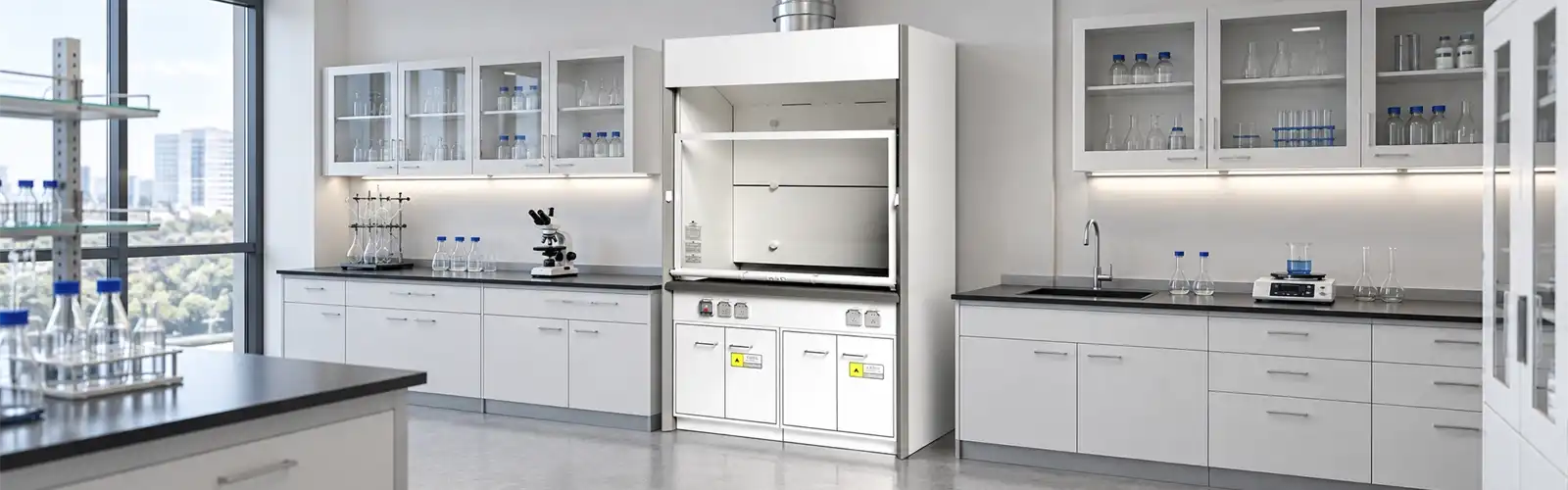
Send us an email at service@ukenlab.com or text us at +8615102909133 with your ideas, a list of chemicals, and when you'd like to ship them. When we get back to you, we'll send you a suggestion with logos, unique shapes, and RAL colors for the laboratory exhaust cabinet. Visit ukenlab.com for more details on our L1200, L1500, and L1800 models.
1. Prudent Practices in the Laboratory: Handling and Management of Chemical Hazards, National Research Council, 2011
2. Occupational Exposure to Hazardous Chemicals in Laboratories (29 CFR 1910.1450), Occupational Safety and Health Administration, 1990
3. ANSI/ASSP Z9.5 Laboratory Ventilation, American Society of Safety Professionals, 2022
4. ANSI/ASHRAE Standard 110, Method of Testing Performance of Laboratory Fume Hoods, ASHRAE, 2016
5. NFPA 45 Standard on Fire Protection for Laboratories Using Chemicals, National Fire Protection Association, 2019
6. ASHRAE Handbook: HVAC Applications, Laboratories Chapter, ASHRAE, 2019