



How Science Lab Tables Improve Student Learning Experience?
Quality laboratory furniture transforms how students interact with scientific concepts. A well-designed Science Lab Table creates more than just workspace—it becomes the foundation for hands-on exploration where theoretical knowledge meets practical application. When students gather around properly engineered laboratory workstations featuring chemical-resistant surfaces and ergonomic heights, they engage with experiments more confidently and collaborate more effectively. The right laboratory furniture reduces distractions caused by safety concerns or equipment instability, allowing learners to focus entirely on discovery. Schools investing in professional-grade lab tables equipped with rounded corners, durable construction, and modular configurations report measurable improvements in student participation and learning outcomes across physics, chemistry, and biology curricula.
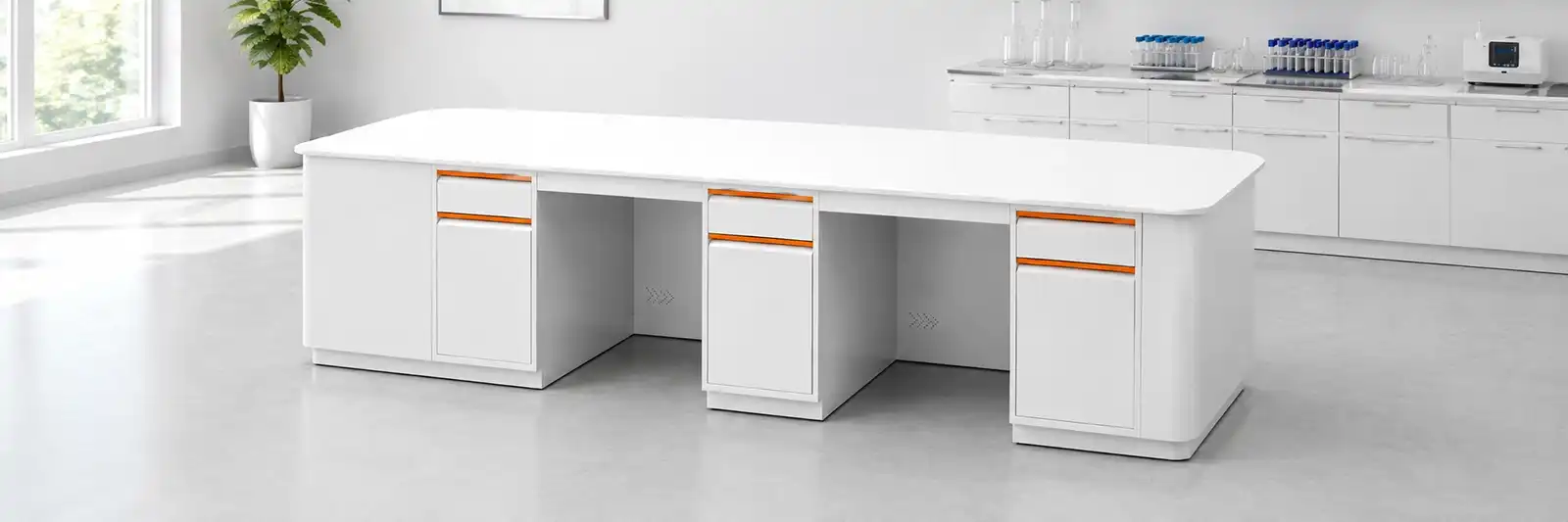
The Role of Laboratory Workstations in Enhancing Student Engagement
Supporting Hands-On Scientific Exploration
For educational settings, laboratory desks make it safe for students to do research while they learn how to think critically. Learners understand things better when they can physically work with materials, watch chemical processes happen, or put together machines without having to worry about surfaces that might fall apart or not having enough room. According to research from the National Science Teachers Association, students remember up to 75% of what they learn when they do hands-on activities but only 10% when they listen to lectures. This kind of collaboration is possible in many scientific fields thanks to good lab furniture with sturdy build and lots of room.
Fostering Collaborative Learning Environments
Along with teaching scientific concepts, group activities help students learn how to work together and talk to others. When lab tables are the right size, three to four students can work together without any problems, sharing their observations and splitting up the work. Working together in the lab is a lot like working in the real world, where scientists usually do their work in groups. Workstations with built-in storage keep shared materials organized and easy to find. This means that students spend less time looking for tools and more time learning.
Creating Psychologically Safe Spaces
When students feel safe in their surroundings, they are more likely to learn. When lab furniture has safety features like rounded edges, there are no sharp corners that could hurt someone while moving from one workstation to another. When students believe that their area is safe, they are more likely to be willing to try new things and be confident in their projects. This psychological safety goes beyond physical safety; it creates an environment where taking intellectual risks and being interested in science can grow.
Key Types of Laboratory Tables and Their Educational Benefits
Modular Versus Fixed Laboratory Configurations
Finding the right balance between freedom and sturdiness is always hard for schools using Science Lab Table. Modular lab desks can be changed to fit new teaching methods and school curricula. During the summer, these systems let teachers change the layout of the classrooms from rows to clusters for working together or arrangements for showing things. This flexibility is especially helpful for schools that use project-based learning, since different units may need different ways to set up the space.
Fixed installations offer the highest level of structural stability, which is especially important for high-tech experiments and precise instruments. Heavy tools like microscopes, centrifuges, and spectrophotometers can be used on the sturdy platform without shaking or bowing. Secondary schools with set curriculums and steady numbers often choose fixed setups that are reliable over time and don't need to be put back together every so often.
Integrated Utility Considerations
Students in biology and chemistry classes often need to be able to get to water for experiments and cleanup. It's easier to get things done when lab tables have sinks built right in, but you need to plan carefully for the pipes and upkeep. In physics labs, electrical outlets and cable management systems may be more important. The most flexible educational desks have utility lines that let them be set up in a variety of ways without needing major repairs between school years.
Storage Solutions for Classroom Management
With built-in cabinet systems, lab tables can be turned into full workspaces that keep tools organized and easy to get to. When goods don't have to be retrieved from faraway storage places, students have more time to learn. Modern designs with silent-sliding boxes keep the classroom quiet during tests. Professional-grade cabinets are usually made of 1.00mm cold-rolled steel, which can stand up to years of use by students. Its resistance to fire and water also keeps important science materials safe.
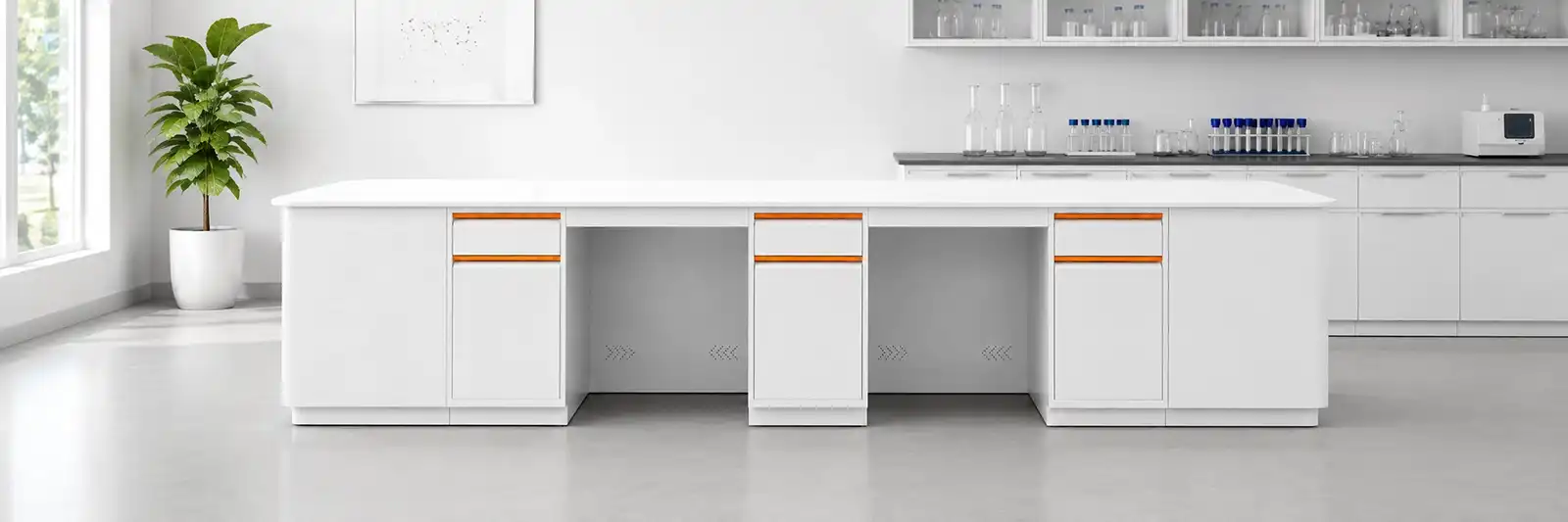
Materials and Maintenance: Ensuring Long-Term Educational Value
Comparative Material Analysis
Work areas on educational lab tables are usually made of metal, wood, or a combination of the two. Solid phenolic resin countertops are very resistant to acids, bases, and organic solvents that high school students are likely to come across in their classes. They are perfect for general chemistry use. Even tho accidents happen in student labs all the time, these surfaces stay in good shape. Epoxy resin surfaces are even more resistant to chemicals for advanced projects that put furniture in contact with harsh chemicals. Ceramic choices are more expensive, but they can handle heat better for projects that use Bunsen burners or hot plates.
The framework that holds up work surfaces is just as important. When you combine cold-rolled steel with electrostatic spraying of epoxy glue, you get buildings that don't rust and stay stable for decades. Professional installs often use 50 × 80mm steel tube framing, which can hold more than 1,000 pounds of weight. This is enough for the heaviest equipment while still leaving enough room for error to keep children safe.
Practical Maintenance Protocols
Schools that don't have a lot of money for repairs need lab furniture that doesn't need much care. Seamless surfaces keep germs from growing and make it easier to clean in between classes. Standard disinfectants can be used by cleaning staff to quickly clean desks without hurting finishes or putting people's health at risk. This ease of upkeep is especially helpful during flu season, when disinfecting often helps stop the spread of sickness.
Proper care extends Science Lab Table furniture lifespan significantly. Regular checks that find loose hardware or old parts allow fixes to be made before small problems turn into big ones. When schools set up easy upkeep plans, their lab furniture will usually last for 15 to 20 years, giving them the best return on their investment.
Warranty and Supplier Support
Support after the sale should be taken into account in procurement decisions. Reputable companies that back their products with full warranties show that they are sure of the quality of their construction. Schools don't have to pay for contractor service calls when they have technical help for questions about assembly or small fixes. Long-term investments are protected by suppliers that offer substitute parts years after the original purchase. This is because specialized parts like hydraulic hinges or slide rails need to be replaced at some point.
Choosing the Right Laboratory Furniture for Your Educational Institution
Aligning Features with Educational Level
For elementary science programs to work, they need easy, long-lasting tools that put safety first. Rounded corners on all sides of the building keep people from getting hurt when kids are exploring scientific ideas in a controlled chaos. When middle schools add more complicated experiments, modular designs that can be set up in both demonstration and small-group settings are helpful. Secondary schools that prepare students for work at the university level need professional-grade surfaces and structural stability that can support high-tech instruments and strict testing methods.
Evaluating Supplier Credentials and Certifications
Quality lab furniture meets standards that are known all over the world. Getting ISO certification shows that a company uses uniform quality control systems throughout the whole production process. Compliance with SEFA standards shows that a product meets the standards for science tools that were created for labs. Chemical protection claims and structural soundness are checked by SGS testing, which is an independent process. Professionals who buy things for schools who ask for proof of these licenses make sure that furniture bought with government money meets the requirements that were promised.
Budget Optimization Through Strategic Purchasing
Schools often have trouble because their restricted funds for capital improvements don't always match up with their real facility needs. When you negotiate bulk purchases of Science Lab Table during new construction or major renovations, you can usually get big price cuts. Shipping costs are affected by whether the building is fully built or knocked down. For schools in remote areas, compact packaging greatly lowers freight costs. Smart managers weigh the original purchase price against the total cost of ownership. They know that high-quality materials that need less upkeep and last longer are often more cost-effective than cheap ones that need to be replaced more often.
Future Trends in Educational Laboratory Furniture
Smart Technology Integration
IoT devices are being used in new designs to track how equipment is used, the surroundings, and even how engaged students are with their work. Traditional lab manuals may soon be replaced by surfaces that are interactive and have displays built in. These surfaces will show step-by-step instructions and safety information as the experiments go on. Even tho these new technologies are still pricey, forward-thinking schools that have been pilot-testing smart lab furniture say that the improved learning results make the investment worth it. As production volumes rise and prices fall, technology-enhanced desks will become more affordable for most schools.
Sustainability and Environmental Responsibility
Environmental responsibility is becoming more and more important to schools when they make purchasing decisions. In response to this demand, companies that make laboratory furniture now make goods with recycled materials and environmentally friendly ways of making them. Low-VOC finishes make the air inside better, which addresses health worries that came up in large-scale environmental health studies. The idea of modular design itself is environmentally friendly, since institutions can update individual parts instead of throwing away whole workstations when their needs change. For schools that want to get LEED approval for green building standards, using environmentally friendly lab chairs helps them get the points they need.
Adaptive Designs for Inclusive Education
Today's ideas about education stress the importance of meeting the needs of all students in regular classes. Students in wheelchairs can fully participate in hands-on experiments with their peers when the lab furniture has work surfaces that can be adjusted for height. Flexible arrangements that can support a range of teaching methods, such as traditional demonstrations, inquiry-based learning, and group research, get classrooms ready for new ways of teaching that haven't been thot of yet. This protects capital investments by making sure that the furniture we buy today will still be useful in the future.
Conclusion
Buying good Science Lab Table desks is a basic way to improve education because it creates spaces where students can safely explore scientific ideas thru hands-on activities. The right furniture has both safety features, like smooth edges and chemical-resistant surfaces, and useful features, like being able to be put together in different ways and having storage built in. Choosing the right materials affects both short-term budgets and long-term worth. This is why educational managers need to make smart purchasing choices. As lab equipment changes to include smart technology and eco-friendly materials, forward-thinking schools get ready to give students a better STEM education that prepares them for jobs that are becoming more technical.
FAQ
What surface material works best for multi-discipline science programs?
Most schools need surfaces made of solid core phenolic resin because they are flexible and offer good resistance to chemicals, heat, and physical contact in biology, chemistry, and physics. Schools with more money and a lot of science classes should use ceramic choices.
How do modular and fixed laboratory tables compare for school settings?
When schools use different teaching methods or expect changes in enrollment, modular setups give them more freedom. Fixed installations are better for keeping precise equipment stable, and they're also more cost-effective for schools with set programs and regular space needs.
What maintenance practices extend laboratory furniture lifespan?
Small problems don't get worse when you clean regularly with mild detergents and check the hardware every so often. Surface finishes are safer when you don't use rough cleaning tools. Taking care of spills right away, especially those involving acidic or basic chemicals, keeps materials that are resistant to chemicals from being damaged in the long run.
Which certifications should procurement professionals require?
Check that the company has ISO quality management approval, meets SEFA standards for laboratory equipment, and has been verified by SGS independent testing. When goods get these certificates, it's clear that they meet professional standards and are safe for school settings.
Partner with Uken for Your Laboratory Furniture Needs
If a school or other educational organization needs a reliable supplier of Science Lab Tables, Luoyang Youken Laboratory Equipment Co., Ltd. can help. Our thirty years of experience in manufacturing allow us to make furniture that is especially designed for tough school settings. The modular structures we design are easier to put together during limited maintenance windows in the summer, and the colors and layouts can be changed to fit the needs of your facility. Each workstation has rounded safety corners, soundproof cabinet materials, and chemical-resistant surfaces that meet SEFA standards. These features keep students safe while meeting the demanding needs of the curriculum. Our knock-down shipping choices cut down on shipping costs by a large amount without affecting the strength of the tables' structures, which makes them ideal for advanced equipment. Email Our Team at ceo@ukenlab.com to talk about the benefits of buying in bulk, the ways that our tech solutions can help your institution with its problems, and the ways that they can be customized.
References
1. National Science Teachers Association. (2019). Position Statement: Laboratory Science and Student Learning. NSTA Press.
2. Johnson, M. & Peterson, R. (2020). The Impact of Laboratory Design on STEM Education Outcomes. Journal of Educational Facilities Research, 12(3), 45-62.
3. American School & University. (2021). 2021 Educational Facilities Design Trends Report. AS&U Publications.
4. Scientific Equipment and Furniture Association. (2018). SEFA 8-M Laboratory Furniture Standard. SEFA Publications.
5. Green Schools National Network. (2022). Sustainable Laboratory Design for K-12 Education. GSNN Research Initiative.
6. Williams, T., Chang, L., & Ramirez, S. (2021). Ergonomics and Safety in Secondary School Science Laboratories. International Journal of Science Education, 43(7), 1089-1104.

CUSTOMER REVIEWS
What Our Customers Say