



Fume hood innovations: Enhancing safety and efficiency in laboratories
Laboratory ventilation technology has advanced well beyond the simple ducted enclosure. Today, the walk-in fume hood is one of the biggest breakthroughs in large-scale laboratory safety – giving floor-to-ceiling containment, high-volume exhaust airflow, and ergonomic access for equipment that just cannot fit into traditional benchtop units. If you are running a pharmaceutical pilot plant, an aerospace materials testing lab, or a national-level research facility, knowing how current floor-mounted ventilation systems function may directly affect both worker safety and operational efficiency.
Understanding Walk-In Fume Hoods: Features, Benefits, and Safety
What Makes a Walk-In Fume Hood Different
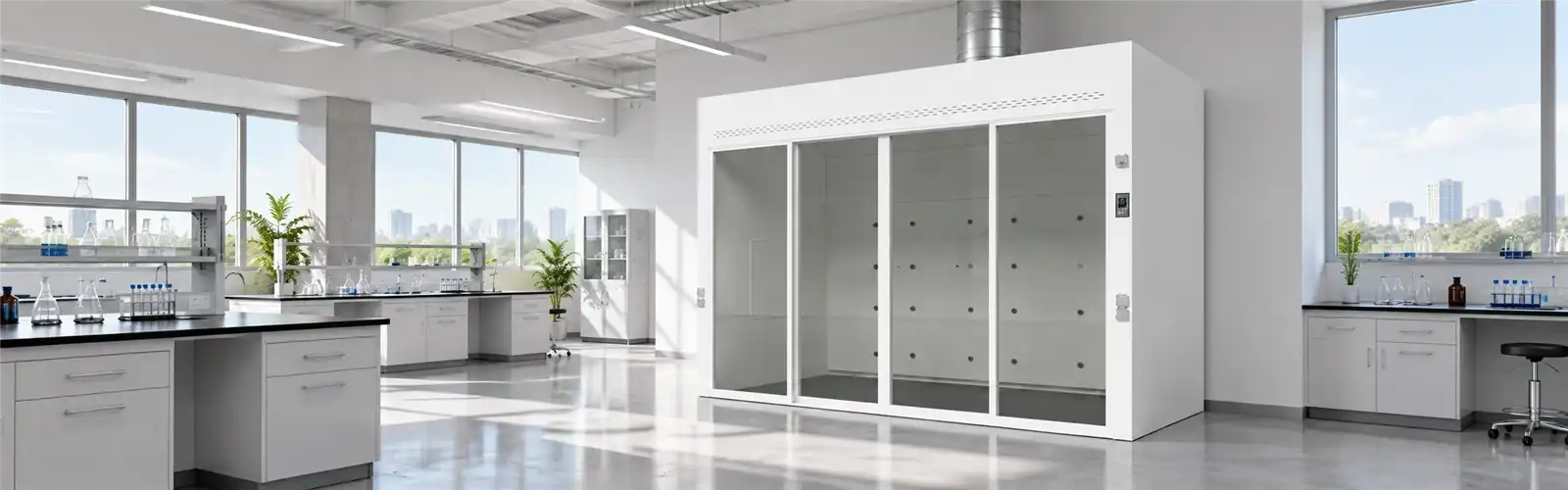
A walk-in fume hood is a ventilated enclosure located in the lab that is large enough to accommodate large goods such as 55-gallon chemical drums, 50- to 100-liter glass reactors, and tall distillation columns. These items don't fit in normal benchtop hoods. The tools are operated by people who can physically enter the enclosure, but they can operate from outside the barrier while chemicals are being deployed. This maintains a safe breathing zone that fulfills OSHA regulations.
Core Safety Features You Should Expect
Today's floor Fume Hoods incorporate sealed separation systems, negative pressure management, and continuous airflow tracking that prevent dangerous vapors from entering the lab. For example, the walk-in fume hood of Youken is designed with a three-stage deflector and a conical airflow collecting structure so that gas is exhausted from the enclosure uniformly from all sides, even when large equipment covers part of the rear baffles.
Energy Efficiency as a Safety Investment
People and the environment don’t have to be adversaries; they may improve conditions when they cooperate. With Youken's floor-mounted model, you have to utilize a 60% make-up air ratio. This takes some of the pressure off your HVAC system and keeps face velocity at a decent level. This is due to the permitted air loss rate. No airflow is lost. This implies that your building is up to international requirements without increasing your energy expenditures.
Innovations in Walk-In Fume Hood Design and Technology
Multi-Duct Laminar Flow Architecture
One of the most significant new concepts in the construction of large-format walk-in fume hoods is the multi-duct laminar flow air source. There is no one point of exhaust this way. Instead, the extraction is uniformly distributed throughout a number of lines. This eliminates any dead places where volatile chemical compounds may build up. Standard-height Youken's equipment can handle 220 to 360 m³/h of waste air. This spectrum comprises steady-state procedures and chemical processing applications requiring high output.
Modular, Corrosion-Resistant Construction
With advances in material science, lab constructions can now accommodate many items. Youken makes lab ventilation equipment using cold-rolled steel plates that are acid-cleaned, phosphated, and electrostatically sprayed. These procedures make the steel resistant to acids and alkalis and able to carry a lot of weight. The device is created from different sections so it’s simple to assemble and disassemble. So it is easy to set up and saves time in the long run.
Integrated Sensor and Control Systems
Today hoods include sensors that alter the rate of airflow according to what is happening within the enclosure at any particular moment. It assists facilities in achieving ANSI/ASHRAE 110 performance criteria and protects them against swift air surges during reactive procedures. These devices are fitted with visible and audible alerts so that lab staff are immediately made aware when containment performance falls below acceptable levels.

Comparison Guide: Walk-In Fume Hoods vs. Other Lab Safety Solutions
Walk-In Hoods vs. Standard Benchtop Ducted Hoods
Standard ducted fume hoods are good for bench-scale chemistry but are quite limited in height and weight. The physical restrictions of a benchtop unit become a safety risk when a research team prepares for pilot plant operations. With a floor-mounted enclosure, you can overcome such limits and handle pressure-release situations, as well as roll-in equipment carts that a tabletop device just cannot accommodate.
Walk-In Hoods vs. Biosafety Cabinets
Biosafety cabinets are used to confine biological hazards – safeguarding samples from contamination and workers from airborne germs. They are not rated for chemical vapor use. Walk-in fume hoods, however, are engineered for high-volume chemical vapor extraction and are the appropriate selection for pharmaceutical GMP facilities, chemical pilot plants, and aerospace materials testing where VOC concentrations and reactive chemical exposure are the primary hazards.
Cost-Benefit Perspective for B2B Procurement
Procurement teams assessing big format ventilation systems need to go beyond purchase pricing and consider the total cost of ownership. The floor-mounted hood’s high make-up air ratio, certified air leakage rate, and modular design translate into reduced operating expenses during its service life compared with bulky typical walk-in fume hoods working at inefficient airflow rates. Certifications like ISO, CE, SEFA, and SGS give documented proof of product quality and thereby reduce compliance audit risk.
Practical Insights for Procurement and Installation of Walk-In Fume Hoods
Specifying the Right Dimensions and Configuration
The fume hood from Youken comes in three standard sizes: L1200×D850×H2350 mm, L1500×D850×H2350 mm, and L1800×D850×H2350 mm. All of them make it easy to roll in from the floor. The standard base plan comes with two storage boxes that have two doors each. There is a frame-type structural improvement that can be used in labs that have big analytical equipment racks or linked chromatography systems.
To make lab work safe, these are the most important things that can be added:
- Fireproof chemical cabinet: Designed to store flammable solvents within the ventilated enclosure, reducing fire risk during storage.
- Waste liquid cabinet: Allows hazardous effluent collection without removing containers from the containment zone, preventing incidental spills.
- Waste bin system: Manages solid waste containing residual chemicals, keeping the work area organized and compliant.
These extras connect straight to the vents on the range hood, so the upper and lower cabinets both work under negative pressure. This keeps mist from building up in places where space is limited. In a meaningful way, this level of integration lowers the risk of being exposed by accident during normal lab work.
Site Readiness and HVAC Integration
Before installation, the site should be checked to make sure that the capacities of the ducts, the floor loads, and the HVAC compatibility are all right. The engineering team at Youken helps customers with this process by giving them detailed drawings and working with the building's systems to make sure the unit works with them. Youken's 30,000 m² factory can store strengthened floor bolts and special duct materials for buildings that are in seismic zones or deal with exhaust streams that are very corrosive.
Lead Times, After-Sales Support, and Certifications
For large, non-standard designs, there is often a production wait time that should be planned for in the project schedule by the procurement team. Youken's 100-engineer team is in charge of projects from the time the design is approved until they are fully installed and tested in the factory. They also offer paperwork packages that help get budgets approved and pass checks by regulators. Any basic or custom set-up can get ISO, CE, SEFA, or SGS certification.
Optimizing Laboratory Safety and Efficiency Through Walk-In Fume Hood Maintenance
Routine Airflow Monitoring and Filter Replacement
Like other machines, hoods need constant maintenance to function. The face velocity must be checked by the lab manager at least every six months and after major changes to the tools within the hood. Filters need to be replaced periodically based on how frequently they are used and the substances they contain. Most manufacturers recommend checking them every six months to two years, but situations where a lot of things happen may need to be examined more regularly.
Personnel Training and Correct Usage Protocols
Not many containment failures are due to faults with the technology, but rather owing to inappropriate conduct on the part of the individuals who are using it. Many individuals make the mistake of obstructing the back baffles with large objects, operating the sash at the incorrect height, or leaving items under the hood while it is not being utilized for airflow. With good training courses that teach the principles of airflow and correct sash management, these hazards are greatly reduced.
Preventive Maintenance Programs
A systematic program of preventative maintenance, checking the ducts, ensuring that the cabinet seals are still in place, checking the exhaust fans to ensure they operate, and calibrating the alarm system protects both the safety of the workforce and the investment in the large-format ventilation equipment. When institutions purchase expensive research equipment, Youken offers post-sale technical assistance, keeping them in the queue as long as the equipment is in use.
Conclusion
Running huge laboratories requires extremely vast, chemically and physically complicated air systems. When correctly purchased, installed, and maintained, floor-mounted fume hoods may assist pilot plants, aerospace research facilities, and pharmaceutical GMP settings in managing fumes, conserving energy, and complying with regulations. The walk-in fume hood from Youken has a multi-duct laminar flow design, a 60% make-up air ratio, modular corrosion-resistant construction, and built-in storage tools. It is a fantastic option for places that cannot risk safety or losing operations.

FAQ
1. How often should filters in a walk-in fume hood be replaced?
Filter replacement frequency depends on usage intensity and the types of chemicals processed. Manufacturer guidelines generally recommend inspection every six to twelve months, with full replacement cycles ranging from six months to two years. High-throughput environments handling aggressive solvents or reactive compounds should schedule inspections more frequently to maintain consistent containment performance.
2. Can a walk-in fume hood be customized to fit existing lab infrastructure?
Yes. Reputable floor-mounted fume hood suppliers offer configurable dimensions, duct connection positions, and optional cabinet accessories to match existing laboratory layouts. Youken provides three standard size options and supports non-standard modifications through its engineering team, allowing facilities to specify units that align with their equipment footprint, HVAC capacity, and floor load ratings.
3. What certifications should I look for when selecting a supplier?
Look for CE, ISO 9001, SEFA, and SGS certifications as baseline indicators of manufacturing quality and product safety. Compliance with OSHA ventilation standards and ANSI/ASHRAE 110 test method performance confirms that the unit has been validated against recognized laboratory safety benchmarks. Uken holds all four certifications and provides supporting documentation for procurement and compliance review.
Contact Uken for Your Walk-In Fume Hood Solution
Uken's engineering team works closely with industry labs, pharmaceutical facilities, and research facilities to determine the best walk-in fume hood for each application. As a seasoned walk-in fume hood manufacturer with ISO, CE, SEFA, and SGS certifications, we support every project with technical drawings, on-site support, and full after-sales service. For technical help or a price on a job, you can email us at service@ukenlab.com or call us on WhatsApp at +8615102909133.
References
1. American Industrial Hygiene Association (AIHA). Laboratory Ventilation, 2022.
2. ASHRAE. ANSI/ASHRAE Standard 110: Method of Testing Performance of Laboratory Fume Hoods, 2016.
3. National Institute for Occupational Safety and Health (NIOSH). Engineering Controls for Occupational Exposure to Hazardous Chemicals in Laboratories, 2021.
4. Occupational Safety and Health Administration (OSHA). Occupational Exposure to Hazardous Chemicals in Laboratories (29 CFR 1910.1450), 2023.
5. Scientific Equipment and Furniture Association (SEFA). SEFA 1: Laboratory Fume Hoods — Recommended Practices, 2020.
6. Journal of Chemical Health and Safety (Elsevier). "Energy-efficient fume hood design and its impact on laboratory air quality," 2022.

CUSTOMER REVIEWS
What Our Customers Say