


Feb 6, 2025
NovaLab Tech Solutions
"Responsive and professional supplier with excellent product quality. Communication was efficient, and the entire purchasing process was smooth and reliable."


A ducted fume hood captures hazardous vapors, fumes, and dust at the source and sends them outdoors through building exhaust, so they never reach the operator's breathing zone. A ducted fume hood benchtop does this job in a compact format that sits on an existing laboratory bench. Labs use it for solvent handling, acid dilution, sample digestion, and routine quality control work. It protects people best when airflow, sash position, ductwork, and work habits operate together. In this guide, I explain how these hoods work, where they fit, and how to choose, install, and verify one.
What a Ducted Benchtop Fume Hood Includes
A ducted fume hood benchtop is a small box that sits on a laboratory workbench or a support base and lets local exhaust flow through it. Dust, vapors, fumes, and smells are pushed out of the work area and into pipes outside by an exhaust collar. The most common parts are the door, the sash, the baffles, the work surface, the lighting, the service fixtures, and the airflow monitoring. Plus, it is smaller and better for smaller treatments than a helmet that sits on the floor. Instead of a movable extractor, this one has a clear enclosure and a set exhaust link that can be used every day. It is a good choice for small laboratories where tools need to be put on top of benches that are already there.
Because the sash is open, the hood pulls air from the room into the enclosure. This keeps the enclosure at a lower pressure than the laboratory. The dirty air then moves toward the baffles and through the duct to leave the system. A lot of laboratory ventilation guidelines say that face speeds should be between 80 and 120 feet per minute. It is more important to have a steady speed than a fast fan. The flow can be slowed down by doors that are open, supply air diffusers, nearby tools, or even just seeing someone walk by. When people buy hoods, they should see them as a part of a bigger picture. It supports things like PPE, risk assessments, safe chemical handling, and written procedures, but it does not replace them.
Here are the most important building details for our unit:
The cage is now strong enough for small laboratories to use every day for chemistry work. The unit was built with SEFA 1 security tests in mind, and it has certifications from CE, ISO, and CQC.
Third-party testing laboratories and teams that check the quality of drugs do a lot of small tasks that are done over and over again. It is common to have to prepare reagents, titrate, digest samples, and extract solvents. Each analyst does not have to wait in line for a big floor hood when they have a ducted fume hood benchtop. They can work at their own station. Test laboratories that look for chemical compatibility also look at paints, adhesives, and other materials that smell or have volatile organic compounds in them. The air around the chairs where people are working stays cleaner because these fumes can escape outside. When there are a lot of workbench spaces in a room, a small hood makes more bench space for scales and instruments.
A ducted fume hood benchtop is used by research and development teams for making small amounts of chemicals, diluting acids, and getting environmental samples ready. Teachers and students can watch the work while the barrier stays in place because the tempered glass window does. This is why they are used in teaching laboratories for supervised demonstrations. To work with liquids during process development, they are used all the time in science and business laboratories. All of them are good because the fumes leave the work area before they get to other parts of the room. This is what OSHA's Laboratory Standard says: To keep workers safe from dangerous chemicals, companies must have a chemical cleaning plan. One of the technical controls that these plans usually depend on is a fume hood that works right.
There are some risks that a regular ducted fume hood benchtop might not be able to handle. When working with perchloric acid, you need a washdown hood that is made just for that. This is because perchlorate salts can build up in lines and make them more likely to blow up. Engineers have to look at things like radioactive materials, infectious agents, explosives, nanomaterials, high-temperature processes, and continuous industrial emissions. They may need to use special containment equipment in some cases. It helps teams figure out how dangerous flammable liquids are and how to keep chemistry laboratories safe from fire. If your process is in one of these groups, we need your list of chemicals first. Then, our engineers look it over and, if needed, suggest a different type of equipment or a better way to line it.

You should do something based on the danger of the poison, the size of the filter you need, and your ability to keep the system running. A ducted fume hood benchtop is good for processes where it is hard to tell how well the filters are working, there are mixed vapors, or the chemical loads change. This is because it sends dirty air outside. A ductless hood changes the air that goes through carbon or HEPA filters back and forth. It can be used for tasks that those filters have been tested to do. After a while, screens get full. If you do not change them, germs can come back into the room. A movable extractor can do light work in one area, but it cannot keep things separate like a hood can. You should look at more than just the buy price, in my opinion.
A ducted fume hood benchtop needs to match everything else because it links to the make-up air, utilities, exhaust fan, and an outside release point. Before you buy, look at the bench's size, the roof's height, the ways to get in and out, the space between the walls, the service lines, and any wind issues that might be nearby. The chemicals, heat, and water in your process need to work with the duct materials you choose. It is important to do calculations that are unique to the project because the real system resistance might not match a general fan grade. People who work nearby should also think about the noise from fans when the laboratory is close to them. The outer-diameter flange is another area that often has problems. Work may need to be redone on-site if the interface is not standard. We show you models and a movie before we start making the flange to make sure it fits your HVAC hole.
Once the hood gets there, it should be easy to put it in place. We offer construction plans that show how to put things together, connect them, and connect them to power sources if needed. There are picture and video guides that show you how to line up the bands, change the belt tightness, and look for leaks. When there are more than one unit in a project, we set up technical support and remote commissioning. Also, our engineers make sure that the HVAC systems meet local building codes and work well with the ones that you hire. After the building is finished, testing should be done on the face velocity, airflow regularity, warnings, sash operation, noise, vibration, and the soundness of the duct. Our basic models come with a 15-day delivery guarantee, which helps teams that need to set up a new laboratory quickly.
Write down what chemicals you have, how much of them you have, how concentrated they are, what temperatures you will use them at, and how long the process will last. Next, look at some different kinds of building stuff. Polypropylene, stainless steel, treated steel, and chemical-resistant laminate are some of the materials that can handle acids, solvents, heat, water, and pressure in different ways. Our ducted fume hood benchtop is made of steel that has been treated and has a 5 mm antibacterial board inside. It can work with common solvents, weak acids, and alkaline solutions to check for quality and do analysis. The surface of the steel is made very rough by pickling and phosphating. This helps the epoxy powder coating stick and keeps it from peeling and burning when it's time to clean it. To make it work better with harsher chemicals, ask for a better lining when you customize. Our engineers will look over your list of chemicals.
Widest sizes we offer are 1200 mm, 1500 mm, and 1800 mm. They are all 850 mm deep and 2350 mm tall. Figure out what width will work best for the bench and the things you put on it. Any of them will not work? We can make the ducted fume hood benchtop any size, move the gas valve and exit, add lights or shelves inside, and make the floors stronger so heavy things can lift them. If you need to match hazard color codes, you can also send Pantone or RAL links. Businesses that sell to other businesses and OEMs often need a lot of the same color and logo. Before we start making the product, we talk about these needs along with the package and laser-engraved marking. Production plans show you exactly where things will go so you can sign off on them.
You stay safe at work by making habits and doing regular checks. Always check the sash and work area for damage and make sure there is enough airflow. After every use, clean out the vent slots. Clean up the area inside the ducted fume hood benchtop where you work, close containers when you can, and never put chemicals inside the case. Floors are cleaned, spills are cleaned up, and vents, fans, alarms, lights, and outlets are checked as part of regular maintenance. The rules in their area should be known by people who do airflow and closure tests like the ASHRAE 110 method. A lot of places test at least once a year and again after moving, fixing, or changing how the air flows. People who read reports and customers will need them a lot, so keep them safe.
Most of the time, people screw up when they only look at price. Others are not following the rules and are using the ducted fume hood benchtop as a separate cabinet without checking to see if it is chemically friendly. There is a full purchase specification that lists everything from airflow and noise to lighting and materials to dimensions and alarms to utilities and paperwork. It also says who is responsible for commissioning. There is also the total cost of ownership to think about. This includes things like setting up the ducts, fans, make-up air, energy, repairs, spare parts, testing, and more. Before you start making something for a job in another country, make sure you know the local codes, labels, plug type, voltage, frequency, and labeling. A written list can find most of these issues early on.
Forms to fill out and send in are often asked for by owners and inspectors. You should ask for information about the materials, models, and certificates. You should also ask for records of containment tests like ASHRAE 110, EN 14175, or SEFA 1 results. Tell us what standard your project needs so we can be sure we can meet it. Also, ask for the full report instead of an outline. You can give the project owner a full file that we make for you with CE, ISO, and CQC papers. Also, CE, ISO, and CQC have approved our ducted fume hood benchtop units. A planning draft is the first step in most projects. The drawings are then approved, accepted in the factory, shipped, and put together on-site. Do not wait; have your papers ready at every step.
There should be enough air flow in the building, the right size ducted fume hood benchtop for the chemicals you use, and rules in your area. Get help with the size, picking out the liner, figuring out the exhaust, hooking up the utilities, installing it, and getting it up and running. It is also possible for distributors and OEM brands to get private labels, technical sketches, replacement parts, export packaging, and records of plant inspections. It has 100 engineers and makes goods that meet ISO, CE, SEFA, and SGS standards. Its name is Luoyang Youken Laboratory Equipment Co., Ltd. It has everything you need for laboratory furniture in one place. It is easier to put together and costs less to ship because our products are made up of separate modules. You should rate a supplier based on their engineering skills, paperwork, wait time, and help after the sale.
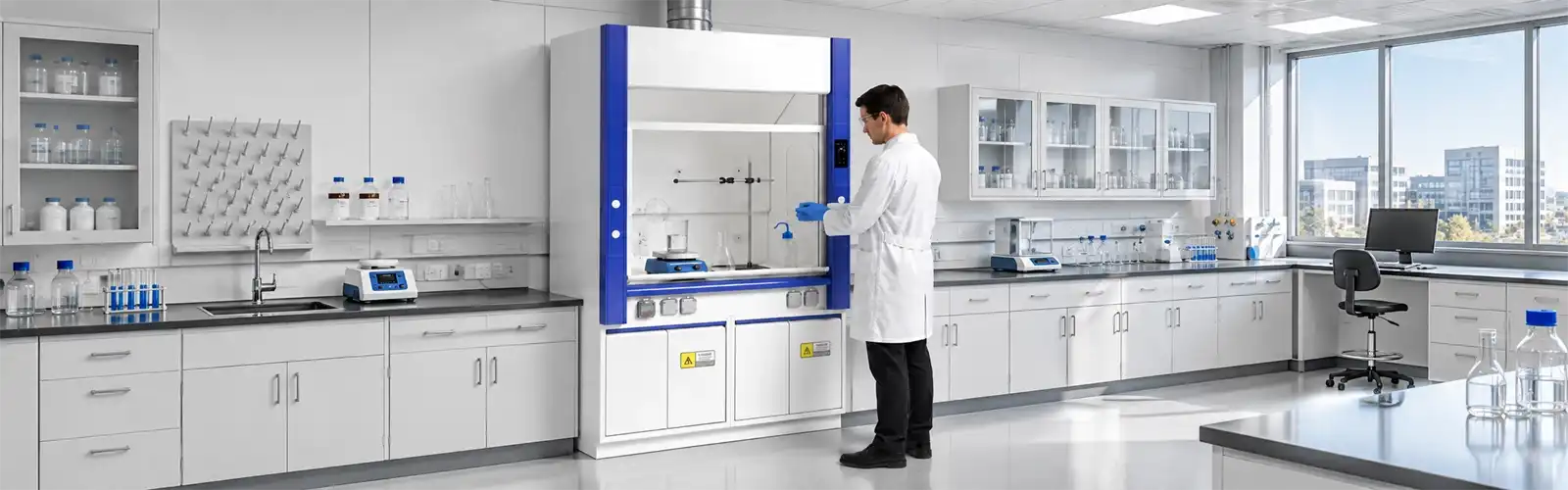
A ducted fume hood benchtop can catch dangerous vapors where they come from and send them outside as long as the airflow, sash position, ventilation, and work habits are all perfect. Operators will be safe this way. There are special tools you need to work with radioactivity, explosives, high temperatures, infectious materials, perchloric acid, and drugs. You can use the hood to teach, do research, analyze, and check the quality of things. When there are different or mixed chemical loads, ducted systems work better than split ones most of the time. However, they only work well after the hood, fan, duct, and make-up air are all matched and set up. Long-term safety is affected by the material, size, fit, and paperwork you choose. These things cost more than the item itself. Performance is tracked by having regular users check it and having professionals test it every so often.
No, ducted hoods are better for poisons that are not all the same because they let the air move outside. When the filters are tested for the chemicals they will be used with, ductless units can fit into clearly defined processes.
Many times, yes, but first check the strength of the bench, the height of the roof, the utilities, and the exhaust link. The average size of our boxes is 850 mm wide and 2350 mm tall.
Follow the rules in your area and the steps for your facility. A lot of laboratories test at least once a year and again after fixes, moving, or changes to the airflow. In between tests, users check the laboratory every day.
Send your measurements, chemical list, process conditions, material choices, utilities, the country where you want to deliver to, the amount you need, and when you want it brought by.
Uken has ducted fume hood benchtop units in lengths of 1200, 1500, and 1800 mm. They come with custom flanges, drawings, installation guides, and papers from CE, ISO, and CQC. Feel free to send us your chemical list, room size, and quantity if you want a ducted fume hood benchtop manufacturer that responds quickly to technical questions. To find out more, email service@ukenlab.com, call +8615102909133 on WhatsApp, or go to ukenlab.com.
1. Prudent Practices in the Laboratory: Handling and Management of Chemical Hazards, National Research Council, 2011
2. Occupational Exposure to Hazardous Chemicals in Laboratories (29 CFR 1910.1450), Occupational Safety and Health Administration, 2012
3. ANSI/AIHA Z9.5 Laboratory Ventilation, American Industrial Hygiene Association, 2012
4. ANSI/ASHRAE Standard 110, Method of Testing Performance of Laboratory Fume Hoods, ASHRAE, 2016
5. SEFA 1 Laboratory Fume Hoods Recommended Practices, Scientific Equipment and Furniture Association, 2010
6. NFPA 45 Standard on Fire Protection for Laboratories Using Chemicals, National Fire Protection Association, 2019