
An Ultimate Guide to Laboratory Island Benches
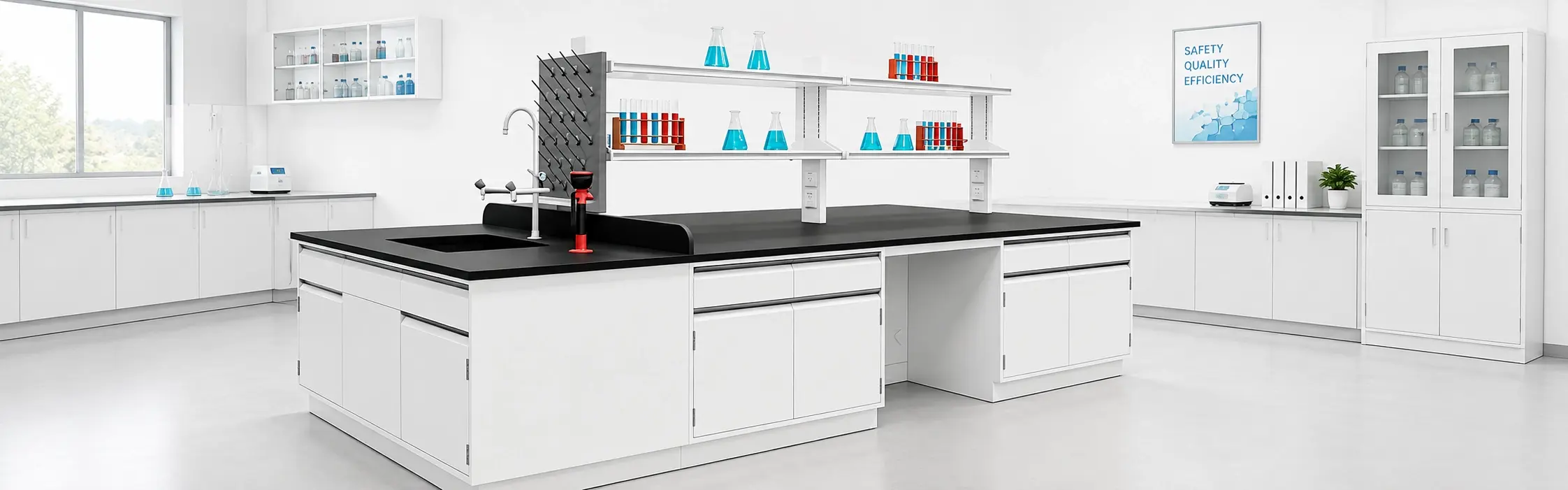
A laboratory island bench is a standalone desk in the middle of the lab that gives workers access from all sides. Unlike units that are fixed on the wall, these island designs make the best use of space and allow multiple users to work at the same time. These benches solve some of the most important problems that procurement managers and facility planners face, like making the best use of floor space, making it easier for people to work together, and connecting centralized utility services like water, gas, and electricity. Their smart placement separates desks from the building's edges, making settings that can change with the needs of research in biotechnology, pharmaceutical, and industrial testing labs.
What Is a Laboratory Island Bench and Why Is It Essential?
Defining the Core Features
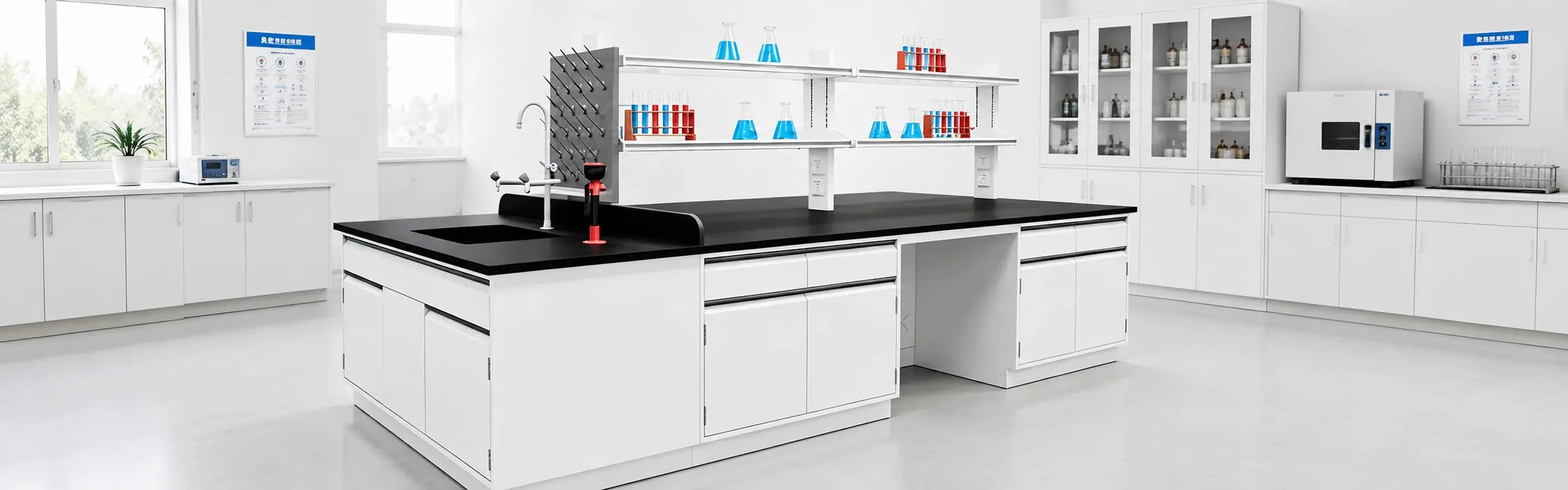
Compared to standard straight desks, laboratory island benches are a big change. When placed away from walls, they make center workplaces that can be reached from all sides. This arrangement changes the way the lab works by letting several researchers work on different projects at the same time while still being able to see each other and talk to each other. The design allows for utility service carriers to be installed above, so there is no need for floor-level routes, which can be dangerous.
Operational Advantages for Modern Labs
The fact that these computers are open to everyone makes processing a lot more efficient. Research teams can plan complicated processes without having to move around tools or wait for a bench spot. Analysts who do parallel testing routines in pharmaceutical quality control labs save a lot of time when they can reach tools and reagent storage from different spots. Chemical testing labs can put heavy analysis equipment in the middle of the room while still leaving clear escape routes around the outside.
Industry Applications Driving Demand
Biotechnology businesses that work with cell cultures use laboratory island benches to keep the incubators and microscopes in one place while keeping the work area clean. Environmental testing labs that take a lot of samples set up processes so that samples come in from one side, are analyzed in the middle, and leave with results written down on the other side. This straight-through-the-center method lowers the risk of cross-contamination while keeping the integrity of the audit record needed by ISO 17025 approval standards.
Types and Materials of Laboratory Island Benches: Choosing the Right Fit
Modular Versus Fixed Construction
Individual cabinet parts that connect to make the whole workspace make up modular laboratory island benches. This method gives labs a lot of freedom for when they need to change how they are set up in the future. When new equipment comes in or study goals change, teams can take modules apart and rearrange them without having to replace the whole system. The knock-down structure also greatly lowers shipping costs, as small packaging makes the best use of containers for foreign projects.
Fixed laboratory island benches are made of metal that is bonded together or permanently joined together. For uses with heavy machinery like centrifuges or large-scale mixing equipment, these machines offer better structure strength. The continuous framework spreads the weight more widely, so it doesn't sag or get out of line like modular systems can when they're under a lot of stress. Facilities that plan to stay open for at least 10 years without making any changes to the layout find that set construction gives them better long-term value.
Material Selection Impact on Performance
Cold-rolled steel construction is most common in industry and school settings. When these frames are made from steel plates that are 1 mm thick and treated with epoxy resin electrostatic spraying, they don't rust in acidic or alkaline environments and can hold a lot of weight. When you put on epoxy, it makes a layer that doesn't let water through. This stops moisture from getting in and rusting older painted steel furniture.
Customization Considerations
The choice of countertop material has a direct effect on how well it resists chemicals and how often it needs to be maintained. Physical and chemical boards with a solid core can be exposed to strong acids, alkalis, and organic solvents for 24 hours without the surface breaking down. These phenolic resin mixtures keep their shape even when the temperature changes, which can happen in labs that don't have precise climate control. For uses with hot plates or autoclaves, ceramic choices are very resistant to heat, but they need to be handled more carefully during installation to keep them from breaking.
Single cabinets are standard at 470x520x830mm, double cabinets are standard at 900x520x830mm, and custom water tank designs are standard at 1440x720x830mm. These modular sizes let buying teams choose exact plans that fit the floor space they have while also leaving room for future growth. Custom sizing works around odd building limitations like columns, HVAC penetrations, or current utility stub-outs that can't be moved without spending a lot of money.
Designing & Installing Laboratory Island Benches: Best Practices
Layout Strategies for Workflow Optimization
Placement of laboratory island benches that works well takes into account traffic patterns, equipment access, and emergency exit needs all at the same time. By placing the island in a way that makes clear areas for sample preparation, analysis, and recording, work flows more smoothly during busy times. Leaving at least 48 inches of space around the edges makes sure that two people can pass without any problems while bringing samples or equipment, which is what OSHA recommends for industrial settings for hallway width.
Utility integration
To avoid expensive change orders during installation, utility connection needs to be planned ahead of time. Water, gas, and electricity services usually go through drops in the roof or pipes that run below the slab and end at the center of the island. By working with structure experts to plan these penetrations, problems with building systems can be avoided. By specifying shut-off valves at the bench instead of far away, repair can be done without disturbing people working nearby.
Safety and Ergonomic Design Elements
When paired with the right chairs, a normal countertop height of 830 mm can be used for both standing and sitting work. This dimension matches physical data for the 50th percentile user while still being usable by people who need accommodations according to ADA rules. To keep your legs from getting tired during long processes, the space between your knees and the bars should be at least 685 mm.
Chemical resistance testing makes sure that the materials chosen are right for the job. Common lab chemicals like acetone, methanol, sulfuric acid, and sodium hydroxide can be used on epoxy resin surfaces without coloring or breaking down the surface. The smooth finish gets rid of grout lines where dirt and grime could gather, making daily cleaning easier and lowering the chance that contamination will spread from one experiment to another.
Installation Process Management
Checking that the floor is level within a 2mm range across the installation area is the first step in getting the site ready. Uneven surfaces put bearing stress on cabinet frames, which over time causes doors to not line properly and drawers to not work properly. Shimming or applying floor leveling powder before placing the bench is one way to fix the problem.
Professional installers usually finish laboratory island bench jobs in three to five business days, but this depends on how complicated the layout is and how many utility hookups need to be made. The flexible design lets cabinet parts be put together ahead of time so they don't get in the way of lab work. By spreading out works over weekends or second shifts, facilities can often keep some of their working capacity.
Comparing Laboratory Island Benches: Materials, Designs & Market Offerings
Performance Benchmarking Across Materials
When it comes to cost, a steel structure building can hold the most weight. When built correctly, steel laboratory island benches can hold more than 400 kg per linear meter of spread load, which means they can hold heavy analytical scales, spectrophotometers, and sample storage without bowing. Concerns about contamination in food and drug testing labs are eased by the full steel structure, which doesn't have any wood parts that could soak up water and allow microbes to grow in damp places.
The thickness of an epoxy resin layer is directly related to how long it protects against rust. Quality makers use electrostatic powder methods to apply 60–80 micron coatings that cover the whole surface evenly, even in joints and areas that aren't flat. This thickness means that the bench won't need to be refinished after being cleaned every day or after chemical spills happen by mistake.
Design Variations for Application-Specific Needs
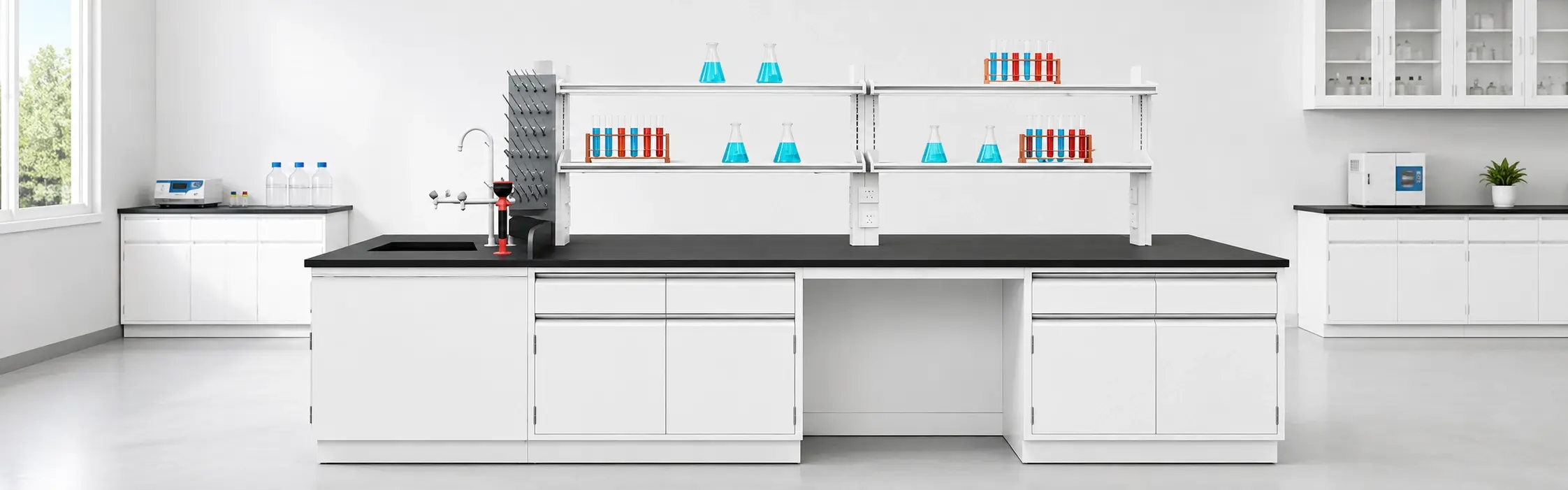
Central island plans with two sides of action work well in high-throughput labs where many workers are working on samples at the same time. This arrangement essentially doubles the work area compared to linear benching of the same size while taking up less floor room. Senior researchers can keep visual touch with multiple workstations from central places, which makes supervision and teaching easier.
Adding a water tank with measurements of 1440x720mm makes it possible to wash large items of glass and clean equipment. Putting sinks in the middle instead of at the ends cuts down on the distance that everyone has to walk, which makes processes that need a lot of rinsing steps more efficient. Built-in drip cups under the faucets keep things stored in base cabinets from getting damaged by water.
Market Landscape and Supplier Evaluation
Well-known companies that make lab furniture keep a wide range of products with standard sizes and styles. These providers have good track records, and new parts are easy to find years after the original installation. Their technical support helps with complicated plans that need structural estimates for setting up heavy machinery.
Custom makers, such as specialized providers like Uken, make solutions that fit the needs of specific study projects or building limitations. They can make things in non-standard sizes, from different materials, and with extras that the customer chooses. As a result, wait times may be longer (20–40 days on average), since production is done only when an order comes in and not from stock.
Procurement Insights: Buying Your Laboratory Island Bench with Confidence
Sourcing Channels and Supplier Assessment
When you work directly with a maker, you avoid the markups that distributors add, and you can get engineering help while you're making specifications. When judging suppliers, you need to look at their quality certifications, such as ISO 9001 for factory methods, ISO 14001 for environmental management, and ISO 45001 for health and safety at work. These licenses show that quality control is done in a planned way, rather than just through final review.
Verifying production ability keeps big projects from being late on their deliveries. Multi-phase institutional projects can be managed by suppliers with dedicated manufacturing sites bigger than 30,000 square meters and professional engineering teams. By asking for building paperwork and production plans for current projects, you can find out if the supplier can meet your deadlines.
Pricing Models and Budget Optimization
The price of a laboratory island bench depends on how complicated the design is, what materials are used, and how many are ordered. Because they are easier to make and ship, modular systems usually cost 15 to 25 percent less than similar set building. The knock-down structure greatly lowers freight costs, and the small package makes the most of the space inside containers for foreign shipping.
A lifecycle cost study shows that high-end features have hidden worth. Steel construction with an epoxy covering costs more at first than other options, but it doesn't need to be replaced for 15 to 20 years, which is how long most educational buildings last. The bulletproof, moisture-proof, and mildew-proof qualities lower upkeep costs and stop the premature wear and tear that needs approval for capital expenditure replacement.
Service and Support Considerations
A full warranty should cover both the structural soundness and the finish's longevity. Manufacturers of good products stand behind their work with guarantees that cover frame flaws, coating adhesion failures, and gear function for several years. Carefully read the guarantee terms because some don't cover damage caused by bad installation or upkeep, which means the buyer is responsible.
Having access to technical advice during the planning stages keeps costly design mistakes from happening. Before manufacturing starts, experienced providers look over building plans, lists of equipment, and locations of utilities to find any problems that might arise. This collaborative method cuts down on change orders and makes sure that the given product works well with the lab's current setup and working needs.
Conclusion
Laboratory island benches are smart purchases that will improve the safety and speed of operations. The strong steel construction, easy access from all sides, and flexible design solve the main problems that purchasing managers in the pharmaceutical, research, and industrial testing sectors face. When choosing materials, making sure they are chemically resistant through epoxy resin coating and strong core work areas is important for long-term performance in tough settings. For procurement to go well, suppliers need to be judged on more than just price. They need to be judged on their ability to manufacture, their certifications, and their availability of expert help. This guide gives decision-makers all the information they need to easily talk to suppliers, make sure that configurations are exactly what the business needs, and put in place installations that will boost lab output for decades.
FAQ
What standard sizes are available for island benches?
Single units are usually 470 x 520 x 830 mm, and double cabinets are usually 900 x 520 x 830 mm. Tanks for water are 1440 mm long, 720 mm wide, and 830 mm high. Custom sizing works around building limitations or equipment needs, and makers offer a range of sizes to perfectly fit any available floor space.
Which materials provide the best chemical resistance?
When you put together solid core physical and chemical board countertops with epoxy resin-coated steel frames, you get the best chemical protection. These materials can be exposed to strong acids, alkalis, and organic solvents for 24 hours without losing their surface. The 60–80 microns thick epoxy covering protects the steel frame from corrosion for a long time.
How long does installation typically take?
Professional installation of modular island chairs takes three to five business days, based on how complicated the layout is and how many utilities need to be connected. The knock-down structure lets parts be put together ahead of time, which keeps activities running as smoothly as possible. Facilities can often stage works so that some lab space is available during the process.
Can island benches be reconfigured later?
Modular building lets researchers take things apart and put them back together again as their needs change. Individual cabinet pieces can be taken apart and put back together in different ways without having to replace the whole system. When benches are moved, utility lines need to be recalibrated by a professional, especially for gas and water services.
Partner With Uken for Superior Laboratory Island Bench Solutions
Uken offers complete options for lab furniture that are designed to work in tough study and production settings. Our fully steel-built island benches are made with 1.0 mm cold-rolled steel plates that have been electrostatically sprayed with epoxy resin. This gives them unbeatable resistance to rust, moisture, and chemicals. With 100 committed engineers and 30,000 square meters of production space, we can make configurations that exactly match your needs while still meeting delivery dates of 20 to 40 days. Our flexible designs cut down on shipping costs by using smaller boxes, and they can be rearranged in the future if your business grows. Uken is a trustworthy company that makes laboratory island benches and is dedicated to high excellence. They are certified to CE, ISO 9001, ISO 14001, and ISO 45001 standards. Email our team at ceo@ukenlab.com to talk about your project needs and get full technical specifications that are made to fit the needs of your building.
References
1. Laboratory Design Guidelines for Efficiency and Safety, National Institute of Health Office of Research Facilities, 2021
2. SEFA 8 Laboratory Furniture Standard: Performance Testing Methods for Laboratory Furniture, Scientific Equipment and Furniture Association, 2020
3. Material Selection for Chemical Resistance in Laboratory Environments, Journal of Laboratory Design and Management, Volume 15, Issue 3, 2022
4. Ergonomic Design Principles for Scientific Workstations, American Industrial Hygiene Association Press, 2020
5. ISO 17025 Accreditation Requirements for Testing and Calibration Laboratories, International Organization for Standardization, 2019
6. Comparative Analysis of Modular versus Fixed Laboratory Furniture Systems, Facilities Planning Quarterly, Volume 28, Issue 2, 2023

CUSTOMER REVIEWS
What Our Customers Say