


Feb 6, 2025
NovaLab Tech Solutions
"Responsive and professional supplier with excellent product quality. Communication was efficient, and the entire purchasing process was smooth and reliable."


A laboratory exhaust cabinet should first pull hazardous fumes, vapors, and dust away from the operator and send them out of the building or through suitable filtration. Look for stable, monitored airflow, a rigid all-steel body, a corrosion-resistant coating and lining, baffles that guide air, and a tempered glass sash with smooth lift. Documented testing to ASHRAE 110 or EN 14175 also matters. Size, ducting, and certifications must fit your project. I walk through each feature below so you can compare suppliers with confidence.
A Laboratory Exhaust Cabinet is a ventilated room that pulls in smells, fumes, gases, and dust from where they come from. The front hole lets air into the room. After going through the baffles and across the work area, the air comes out of pipes or a filter in a safe place. Besides that, it is also important to know how the laboratory exhaust cabinet was put together and how fast and how much the face moves. I try to stay away from things that are flammable, poisonous, cross-contaminated, or small powders most of the time. It matters what kind of wood was used to make the laboratory exhaust cabinet. If you need to weigh powder in this case, putting it in hot acid might not work.
A lot of U.S. rules say that the face motion of a laboratory exhaust cabinet should be between 60 and 100 feet per minute (fpm). The safe working window is usually 18 inches high. The steady flow of air should be adjustable, and you should be able to hear an alert when it slows down. You should also be able to keep an eye on the difference in pressure. Next, look at how the room's air is leaving. Then, look at how the air is leaving the room and compare the angle of the vent fan to its length, number of turns, and direction. It doesn't matter how well the laboratory exhaust cabinet is built if the ducts are too small or the building can't get rid of enough make-up air. They check these points against your plans first, before they start making things. When the item is used, it won't be a surprise.
Ducted systems do get rid of bad things in the house. If you work with unknown or dangerous chemicals all the time, you should get a laboratory exhaust cabinet with pipes that connect to the air in the building. Keep in mind that split units can only handle very small amounts of chemicals because they make the air more pressurized. Also, the filters need to be changed often and with the right ones because smoke can pass through carbon that is fully loaded. If you can't name all the chemicals and figure out how much of each one there is, ducted exhaust is the best choice. It only makes sense for a choice to come with a written report if it doesn't use pipes.
In the long run, structure is what helps the laboratory exhaust cabinet do well. Uken is made from steel pieces that are at least 1 mm thick. The pieces are cut with a laser so that they fit together well. The outside can be pickled, phosphated, or powder coated with resin. At least 70 μm of thin film is needed to cover something. It makes the paint more slippery, and it cleans the surface by pickling it. When you wipe it down or crack it, the thick epoxy protects against it. They should be able to match the information you give them with records of how thick the layers are. Iron doesn't bend or break, and the plates won't come off over time.
This is the most important place for chemical reactions because it's where you breathe in and out. The laboratory exhaust cabinet is made of stainless steel. It's strong and easy to clean. Polypropylene can handle strong acids and bases better most of the time. This is why acid digestion laboratory exhaust cabinets use it so much. You can rate a lining by what kind of chemical it is, how strong it is, how hot or cold it is, what it is in contact with for a long time, and the tools you use. There is a 5 mm board inside our laboratory exhaust cabinet that doesn't rust and kills germs. There are also vents that help air flow and won't rust. This keeps dead spots from getting filled with fumes. You can't just use any room when you need to work with hydrofluoric acid and perchloric acid. We'll make sure the cover looks good if you send us the list of chemicals.
A lot of little things work together to keep the person safe. The sash on our window is made of toughened glass, and rubber guards keep it safe. The lift for both belts at the same time doesn't break and works well. Make sure to check the lights, the electrical services, the utility lines, the grounds, the spill control, and the emergency shutoffs as well. After a full risk assessment of the work area and method, only choose parts for the laboratory exhaust cabinet that won't explode. This is because you don't always need them and they cost more. Another part of safety is comfort. Things that are hard to reach, big, or have sharp edges are more likely to be risky. To keep you safe, there is training, warning signs, standard ways to do things, and a place for the sash to go.

Instead of making a list of things that need to be cleaned, you should clean what is dirty. HEPA filters get rid of dust, powders, and aerosols, but they don't stop gases. If the carbon is the right kind and can hold the right amount, it can keep some vapors and smells in check. You should think about how to keep an eye on things, get replacement parts, get rid of the waste in the right way, the chance of a breakthrough, and the drop in pressure. Whether you want to get rid of unknown chemicals that are highly poisonous, reactive, or corrosive, you need a ducted laboratory exhaust cabinet or another person to look it over. It will cost you more in the long run if you buy a cheap unit with few screens. It will cost you more in the long run to use cheap units with few screens.
Four types of things are often mixed up. A laboratory exhaust cabinet is the best way to keep chemicals safe in a small area. A lot of people use a laboratory exhaust cabinet that is big and open. A laboratory exhaust cabinet for drugs makes the packages safe, but dirt and other things can get in. Living things or cells can't get into a biosafety laboratory exhaust cabinet. It shouldn't be worked on with chemicals unless the company that made it says it's okay. There may be a product name in a quote, but that doesn't mean it will work for your process. This is because each type moves air, controls it, and fits it in a certain way.
I think you should make a simple table of comparisons for yourself to look over. To help you decide, write down the kind of risk, the size of the process, the need for filtering, the availability of ducts, and the amount of upkeep that needs to be done. There is only one way to do a small solvent job with a short duct run. There is another way to do a daily acid process with a lot of people using the laboratory exhaust cabinet. They can write and compare things on the same piece of paper. If a client does an audit or review, this helps you show why you made the choice you did.
The clients tell us what they want on the forms. ANSI/ASSP Z9.5 is used for lab airflow, ASHRAE 110 is used for containment tests, and NFPA 45 is used for fire safety in the US. An OSHA rule called 29 CFR 1910.1450 for labs says that managers must always make sure that the safety gear their employees wear is in good shape. EN 14175 is used in EU projects, and SEFA makes rules about how lab chairs should be used. Find out what high standards people in your area and your business agree on. ISO, CE, SEFA, and SGS all say that Uken's laboratory exhaust cabinets are good. There were no changes made to the rules in your area about buildings, fire, or electricity.
Having a certificate doesn't mean something worked. Get test records from the service provider for the lid, the filter, the warning, the noise, the lights, the airflow, and the containment of the laboratory exhaust cabinet. The machine needs to be checked out in person once it is all set up. You can see how the sash works, the filters, the alarms, the electrical safety, the exhaust discharge, the labels, and the maintenance records when you look at these parts. Tests should be done at least once a year and after every move or change. You have to not only agree with the plant, but also accept the system when it gets there. It talks about things like how the building is balanced and where the pipes are put in.
To find out how much the pipes, fans, installation, commissioning, energy, new filters, fixes, shipping, and importing cost for the laboratory exhaust cabinet, you need to add them all up. Better fan motors, screens with low pressure drop, and modes with less flow can all help you save power without letting air escape. It's also important that it works well. Parts that are easy to get to, clear review times, and extra parts can all help cut down on downtime. Get the seller and the worker in the other country to agree on how big the laboratory exhaust cabinet will be, how to get it there, how to power it, how to move the lines, and how the work will be split before you send it. Because our design is flexible and our boxes are small, it doesn't cost much to ship.
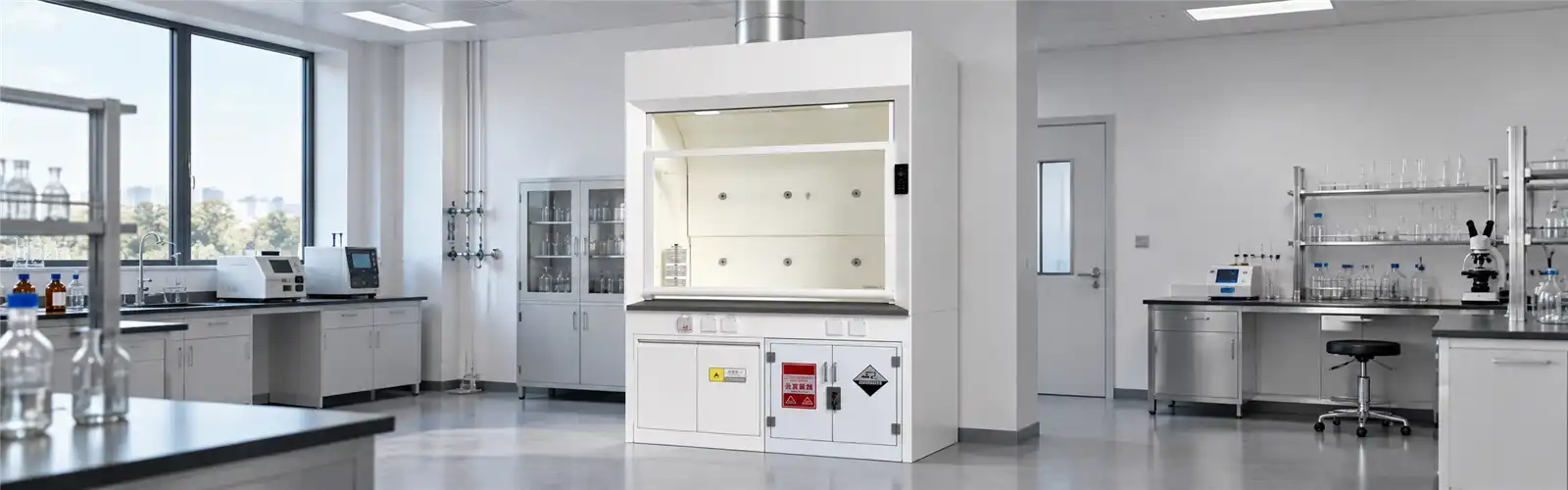
Write down all the pollutants and how often they show up, how strong they are, how hot they are, and how much of them there is. Then set rules for things like the size, the materials, the filtering, the electricity, the sounds, the warning, the certification, and more. There are three widths of Uken laboratory exhaust cabinets: 1200, 1500, and 1800 mm. They are 850 mm wide and 2350 mm tall. Next, check the spot's repair access, voltage, frequency, and duct routes. Get each seller to fill out the same form and give you a price. This plan should include details about the tools, choices, shipping, setting up, testing, extra parts, warranty, and help after the sale. They can work on drawings sent to them by EPC contractors and add more information to them in CAD and 3D.
Someone needs to watch the airflow, a building that can handle chemicals, a way to contain spills, and a risk assessment for things that could catch fire when you work with chemicals and solvents in a laboratory exhaust cabinet. People who work with things that rust might need lines and buildings made of polypropylene. As long as there is a steady flow of air coming in, locked rooms, ducted exhaust, and safe filter changes, you can work with powder. We can use small or split units for jobs where people don't walk around much if the review says it's okay. There are times when a project needs to be tried more than once or has more than one site, supplier, or OEM brand. In these situations, it can be helpful to have a standard platform, custom branding, export packing, and service support in your area. Other Uken laboratory exhaust cabinets can be put with them to make a bigger job.
Few people think about how much a laboratory exhaust cabinet is worth before they buy it. They choose filters over chemicals, don't pay attention to the building's HVAC limits, believe that factory approval is the same as starting, and forget about extra parts and service chores. You should think of the laboratory exhaust cabinet, the fan, the ducts, the filtering, the controls, the setup, the tests, and the support as all being different parts. Before you buy something, make sure that it fits your needs in terms of size, tracking, fan capacity, fit for the contaminant, and containment. Check out the lights, the utilities, the materials, how well they clean up spills, how easy it is to get to services, and how the door works. Talk about the rules, tests, work, and jobs that need to be done before the game starts. Last but not least, look at how experienced the seller is, how easy it is to make changes, how clear the price is, the guaranty, the filters, and the shipping. The lab, engineers, EHS, and buying teams should all use the same list of things they need.
You should choose a laboratory exhaust cabinet based on the risk, not the list. Chemicals stay inside when the airflow is stable and watched. This can be done with the right ducts or filters. Working with poisons that you don't know much about or that happen all the time is still best in this way. The steel shell needs to be at least 1 mm thick, have a thick epoxy finish, be lined with chemical-safe materials, and have holes in it so air can flow. So long as people know how to use the safety features like a smooth hardened glass sash, grounding, and spill control, they will be safe. You can find out how well something works with specs, test records, and site commissioning. To find the real price, add up all the costs of owning the thing. One way to escape most buying mistakes is to write down what you need and get an equal quote form.
A container that has been used before is also very important. The most important thing for a laboratory exhaust cabinet is stable airflow that is under control. Some of the things that help reach that goal are the materials used, the way the sashes are made, and the alarms.
Select ducted if you need to do chemical work in a laboratory exhaust cabinet that is dangerous, unknown, or will last for a long time. Diffusers that don't need ducts should only be used for clear, small loads.
It's clear that HEPA filters used in a laboratory exhaust cabinet get rid of dust, powders, and foams. Some things can smell and gas less when the chemistry is right for them.
Laboratory exhaust cabinet tests should be done at least once a year and after every move or change.
Send us a list of the chemicals you need, how much you need, the laboratory exhaust cabinet measurements, the material you've chosen, the location, the amount, and the date of delivery. Things can be changed.
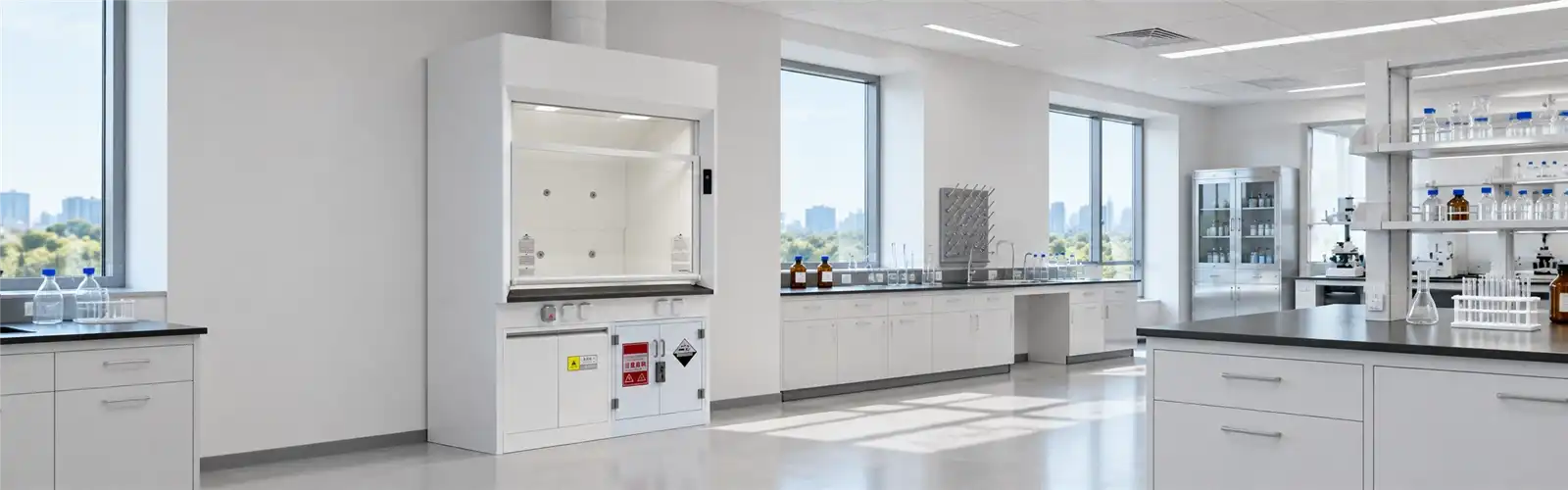
Are you looking for a company that can make a laboratory exhaust cabinet and look over your plans and science list? With a price quote and steps on how to export and set up the package, Uken will suggest a model and make sure that the customization is okay. Send information about your app, such as how big it is, how many there are, where they need to go, and when they need to be shipped, to service@ukenlab.com or WhatsApp +8615102909133. You can read more about the item at ukenlab.com.
1. National Research Council, Prudent Practices in the Laboratory: Handling and Management of Chemical Hazards, 2011
2. ASHRAE, ANSI/ASHRAE Standard 110, Method of Testing Performance of Laboratory Fume Hoods, 2016
3. American Society of Safety Professionals, ANSI/ASSP Z9.5, Laboratory Ventilation, 2022
4. Occupational Safety and Health Administration, Occupational Exposure to Hazardous Chemicals in Laboratories, 29 CFR 1910.1450, 1990
5. National Fire Protection Association, NFPA 45, Standard on Fire Protection for Laboratories Using Chemicals, 2019
6. European Committee for Standardization, EN 14175-2, Fume Cupboards: Safety and Performance Requirements, 2003