



How to Use a Fume Cupboard in a Lab?
The proper use of a lab fume cupboard is one of the most crucial safety precautions in any laboratory. A fume cupboard (also known as a fume hood or chemical exhaust cabinet) draws air in via its front aperture to capture dangerous vapors, gases, and airborne particles before they reach your breathing zone. To operate it properly, check airflow before commencing work, maintain the sash at the stated working height, keep items at least 6 inches within the device, and never store chemicals inside while not working. When used properly, it protects people and lengthens the life of equipment.
Understanding the Role of a Fume Cupboard in the Laboratory
What a Fume Cupboard Actually Does
A fume cupboard is a kind of local exhaust ventilation. It produces a vacuum within the enclosure, sucking in polluted air from the operator and forcing it out via an exhaust duct. OSHA says the most prevalent route of occupational chemical exposure is inhalation, and proper containment equipment is non-negotiable in any lab that handles volatile compounds.
How Airflow Dynamics Keep You Safe
The cabinet is operated at a face velocity of 0.3 to 0.5 m/sec (60 to 100 fpm) at the sash opening. This air speed is regulated to avoid turbulence that might push vapors back to the user. The back of the cabinet is equipped with an improved baffle system that directs the airflow uniformly over the work area, minimizing dead zones where harmful gases might build.
Fume Cupboard vs. Biosafety Cabinet: Know the Difference
These two gadgets are for distinct reasons. HEPA filtration protects the sample against biological agents and workers from contamination in a biosafety cabinet. Fume Hoods are meant for containment of chemical vapors by directing exhaust, not for use with pathogens. It’s important to know the difference before you purchase, since selecting the incorrect device for your application introduces actual safety hazards.
Step-by-Step Guide: How to Use a Fume Cupboard Safely and Effectively
Pre-Use Inspection Checklist
Make sure the exhaust fan is running before performing any process. Check that the airflow monitor or magnehelic gauge is in the authorized range. Wear adequate PPE (at a minimum, a lab coat, nitrile gloves, and safety glasses). Remove any debris obstructing the back baffles and lower the sash to the specified safe working height, generally 18 inches (450 mm) from the work surface.
Correct Material Placement and Sash Management
Keep all equipment and chemicals at least 15 cm (6 in.) within the sash line of a lab fume cupboard. This sustains chemical processes in the trapped airflow zone. • Operate with the sash down. The containment performance is reduced when the sash is raised above the approved height. If your unit has a sash stop or an audible alert, do not bypass it. Sash discipline is the most prevalent cause of hood-related exposure events.
Post-Use Procedures and Documentation
Leave the hood on for 2-3 minutes after work and then raise the sash to full height. Discard garbage according to your facility's chemical waste policy. Wipe off the inside using an appropriate solvent-resistant wipe. Document the session in your lab’s equipment record, noting any abnormalities in airflow or spillage. This paperwork supports yearly certification audits and internal safety compliance evaluations.

Choosing the Right Fume Cupboard for Your Laboratory Needs
Key Specifications to Evaluate Before Buying
The right ventilation enclosure for your lab depends on three core factors: liner material compatibility with your chemical inventory, airflow capacity relative to your room's HVAC system, and sash configuration. Vertical-rising sashes suit high-throughput workflows; horizontal sliding sashes work well in confined spaces. For acid-heavy applications, polypropylene liners resist hydrofluoric acid attack far better than standard epoxy coatings.
Comparing Unit Types and Sizing Options
Standard ducted cabinets work for most chemical labs. Ductless recirculating units with activated carbon filters suit low-volume applications where duct installation is impractical, but they require strict filter lifecycle management. Uken's lab fume cupboard line offers three standard footprints — L1200×D850×H2350 mm, L1500×D850×H2350 mm, and L1800×D850×H2350 mm — built from 1.0 mm cold-rolled steel with an epoxy powder-coated surface. These dimensions accommodate most teaching and small research labs without consuming excess floor area.
Certifications, Installation, and After-Sales Factors
Look for units that carry CE, ISO, SEFA, SGS, and CQC certifications — these confirm third-party testing against internationally recognized performance standards. Confirm the supplier provides installation guidance and accessible technical support after delivery. Uken units ship with professional packaging that protects the cabinet during transit, so you receive it ready for installation without damage-related delays.
Maintaining and Training for Optimal Fume Cupboard Performance
Routine Inspection and Preventive Maintenance
Airflow and containment of fume hoods must be certified at least once per year or after any significant HVAC change, per OSHA and NFPA 45. Between certifications, do monthly visual inspections to ensure the airflow alarm is working, examine the sash glass for cracks, and make sure nothing is obstructing the back baffles. Filters in ductless systems must be replaced on a precise schedule depending on your amount of chemical use – never go over the stated capacity of the filter as specified by the manufacturer.
Meeting EN, OSHA, and ANSI Compliance Requirements
In the U.S., laboratory ventilation systems such as lab fume cupboards must comply with ASHRAE 110-2016 testing standards and SEFA 1 criteria. European markets follow EN 14175. Buying equipment that already meets these requirements goes a long way in reducing your internal compliance load. Uken’s manufacturing method includes acid cleaning, phosphating, and electrostatic spraying, which provide each item with real corrosion resistance that lasts for years of frequent chemical exposure.
Personnel Training and Emergency Protocols
No lab user should be allowed to operate a fume hood with just a written instruction sheet. Hands-on training is essential. Training should address proper sash operation, regulations for placing material, recognition of airflow alert signals, and reaction to spills. Plan half-hour refresher seminars yearly or when new personnel arrive. “Properly trained teams reduce improper use, which is a leading cause of in-lab chemical exposure,” the American Chemical Society’s safety recommendations state.

Troubleshooting Common Issues and Enhancing Lab Efficiency
Diagnosing and Fixing Airflow Deficiencies
If the face velocity monitor alert sounds or if smoke testing indicates containment failure, work should be stopped immediately. Common reasons include a sash higher than the permitted height, back baffles obstructed by stored equipment, or an HVAC system malfunction that reduces supply air. Clear obstructions and retest. If this continues, have your facilities team check the exhaust duct and fan motor before proceeding with chemical operations.
Energy-Saving Strategies That Don't Sacrifice Safety
According to the Lawrence Berkeley National Laboratory, variable air volume (VAV) systems decrease HVAC energy usage by as much as 50% compared to fixed constant air volume (CAV) systems, automatically decreasing exhaust flow when the sash is lowered. Even without VAV, closing the sash while the hood is not in use results in considerable energy savings. Sash management training is consequently a safety and cost-saving solution.
Procurement Tips for Budget-Conscious Labs
Schools, small research institutions, and clinical testing laboratories on restricted budgets receive the finest combination of speed and affordability with in-stock standard-size units. Uken has standard dimensions as ready inventory; therefore, shipping durations are greatly reduced. When negotiating with a lab fume cupboard provider, ensure the given price includes hardware, exhaust collars, and packing. Hidden charges at the installation stage can impact overall project budgets.
Conclusion
Simply adhere to an easy process when using a fume hood such as a lab fume cupboard: check before you use, handle the sash appropriately, position items inside the airflow zone, and record every session. Getting the proper certifications and the correct size for your area takes the guesswork out of buying. With frequent training and consistent maintenance, you may expect it to operate for years as planned. Whether you're working in a school lab, a small R&D center, or a hospital testing area, the correct chemical exhaust cabinet safeguards yOur Team without hindering your productivity.
FAQ
1. What face velocity should a fume cupboard maintain during use?
The standard safe operating face velocity is between 0.3 m/s and 0.5 m/s (60–100 feet per minute) measured at the sash opening. Velocities below this range reduce containment; velocities above it create turbulence that can pull vapors out of the enclosure.
2. Can I store chemicals inside a fume hood when it is not in use?
No. Storing chemicals inside the cabinet disrupts the baffle airflow pattern, creates dead zones, and can contribute to vapor accumulation even when the exhaust fan is running. Store chemicals in dedicated vented storage cabinets.
3. How often does a laboratory fume hood need certification?
According to OSHA and NFPA 45 guidelines, performance certification — including airflow and containment testing — is required at least once per year or after any significant HVAC modification.
4. What is the difference between a ducted and a ductless fume cupboard?
A ducted unit exhausts air outside the building through a dedicated duct — it handles the widest range of chemicals. A ductless unit filters and recirculates air internally using activated carbon filters, and is only appropriate for specific, low-volume chemical families with strict filter management in place.
5. What certifications should I look for when purchasing a fume hood?
Look for CE, ISO, SEFA, SGS, and CQC certifications. These confirm that the unit has been independently tested against international laboratory safety and construction standards.
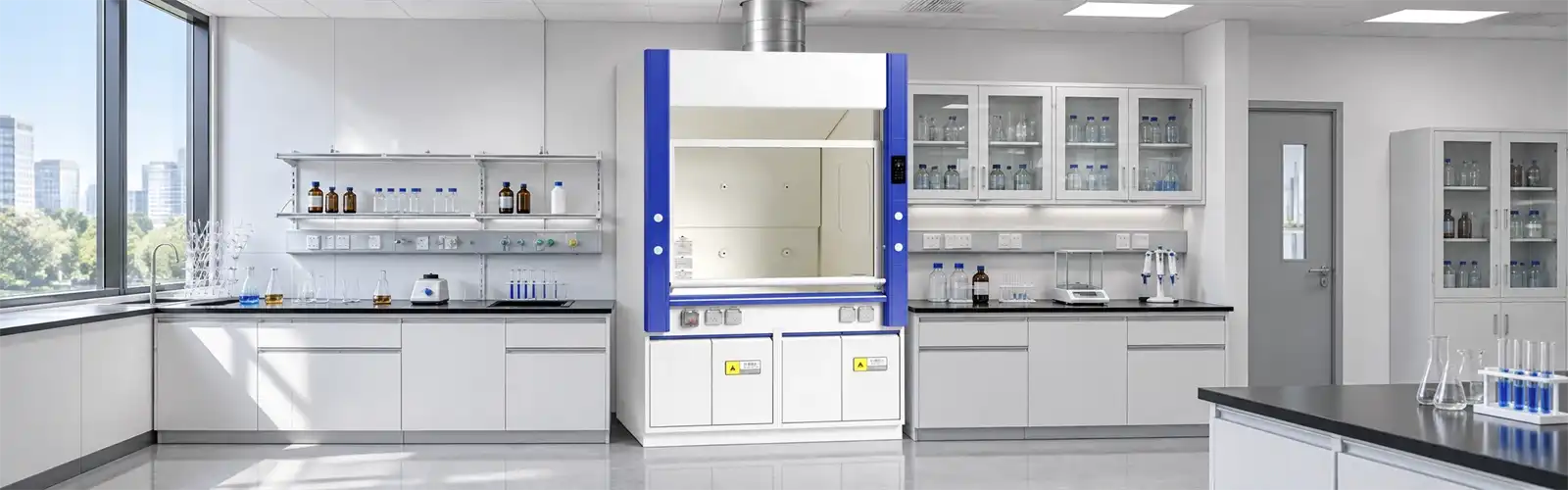
Get a Quote from Uken — Certified Lab Fume Cupboard Manufacturer
Uken, by Luoyang Youken Laboratory Equipment Co., Ltd., supplies certified lab fume cupboards built from 1.0 mm cold-rolled steel with epoxy powder coating, available in three in-stock standard sizes. Every unit carries CE, ISO, SEFA, SGS, and CQC certifications and ships in protective packaging for safe delivery. If your lab needs a space-efficient, compliance-ready ventilation solution at a competitive price, contact our team today. Email us at service@ukenlab.com to WhatsApp: +8615102909133 request a quote.
References
1. American Chemical Society — Safety in Academic Chemistry Laboratories, 8th Edition, 2016.
2. ASHRAE — ASHRAE 110-2016: Method of Testing Performance of Laboratory Fume Hoods, 2016.
3. Lawrence Berkeley National Laboratory — Fume Hood Energy Efficiency, 2003.
4. National Fire Protection Association — NFPA 45: Standard on Fire Protection for Laboratories Using Chemicals, 2019.
5. Occupational Safety and Health Administration (OSHA) — Laboratory Safety Guidance, U.S. Department of Labor, 2011.
6. Scientific Equipment and Furniture Association (SEFA) — SEFA 1: Recommended Practices for Laboratory Fume Hoods, 2010.

CUSTOMER REVIEWS
What Our Customers Say