



How to Select the Right Chemistry Lab Island for Research Institutes and Universities
When choosing the right Chemistry Lab Island for a university or research laboratory, you need to consider its durability, safety, and functionality. A Chemistry Lab Island is a centrally located, freestanding workstation that enables collaborative research, improves lab workflows, and integrates essential utilities like water, gas, and electricity. Unlike traditional perimeter benching, these islands are accessible from all sides, so multiple people can work at the same time while still following strict safety rules. Universities and research outfits must check the structure's strength, resistance to chemicals, ability to be customized, and compliance with standards to make sure it will work well in difficult experimental settings for a long time.
Understanding the Unique Requirements of Academic and Research Laboratories
Balancing Teaching and Advanced Research Functions
There are two main jobs that academic labs have to do: they have to be able to teach undergraduates and help graduate students and staff members do cutting-edge research. Because of this, workstations need to be able to handle both simple educational tasks and complicated analytical processes. The central island layout makes it easy for teachers to keep an eye on many kids at once and gives them plenty of room for advanced tools and processes. Universities that do research in materials science, analytical chemistry, or organic synthesis need Chemistry Lab Islands that can hold large instruments, provide enough workspace for reagents, and integrate with ventilation systems.
Addressing Safety and Compliance Standards
Safety in the lab is still very important in educational settings where people range from new students to expert researchers. The workplace needs to have safety features that lower the risk of chemical exposure, stop cross-contamination, and make it easier to handle an emergency. Following SEFA 8 standards makes sure that cabinets meet strict requirements for sturdiness, and ASTM D1308 approval makes sure that they are resistant to chemical spots. For research institutes that work with dangerous materials, surfaces need to be able to stand up to acidic chemicals for a long time without breaking down. Emergency eye wash stations, spill containment features, and proper electrical grounding are built in to protect users and meet OSHA standards for college labs.
Scalability for Evolving Research Programs
Because research programs are always changing, lab furniture needs to be able to change to new needs. With modular building, institutions can change layouts without having to rebuild all of their equipment, which lowers their long-term capital costs. Workstations that can handle a range of study methods, from wet chemistry to computational models, are helpful for universities that are growing their interdisciplinary programs. The lab will still work even if research goals change because the sizes can be changed, special features can be added, and new utility connections can be made. Managers in charge of buying things need to check to see if the solutions being considered really offer modularity and not just set configurations that make it harder to change things in the future.
Critical Selection Criteria for Central Laboratory Workstations
Structural Integrity and Load-Bearing Capacity
The structural integrity of a chemistry lab island is one of the most important factors determining its stability and long-term performance. When compared to particle board or composite options, cold-rolled steel buildings, especially when using 1.00mm gauge steel, are stronger. This all-steel frame makes sure that the workstation can hold big instruments, centrifuges, and other tools without sagging or breaking. To support the weight of current research tools, the load-bearing capacity should be higher than 400 kg per square meter. The quality of the welding has a direct effect on how long something lasts. For example, integral welding methods make parts that are seamless and less likely to break under stress than bolted systems. Before buying a workstation, universities that want to put in mass spectrometers, NMR equipment, or other large tools must make sure that it meets the structure requirements.
Chemical and Corrosion Resistance
A chemistry lab island in a research laboratory is exposed to harsh chemicals every day, making chemical and corrosion resistance a critical selection factor. How well the machine can handle this chemical attack depends on how the surface was treated. Epoxy resin electrostatic spray covering makes a molecular shield that is stronger than regular paint finishes against acids, alkalis, and organic solvents. Common lab chemicals like sulfuric acid, sodium hydroxide, acetone, and methanol must be used to test this covering very carefully. The choice of material for the worktop is also very important. Solid core scientific boards are very good at resisting chemicals and keeping their structure stable when temperatures change. Some schools choose ceramic tops for places that get very hot, but the cost is higher at first. The smooth surface design keeps liquids from getting into the joints, which is where corrosion usually starts. This makes the desk last a lot longer.
Customization and Dimensional Flexibility
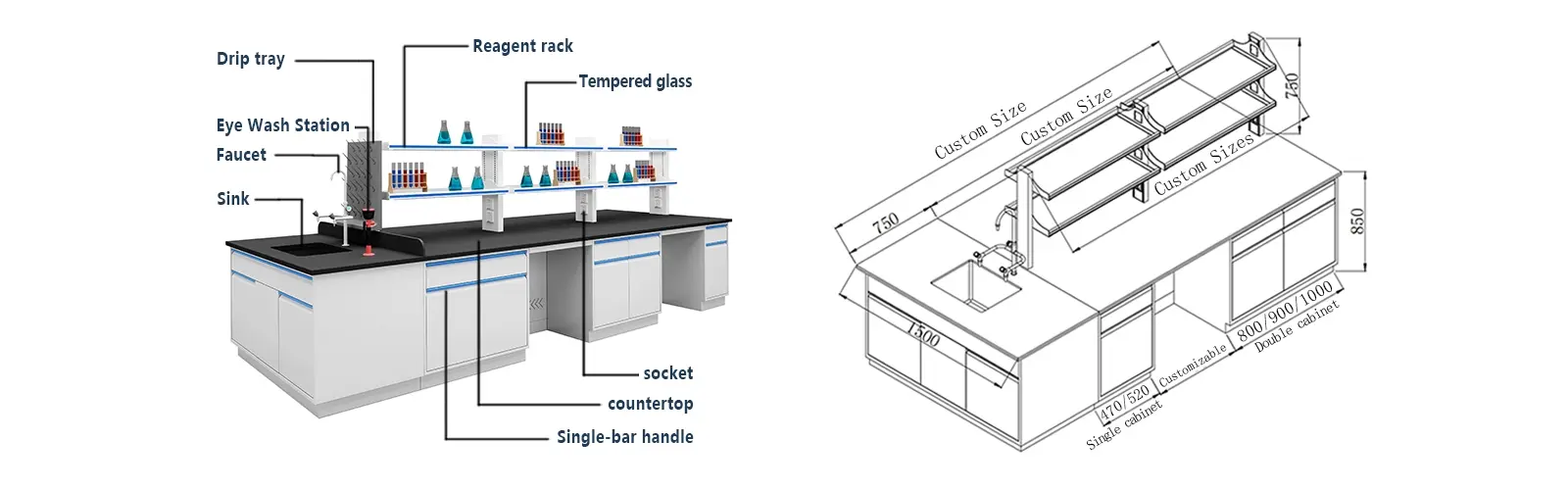
Every laboratory has unique space constraints and workflow requirements, so a Chemistry Lab Island should offer extensive customization options. Professional-grade options are different from general ones because you can change the sizes, shapes, and built-in parts. Standard cabinet sizes include a single cabinet (470x520x830mm), a double cabinet (900x520x830mm), and specialty water tank units (1440x720x830mm). These provide basic plans, but truly flexible systems let you change the sizes to fit different room layouts. Color customization lets schools keep the look of all of their buildings consistent or set up color-coding systems for different study areas. OEM and ODM services let universities choose their features, like built-in electrical outlets, special gas lines, or storage arrangements that are tailored to the needs of each department. The modular design theory makes it easier to put something in for the first time and add on to it later without having to update the whole system.
Material Specifications and Performance Standards
Advanced Surface Treatment Technology
The surface treatment applied to a chemistry lab island directly affects its chemical resistance, appearance retention, and service life. Good manufacturers use acid washing to get rid of mill scale and other impurities. This is followed by phosphating, which makes a chemically linked conversion layer that helps paint stick. The electrostatic spraying method makes sure that the coating covers all areas evenly, even those that are hard to reach or have parts that were soldered together. After this thorough cleaning plan, the desks are resistant to acids and alkalis, don't rust, and keep their structural integrity even after years of heavy use. The layer is usually between 60 and 80 microns thick, which is a good balance between toughness and cost-effectiveness. Universities that work near wet coasts can benefit from better rust protection because water speeds up the oxidation process in steel that hasn't been treated.
Worktop Material Selection
The choice of work area affects how easy it is to use every day, how much care it needs, and how long it will last. Solid core scientific boards made from phenolic resin are very resistant to chemicals, don't let water through, and stay stable at temperatures up to 350°F. When the temperature changes, these materials keep their shape, so they don't bend and make it harder to get accurate results from experiments. The smooth, flawless surface makes it easier to clean and kill germs, which are very important in labs that do biological studies or work with infectious materials. Ceramic tables are better at withstanding heat in high-temperature processes or when using thermal analysis equipment, but they need to be handled carefully to avoid damage from impacts. The edge treatment and joint binding stop liquid from getting in, which keeps the structure below from getting damaged by water and germs.
Fire and Moisture Resistance
Because academic laboratories store flammable chemicals and contain ignition sources, every Chemistry Lab Island should be designed with fire and moisture resistance in mind. All-steel construction naturally makes cabinets less likely to catch fire than wooden ones, stopping burning and reducing the spread of fire. The type of material and how it's treated on the outside make walls that keep water out and stop bacteria from growing. This is especially helpful in labs that do aqueous science, biological growth, or tests of the environment where humidity levels change. The fire- and water-resistant features ensure that building codes are followed and protect expensive tools and study materials from environmental damage. Insurance companies often offer lower rates to buildings that have fire-resistant lab furniture, which makes up for the higher original cost.
Evaluating Manufacturing Quality and Certification Standards
International Quality Certifications
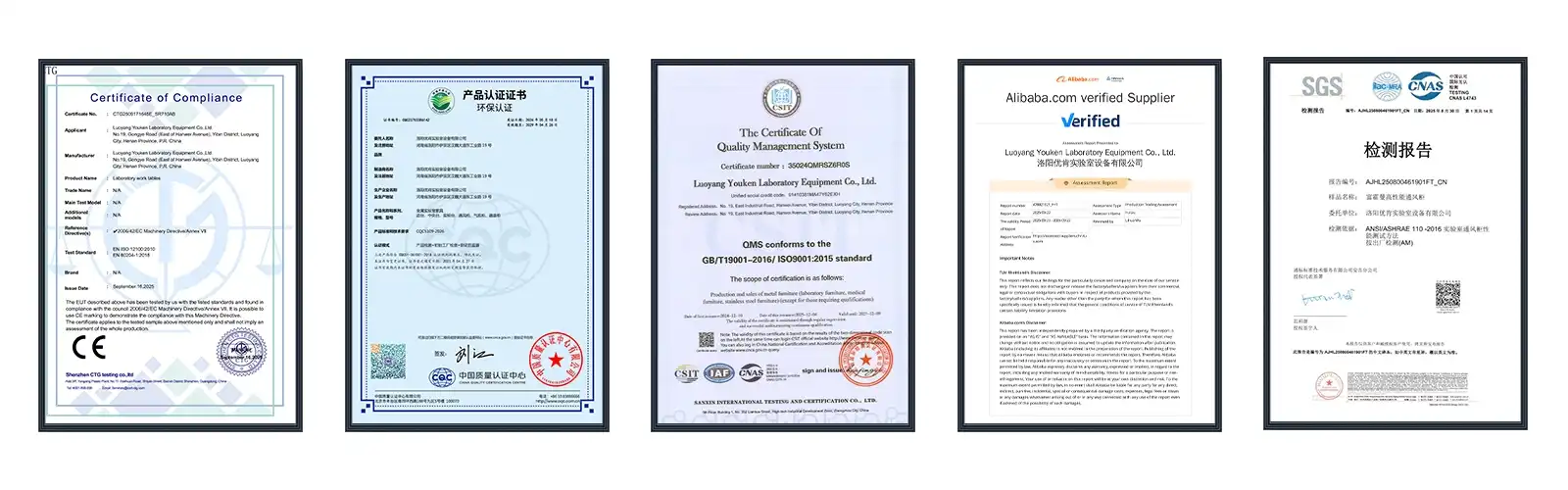
Managers in charge of buying things need to make sure that the options they're considering have foreign certifications that prove they meet safety and quality standards. If a company has ISO 9001 approval, it means they use systematic quality control throughout the whole production process. This makes sure that the quality of the products is the same for all orders. ISO 14001 shows that environmental management is serious, which is especially important for organizations that want to prioritize sustainable purchasing policies. ISO 45001 approval checks occupational health and safety management, showing that the company puts worker safety first during production. CE marking shows that a product meets the safety, health, and environmental protection standards of the European Union. This makes it easier for schools with global campuses or joint research programs to buy goods from other countries. Instead of depending only on what the maker says, these certifications give you objective third-party validation.
Production Capacity and Lead Times
Universities purchasing a custom chemistry lab island should carefully consider manufacturing lead times when planning laboratory construction or renovation projects. Good makers usually take 20 to 40 days to make custom orders. This is because laboratory-grade furniture needs to be made with great accuracy. This time frame includes getting the materials ready, making the product, checking its quality, and packing it safely. Rush sales might make it harder to keep an eye on quality or cost more. Institutions should coordinate building plans and furniture purchases, placing orders far enough in advance to avoid project delays. Manufacturers with big production facilities (more than 30,000 square meters) can handle large orders from institutions without lowering the quality of their products. Shipping procedures and installation difficulty are affected by whether the furniture is fully assembled or knocked down. Knock-down choices make transportation much cheaper for schools that are far away.
Inspection and Quality Verification Protocols
Before taking delivery, procurement teams should set up organized inspection processes that ensure the goods meet the requirements. Some important parts of the inspection process are comparing the real sizes to the ones on the buy order, making sure the coating is the right thickness and is applied evenly, trying the drawer and hinge's ability to work through multiple cycles, and making sure the worktop is flat enough to meet acceptable tolerances. Load tests should be part of the structural integrity study to make sure that promises about capacity are true, especially for islands that are meant to hold heavy equipment. Chemical protection spot tests with standard lab chemicals verify the performance of the surface in the real world. To keep people from getting shocked, you need to test electrical parts for connection and good grounding. Keeping track of serial numbers, production dates, and component specs makes it easier to file insurance claims and plan upkeep for the entire life of the workstation.
Cost Considerations and Value Analysis
Total Cost of Ownership Assessment
The purchase price is only the first part of the investment in lab furniture. The total cost of ownership includes the costs of repairs and replacements, the energy efficiency of combined systems, and the costs of lost work time caused by failures that happen too soon. High-quality steel construction that is properly protected against rust can last for decades with little upkeep, while cheaper options may need to be replaced every five to seven years. The flexible design lets you fix individual parts instead of replacing the whole system, which saves you money over time. Instead of just looking at the original purchase price, universities should figure out the total cost over the expected 15 to 20-year lifespan. Because quality surfaces are more resistant to chemicals, they don't need to be fixed as often for expensive reasons like corrosion damage that happens with cheaper goods. Long-term cost analyses often show that investing in a high-quality chemistry lab island provides greater value than choosing lower-cost alternatives.
Negotiation Strategies for Academic Institutions
Universities purchasing multiple Chemistry Lab Island units can often negotiate significant pricing advantages. Large savings are allowed for contracts that cover multiple buildings or construction projects that are done in stages. Manufacturers often have special price systems for universities because they know that universities have limited budgets. So that they can negotiate more effectively, procurement managers should ask for specific quotes that break down the prices of materials, fabrication, finishing, and installation. For big capital projects, being able to change the payment terms, like making progress payments that are tied to project goals, improves managing cash flow. Some furniture makers offer funding or research partnerships that lower the cost of furniture in return for performance data or people taking part in case studies. By using the same lines of products across the whole school, it makes upkeep, training, and future growth easier and gives you more power when dealing with suppliers.
Hidden Cost Factors
Several cost factors often get missed in the first budget estimates. Shipping costs for lab furniture depend a lot on the layout you choose. For example, shipping costs are 40–60% lower for knocked-down designs than for fully built units. Because of the specifics of the work, it may be necessary to hire qualified technicians instead of general contractors, which will raise the cost of labor. The complexity of the utility link affects how long and how much it costs to build, especially when gas, vacuum, or specialized electrical systems are added. Institutions need to plan for extras like emergency eyewash stations, specialized sinks, reagent racks, and power plugs that make things work better but cost more. Some providers don't offer standardized modular systems, which makes it harder for systems to work together and raises the cost of future growth. By making these factors clear during procurement, price overruns that slow down project finish can be avoided.
Installation and Ongoing Maintenance Considerations
Assembly and Installation Efficiency
The installation method of a chemistry lab island directly affects project timelines and labor costs. Modular building lets university facilities teams put things together quickly, so they don't have to rely on expert contractors as much. Full construction instructions with clear pictures make it easier to put things together without making mistakes that cost a lot of money and damage the structure. The knock-down design makes it possible to move furniture through normal doorways and lifts without having to take out windows or use special rigging tools. Standardized fastener systems and pre-drilled attachment spots speed up installation while maintaining security. Modular systems allow flexible scheduling, which helps universities coordinate furniture placement with ongoing building work. The small packaging reduces the store room needed when furniture rollout is delayed by a phased installation plan. Good makers offer technical help during installation to answer any questions that come up and make sure the right way to put the parts together is used.
Long-Term Maintenance Requirements
The maintenance requirements of a Chemistry Lab Island have a significant impact on its lifetime operating costs. The smooth, seamless design keeps dirt from building up and makes regular cleaning with normal lab soaps easier. Epoxy finish doesn't get damaged by cleaning products, so it keeps its look even after being cleaned a lot. Since there are no wooden parts, there are no worries about damage from water, termites, or paint wear that is common with traditional cabinets. Heavy-duty ball-bearing slides rated for 50,000 cycles or more should be used in drawer systems to make sure they work smoothly for years of daily use. The hinges on cabinet doors decide how long they last. Soft-close systems lower impact stress and improve the user experience. Specifications for purchases should require replacement parts to be easily accessible from the maker. This will stop the problems with obsolescence that happen with private designs. Setting up preventive maintenance plans for things like quarterly checks and a deep cleaning once a year can help furniture last longer and find small problems before they get worse.
Conclusion
When academic and research organizations choose the right Chemistry Lab Island, they must balance budget constraints with long-term performance. The full steel structure, epoxy coating, and flexible design that reputable makers offer give educational labs chemical protection, structural stability, and the freedom to make changes that they need. Certifications that prove the quality of the manufacturing process should be a top priority for procurement managers. These include CE, ISO 9001, ISO 14001, and ISO 45001. A study of the total cost of ownership shows that buying long-lasting desks that can handle chemicals is a better investment than cheaper options that need to be replaced more often. When institutions compare a product's size, weight, and customization choices to the needs of a particular study program, they benefit. Waterproof buildings, resistant to water, and easy to maintain make labs that are safe, effective, and supportive of academic success.
FAQ
What makes central laboratory islands suitable for university research programs?
Central desks are easy to reach from any angle, which makes it easier for people to work together on study projects and keep an eye on what students are doing. The flexible form can be used for a wide range of experiments in materials science, biology, and chemistry. Integrated utility links allow for high-tech instruments to be used in safe, well-organized work areas.
How long does laboratory furniture typically last in academic settings?
With regular upkeep, a well-built structure made of high-quality steel that is properly protected against rust will keep working for 15 to 20 years. It varies on how much chemical exposure there is, how often upkeep is done, and how well it was built in the first place. High-quality furniture lasts a lot longer than particle board options, which need to be replaced every 5 to 7 years.
Can laboratory islands be reconfigured as research programs evolve?
Modular design lets you change the size, replace parts, and change the structure of a system without having to replace the whole thing. This adaptability allows for shifting research goals, adding new tools, and growing interdisciplinary programs while protecting the original investment in infrastructure.
Partner with Uken for Your Laboratory Furniture Requirements
Luoyang Youken Laboratory Equipment Co., Ltd. has been making lab equipment for 30 years and can help universities and research centers that need reliable Chemistry Lab Island solutions. Our 100 professional engineers work in a 30,000-square-meter factory that makes unique desks that meet CE, ISO 9001, ISO 14001, and ISO 45001 standards. Our all-steel central workstations are made with 1.00mm cold-rolled steel, an electrostatic epoxy finish, and solid core physicochemical worktops that can handle harsh chemical conditions. The flexible design cuts down on shipping costs and makes it easy to set up quickly and change the layout later. As a Chemistry Lab Island maker with a lot of experience, we offer OEM and ODM services with lead times of 20 to 40 days and full technical support. Email our procurement experts at ceo@ukenlab.com to talk about what your school needs and to get full specifications that are made just for your research projects.
References
1. Scientific Equipment and Furniture Association. (2019). SEFA 8 Laboratory Furniture Standard. Hilton Head Island: SEFA Publications.
2. American Society for Testing and Materials. (2021). ASTM D1308 Standard Test Method for Effect of Household Chemicals on Clear and Pigmented Organic Finishes. West Conshohocken: ASTM International.
3. National Research Council. (2011). Prudent Practices in the Laboratory: Handling and Management of Chemical Hazards. Washington: National Academies Press.
4. Occupational Safety and Health Administration. (2020). Laboratory Safety Guidance. Washington: U.S. Department of Labor.
5. International Organization for Standardization. (2018). ISO 9001:2015 Quality Management Systems - Requirements. Geneva: ISO Publications.
DiBerardinis, L.J., Baum, J.S., First, M.W., Gatwood, G.T., Groden, E., & Seth, A.K. (2013). Guidelines for Laboratory Design: Health, Safety, and Environmental Considerations. Hoboken: John Wiley & Sons.

CUSTOMER REVIEWS
What Our Customers Say